


Intro
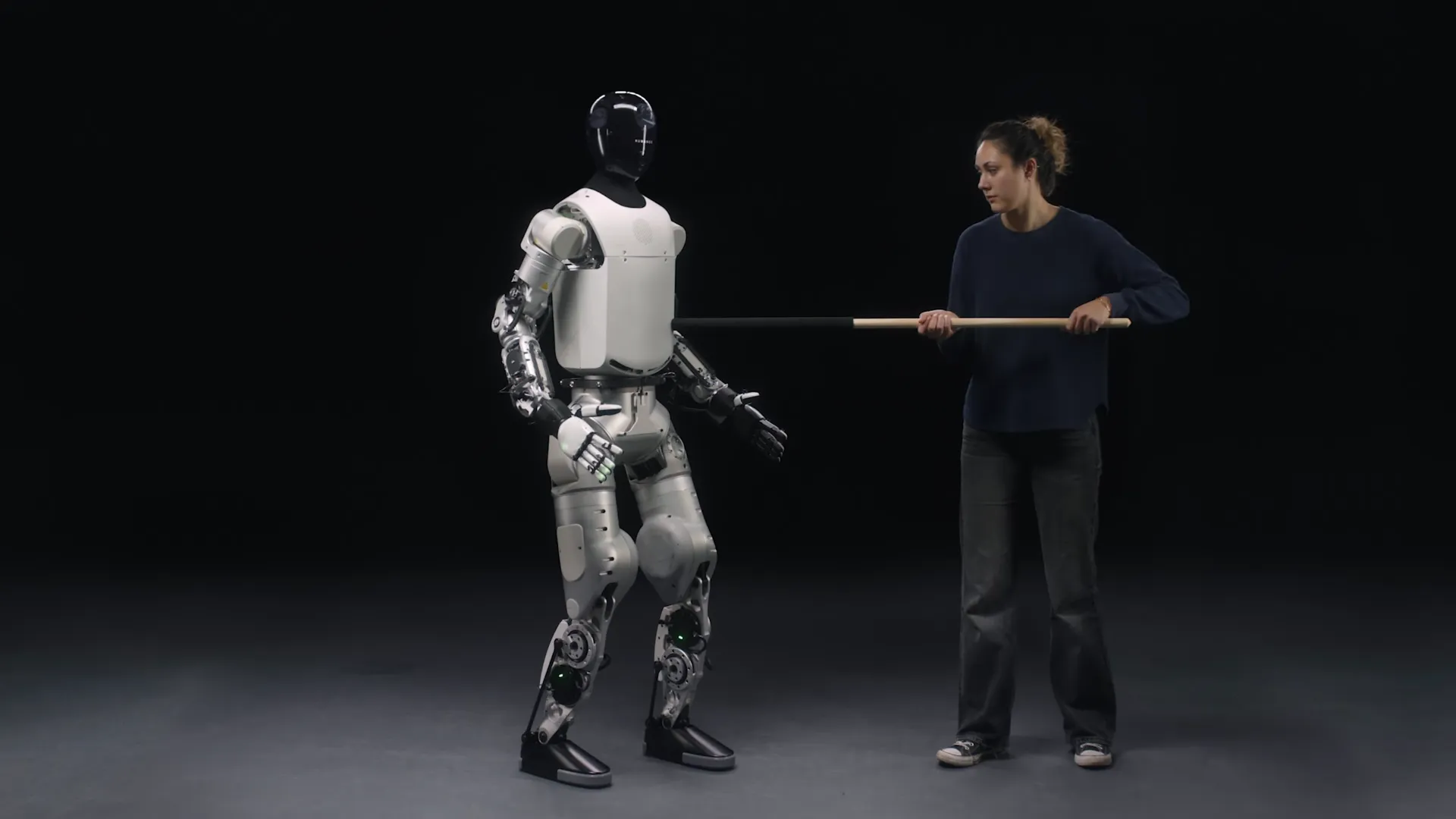
The HMND 01 ALPHA Bipedal is built upon a modular hardware family that shares a standardized core AI brain, an approach crucial for rapid scale and deployment across diverse industrial settings. The design philosophy centers on achieving operational readiness quickly; the ability of the prototype to walk within 48 hours of initial assembly validates this accelerated development strategy. The design prioritizes stable, reliable bipedal motion with balanced, humanlike proportions, essential for navigating and interacting safely within human workspaces.
The primary strategic objective of the Bipedal variant, in contrast to the heavier Alpha Wheeled model which targets high-throughput logistics on flat surfaces, is to handle highly complex and irregular spaces—such as older factories or maintenance areas—known as "brownfield environments". This capability extends the automation potential beyond standard optimized zones. Furthermore, the platform's initial locomotion was refined using 13,680 hours of simulation training data before the physical hardware assembly, leveraging a Reinforcement Learning (RL) approach.
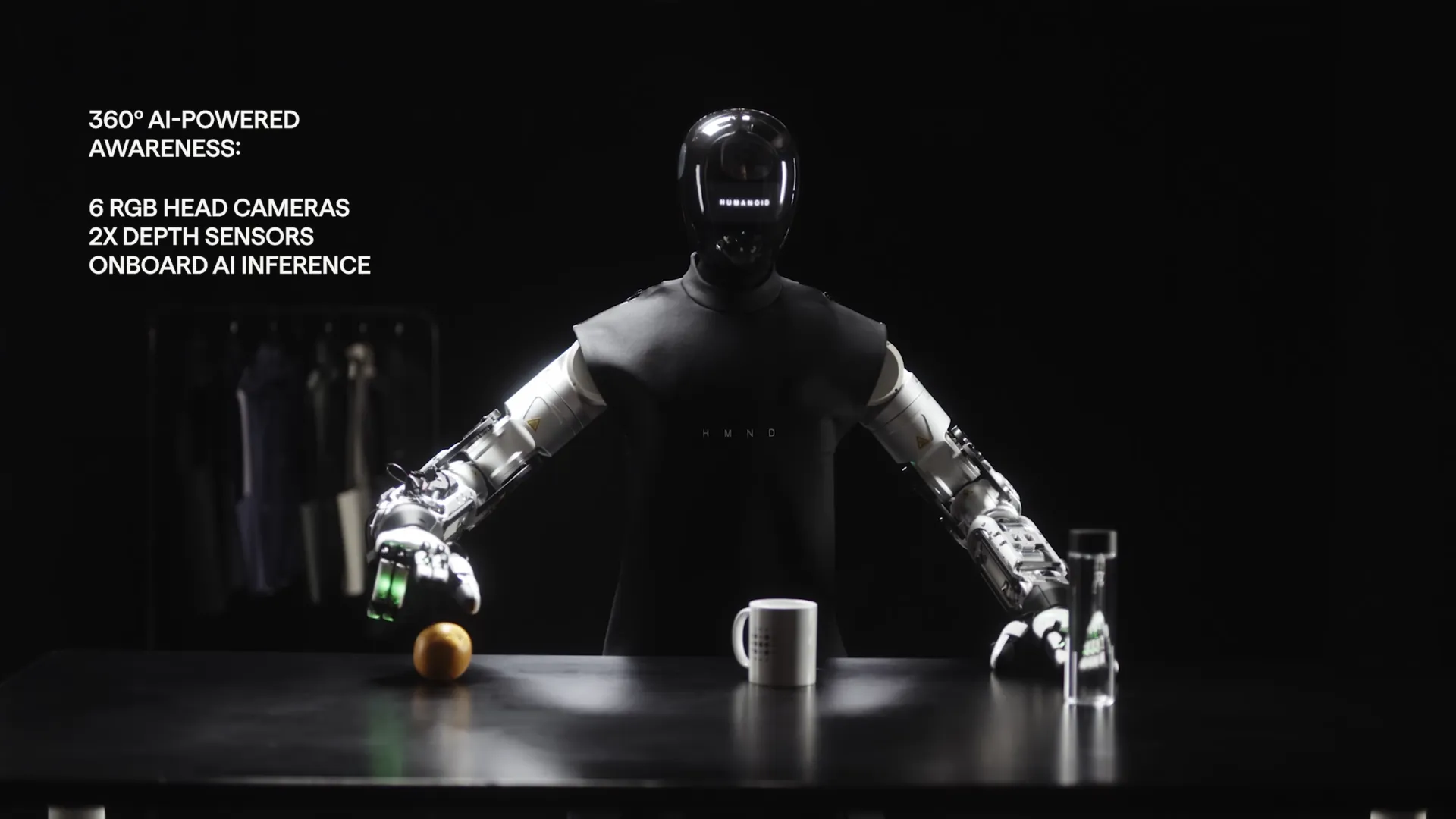
The physical design centers around robustness and scale. It features a full humanoid torso and arms mounted on a heavy-duty, omnidirectional wheeled mobile base, which provides exceptional stability necessary for dynamic manipulation while moving at high speeds.
- Height and Mass:
The robot stands at 220 cm, ensuring it can reach 2 meters wide, and interact with industrial shelving, control panels, and machinery designed for human operators. Its weight of 300 kg provides a highly stable platform, which is critical for maintaining precision during high-speed travel and when handling its maximum payload. - End-Effectors:
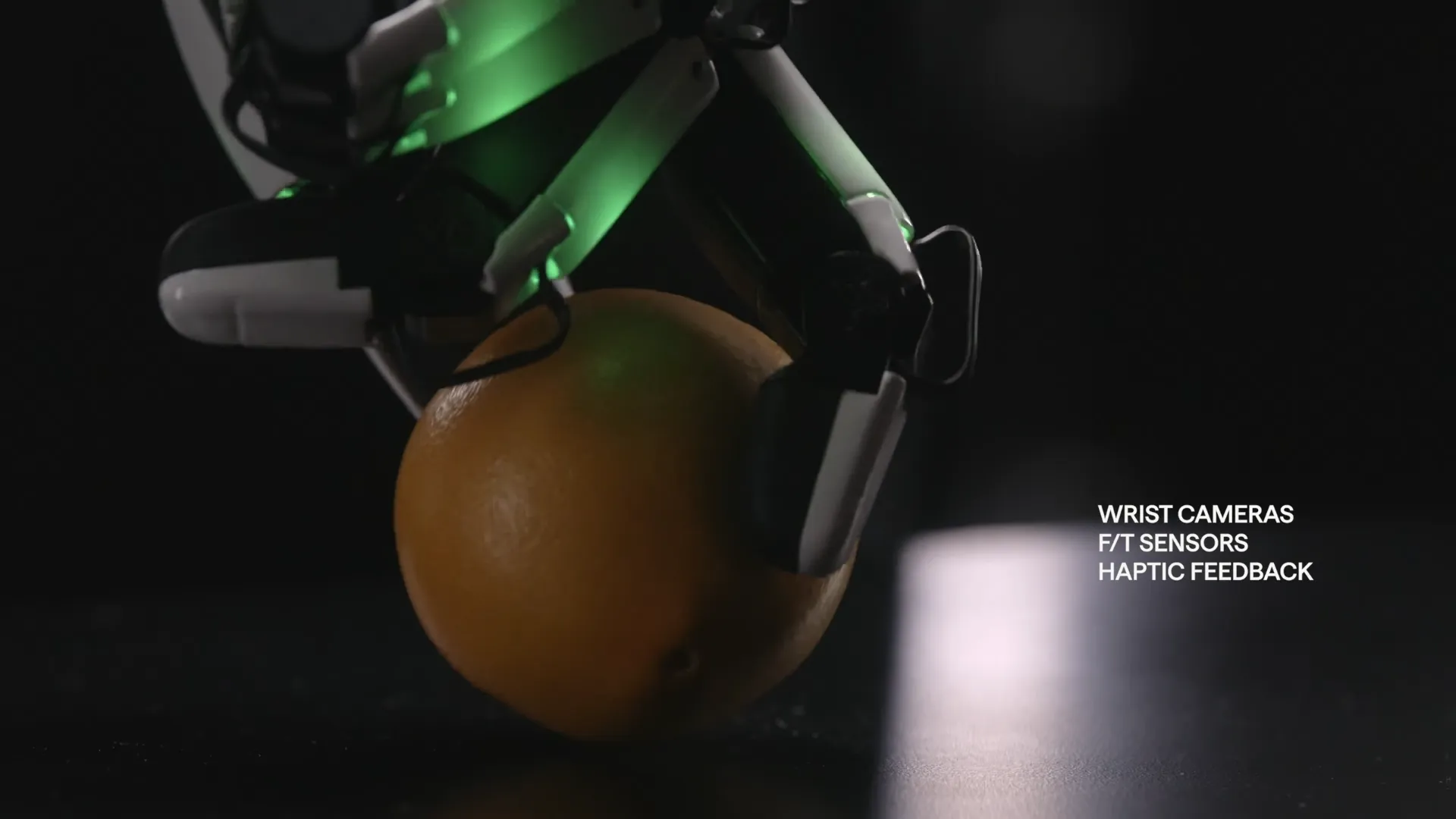
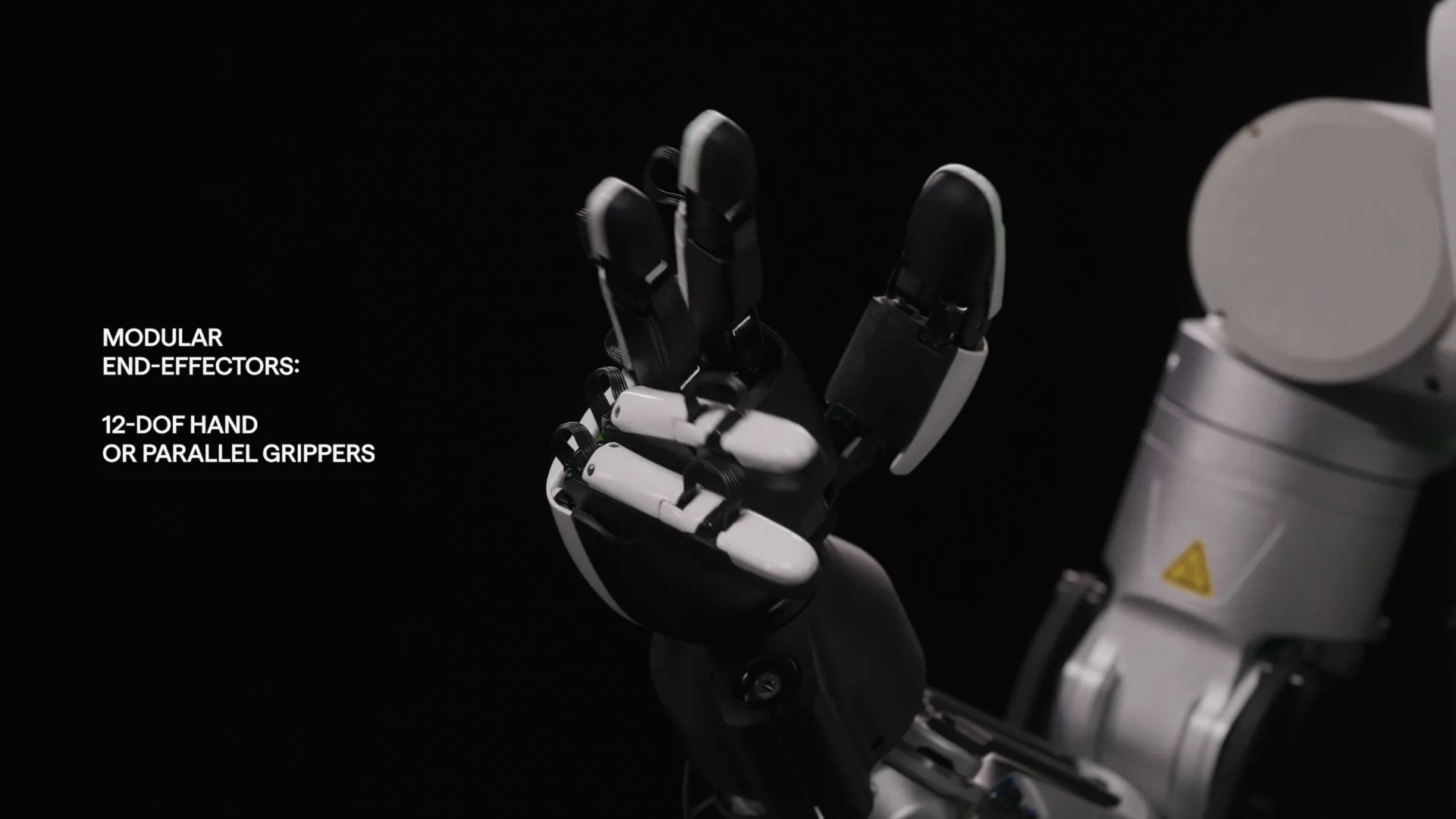
Modularity is a key feature. The robot supports interchangeable end-effectors, including a highly advanced 12-DOF 5-finger hand for intricate, delicate tasks, or a simpler, faster 1-DOF parallel gripper with a pad for robust, repetitive handling. - Environmental Preparedness:
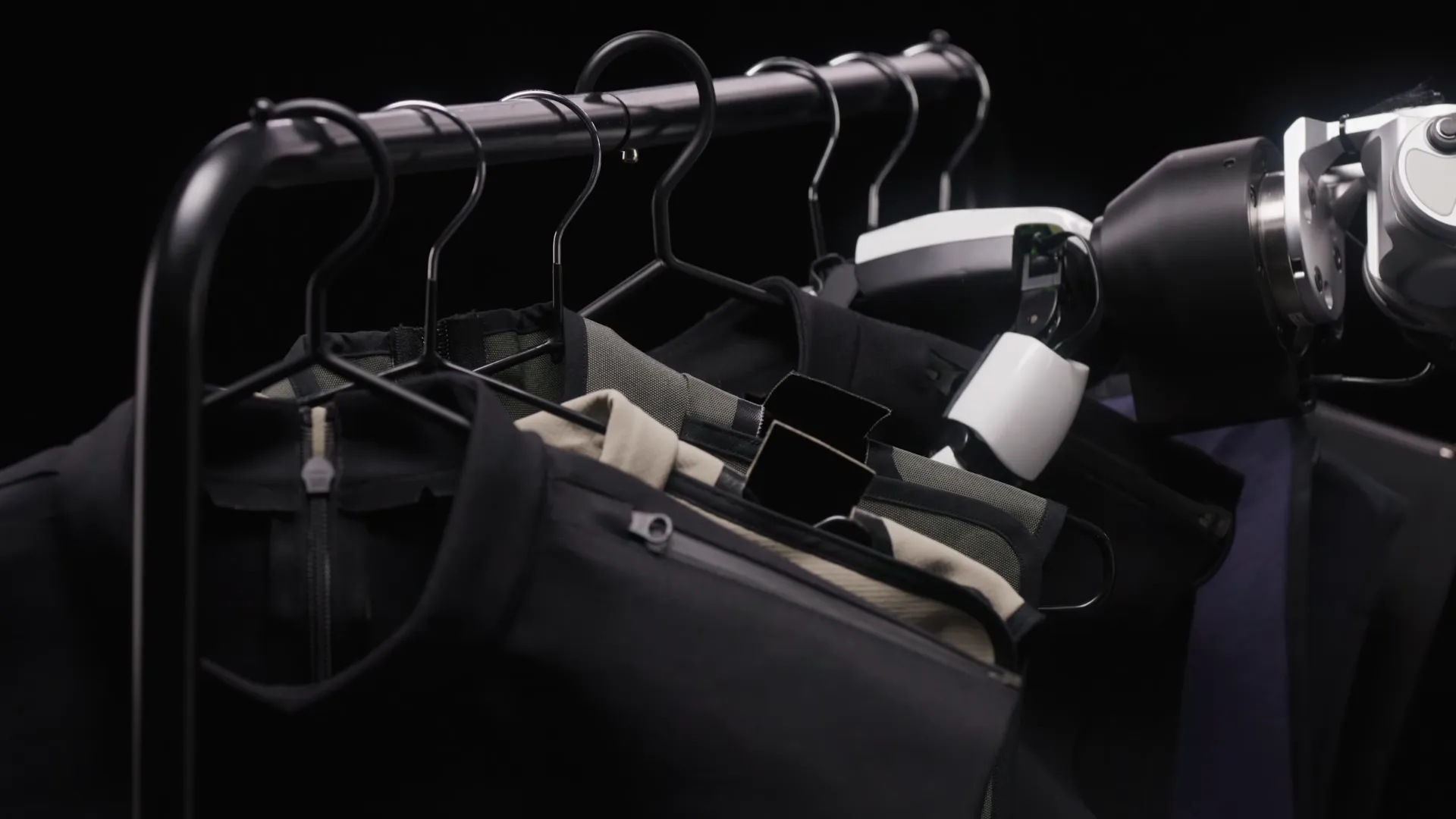
The inclusion of interchangeable garments for protection and safety suggests that the robot is prepared for environments with potential hazards, debris, or contaminants typically found on a factory floor.