- Atlas has officially transitioned from a research project to a production ready robot.
- Google DeepMind partnership integrates Gemini Robotics, allowing Atlas to understand natural language commands and reason through complex tasks.
- Hyundai Robotics Metaplant Application Center, also knows an RMAC, will be the training ground where human skills are translated into Atlas.
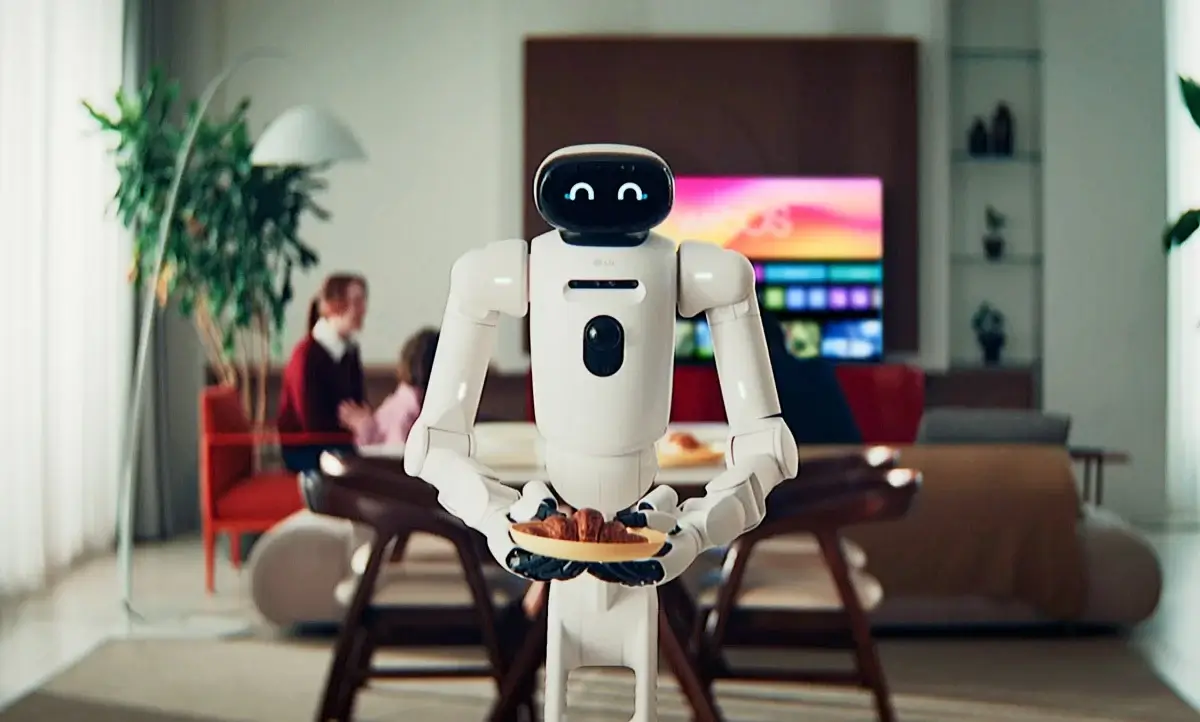
The energy at CES 2026 was electric this year, but the real story was about more than just gadgets. While companies like LG Electronics were showing off the LG CLOiD, a friendly robot designed to handle laundry and chores for a "Zero Labor Home," Boston Dynamics was busy unveiling a machine built for a much tougher environment.
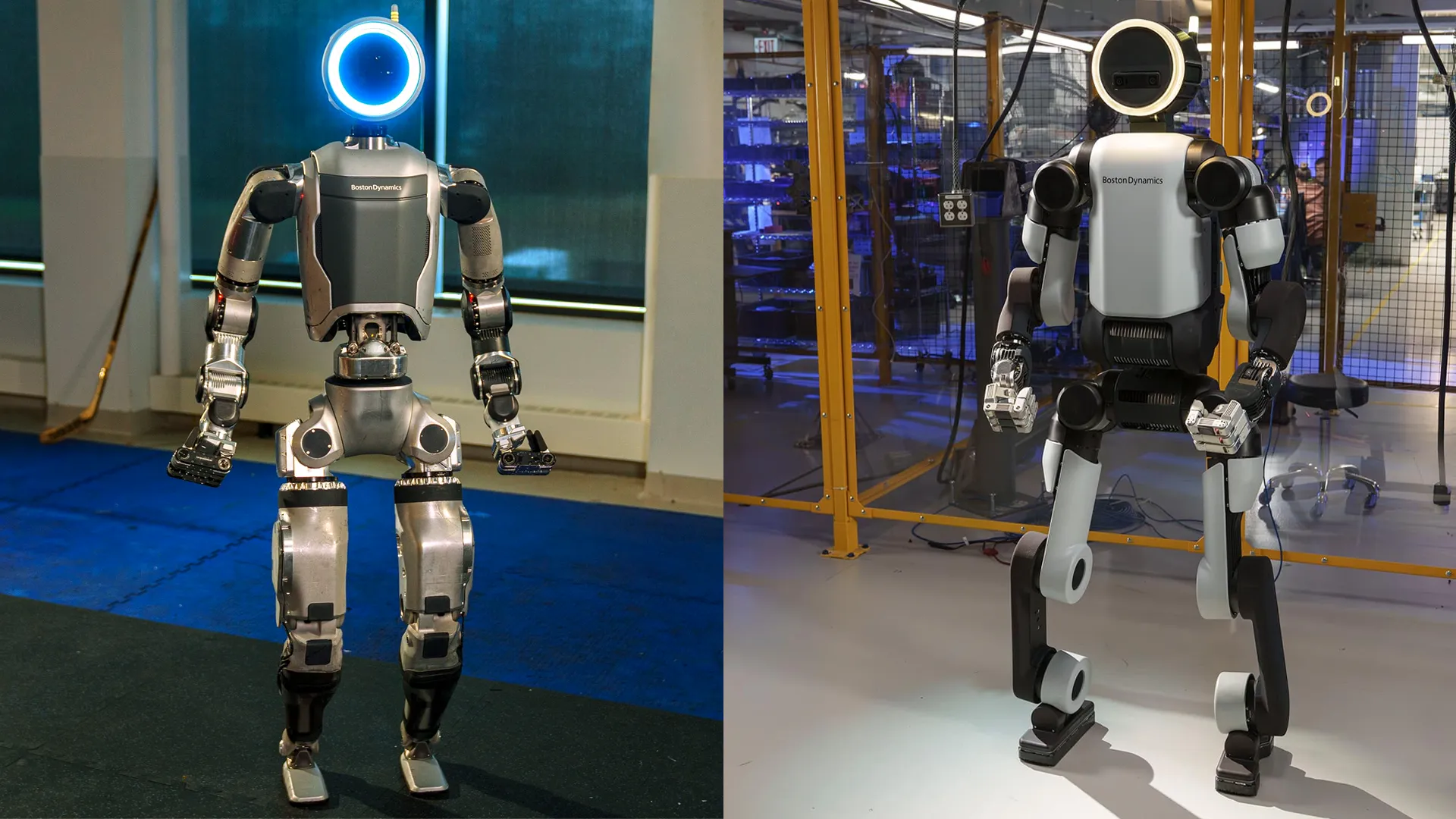
When the curtains pulled back to reveal the new production-ready Atlas, it was clear that the days of researches and experiments were over. While the 2024 electric prototype was impressive, the version hitting the factory floor this year is a different beast entirely.
Refining the Machine: Prototype vs Production
To the casual observer, the electric prototype from 2024 and the 2026 production model might look similar, but the upgrades under the hood are what turn this robot into a real worker.
In the 2026 version, Boston Dynamics refined the joints to be more robust and reliable. They removed any external wiring that used to cross over the joints. By moving all the "veins and nerves" of the robot inside its frame, they eliminated the risk of snagging or wear and tear during long shifts. This model now boasts 56 DoF, which means it has 56 different ways it can move its parts. Many of these joints can rotate 360 degrees, something no human could do with such grace.
Atlas' grippers have also seen a massive upgrade. The production Atlas now features human-scale hands equipped with tactile sensing. This allows the robot to "feel" what it is touching, so it can pick up a heavy car part or a delicate component with the perfect amount of pressure.
To support continuous operation, the production model introduced a power system not fully realized in the early prototype: Hot-Swappable batteries. It can perform an autonomous battery swap in just 3 minutes, allowing it to get right back to work for another 4 hours without downtime.
Built to Outperform, Not Just Mimic
The reason Atlas looks and moves so strangely is because it is not trying to be a person. It is trying to be the most efficient tool in the factory. Because its torso and limbs can spin in full circles, it never has to waste time turning around. If Atlas needs to move a box from a shelf behind it to a conveyor belt in front, it simply spins its waist and arms 180 degrees while its feet stay planted.
"We've learned that there's more to it than just to copying nature. We can pick the best parts of what nature has to offer and do better in others."
- Zachary Jackowski, Vice President, General Manager of Atlas, Boston Dynamics
Managing a fleet of these "superhuman" workers is handled by Orbit, a fleet management software from Boston Dynamics. Think of Orbit as a digital brain for the entire factory. It tracks every robot's health, assigns tasks, and allows them to share knowledge. If one Atlas finds a faster path through a narrow aisle, that information is instantly sent through Orbit to every other robot on the floor. At CES, Boston Dynamics showed how Spot, Stretch, and future Atlas deployments can all be managed through a single platform.
This highlights an important shift. Boston Dynamics is no longer just selling robots. It is offering a scalable robotics system that companies can actually operate at scale.
The Brain Upgrade: Google DeepMind
While Boston Dynamics provided the "Athletic Intelligence" for movement, a new partnership with Google DeepMind has provided the "Cognitive Intelligence." By integrating Gemini Robotics models, Atlas can now understand the world through language and logic.
Instead of a programmer writing complex code for every new task, a floor manager can simply tell Atlas what to do. You can say, "Find the blue crates that are out of place and stack them by the loading dock." Atlas uses its cameras and the Gemini AI to recognize the crates, plan the best route, and execute the job autonomously.
The Road to 30,000 Units
The deployment of Atlas is already happening. The first production units are heading to the Hyundai Metaplant in Georgia and Google DeepMind’s testing labs. However, the real secret to Atlas’s future success lies in a new facility called the Hyundai Robotics Metaplant Application Center, or RMAC.
Opening this August, the RMAC will act as a data factory for humanoid skill. Here, engineers will map human movements directly into robot learning, capturing real-world data on precision and safety. This center is the cornerstone of the plan to build the world's most complete dataset for manufacturing. It ensures that when Atlas arrives at a factory, it already knows how to perform high-precision tasks or learn tasks at minimal time.
Hyundai and Boston Dynamics have set an ambitious goal to reach a mass production capacity of 30,000 robots per year by 2028. By 2030, these robots are expected to handle complex assembly alongside their human colleague. With its 50 kg lift capacity and its ability to work in freezing or sweltering temperatures, Atlas is no longer just a viral video star. It is the first true blue-collar humanoid ready for the real world.
%20Hyundai%20Debuts%20Next-Gen%20Atlas%20Robot%20from%20Boston%20Dynamics%20-%20YouTube%20-%208_28.webp)
What Can We Expect?
As the curtains close on CES 2026, it is clear that we have witnessed more than just a product launch. The transition of Atlas from a laboratory marvel to a production-ready worker represents the moment humanoids stopped being a "maybe" and became a "must-have" for global manufacturing.
With the massive scale of the Hyundai Robotics Metaplant Application Center and a goal of 30,000 units by 2028, Boston Dynamics is no longer just building robots. They are building the future of how things are made. This version of Atlas is not here to replace us, but to stand beside us, taking on the heavy, dangerous, and repetitive tasks that have defined factory work for a century.
About the author