




%20Hyundai%20Debuts%20Next-Gen%20Atlas%20Robot%20from%20Boston%20Dynamics%20-%20YouTube%20-%204_00.webp)
Intro
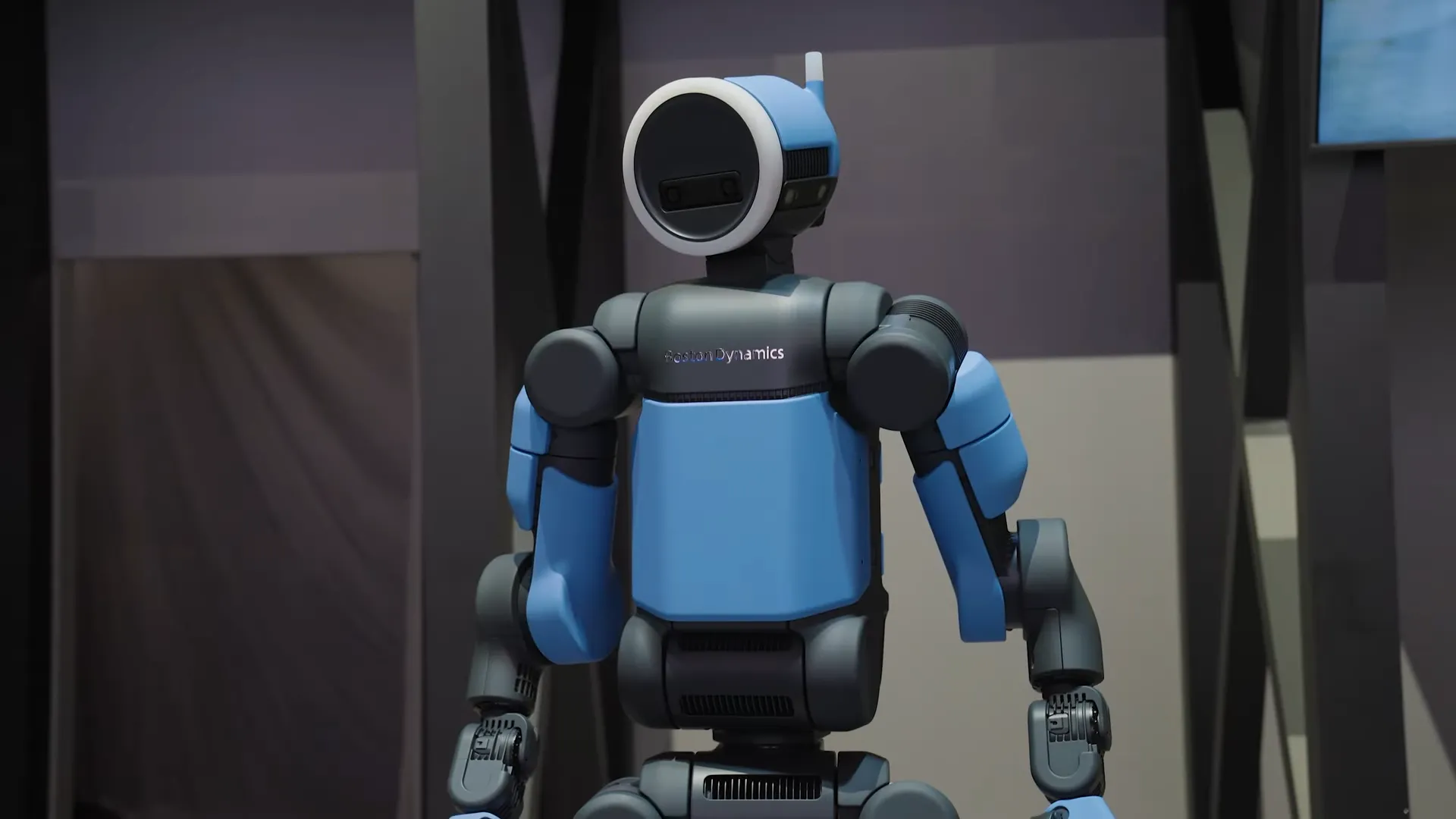
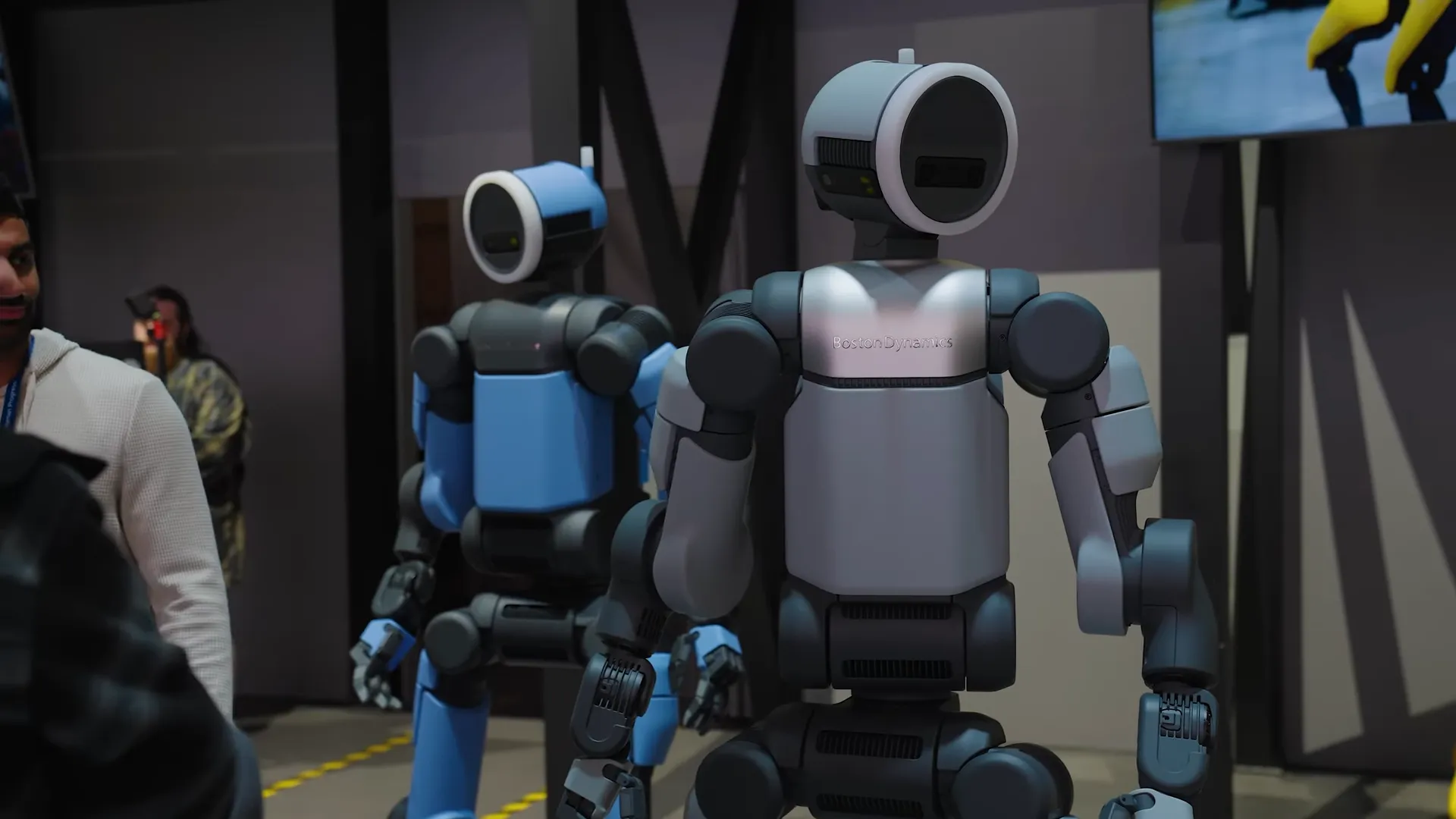
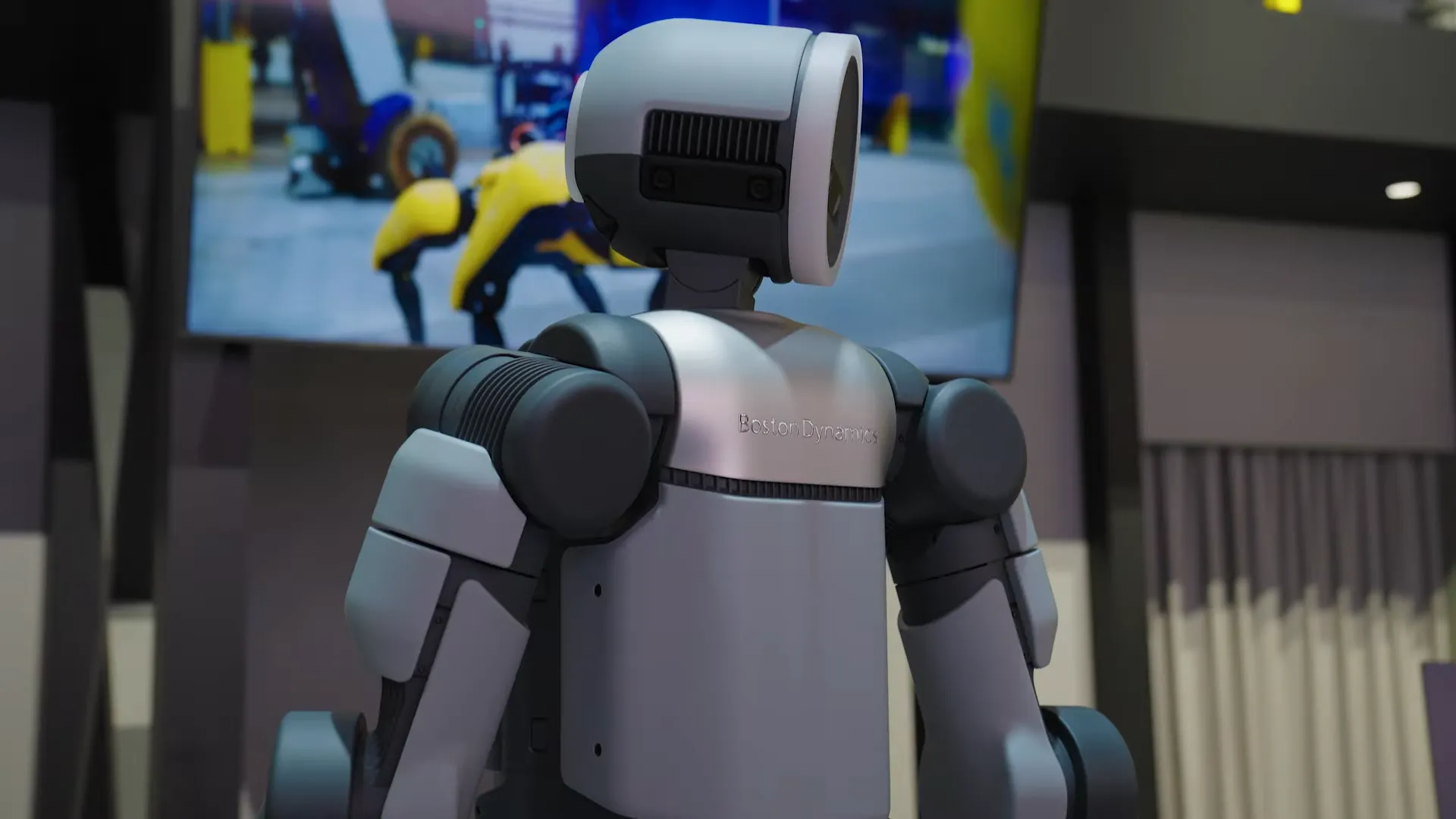
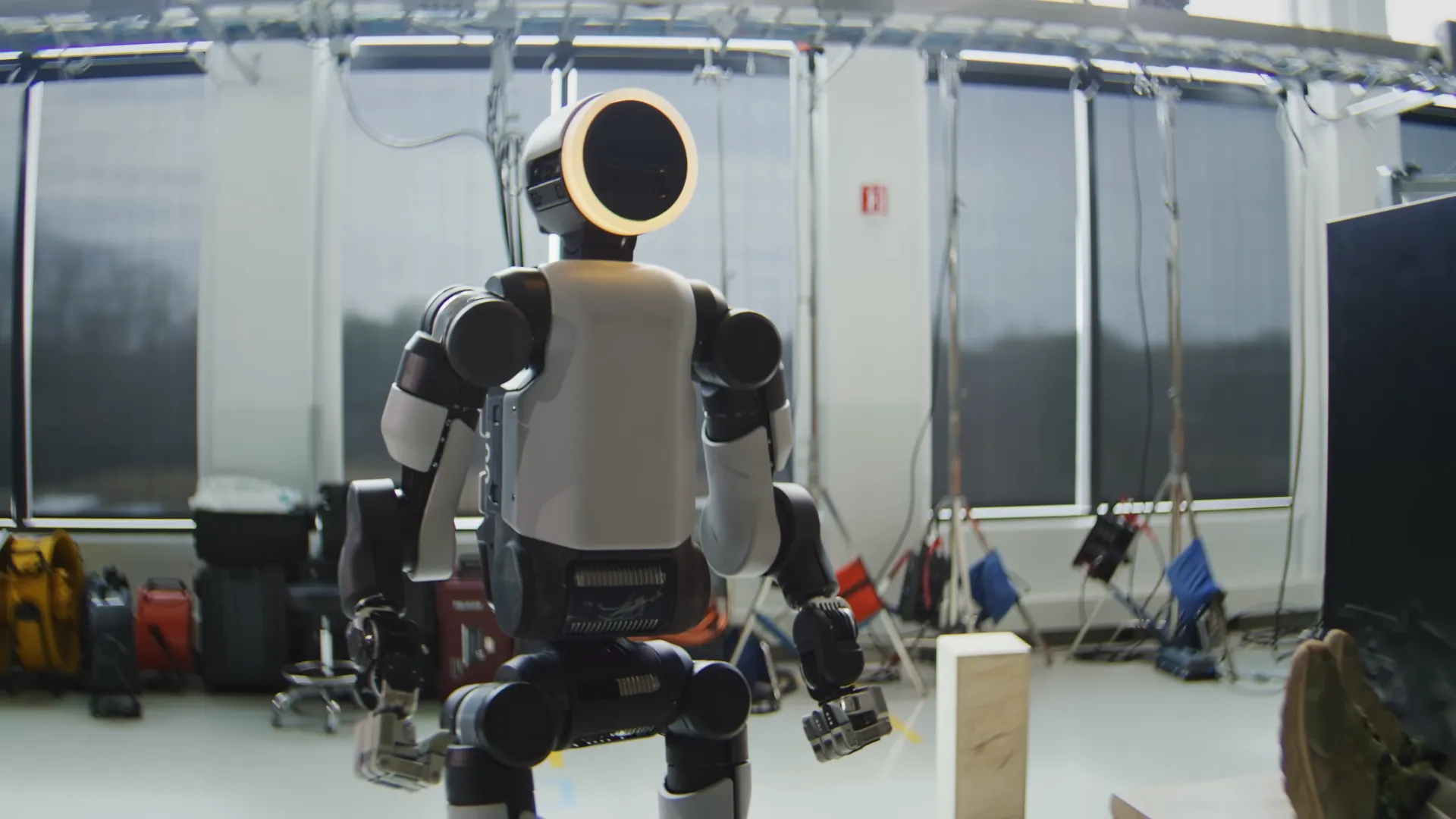
Atlas (2026) stands 1,900 mm (6.2 ft) tall and weighs 90 kg (198 lbs). Its 56 degrees of freedom include fully rotational joints at the hips, waist, and neck that exceed the human range of motion, enabling movement configurations and recovery postures that are physically impossible for a human skeleton. Every component of the robot is designed for modular field replaceability, with a parts count significantly reduced from the research Atlas to enable manufacturing scalability. Components are compatible with automotive supply chain manufacturing standards, and Boston Dynamics offers a customer self-repair certification programme. The robot's custom high-powered electric actuators are supplied by Hyundai Mobis — the components division of parent company Hyundai Motor Group — using planetary roller screws and high-density neodymium magnets to match the force density of the prior hydraulic system while eliminating fluid maintenance. The instant payload capacity is 50 kg (110 lbs), sustained payload is 30 kg (66 lbs), and one-handed payload is 20 kg (44 lbs). Arm reach extends to 2.3 m (7.5 ft). The robot achieves 85 to 90% electrical-to-mechanical efficiency and sub-10 cm foot-placement precision. The articulated head integrates LED lights for status indication and 360-degree camera coverage.
Atlas (2026)'s perception system uses tactile fingers and palm sensors, replacing the LiDAR of the research version, and a 360-degree camera suite rather than discrete directional cameras. The safety system provides fenceless guarding with human detection and automatic motion adjustment, enabling safe co-working in occupied facilities without barriers or cages. Operating modes include fully autonomous, VR teleoperated, and tablet-controlled configurations. Workflow integrations include barcode scanner and RFID support for enterprise traceability. The robot operates from -20°C to 40°C (-4°F to 104°F) and holds an IP67 ingress protection rating, making it suitable for outdoor, dusty, and wet industrial environments. The 4-hour runtime battery is self-swapped by the robot autonomously in under 3 minutes at a dedicated charging station, with a charge time of 1.5 hours at 110 V (220 V optional). Boston Dynamics confirms Atlas is manufactured in the United States. Initial 2026 commercial pricing is reported at approximately USD 420,000 per unit.
The AI stack combines Boston Dynamics' proprietary whole-body and manipulation control software, the Orbit fleet management platform for WMS/MES integration, and a strategic AI partnership with Google DeepMind for foundation model development. The compute platform is NVIDIA Jetson Thor T5000 delivering 2,070 FP4 TFLOPS of AI performance. Boston Dynamics is also an early adopter of NVIDIA Isaac GR00T, using Isaac Lab for simulation-to-real locomotion and manipulation policy training.