

Enquire about Robot

Simply fill up the form, our team will then reach out to you to connect to the relevant parties who can help facilitate your request.

Brand & Model
All fields required. Refer to our privacy policy for questions.
Thank you! Your submission has been received!
Oops! Something went wrong while submitting the form.
HomeRobots

Black Panther II

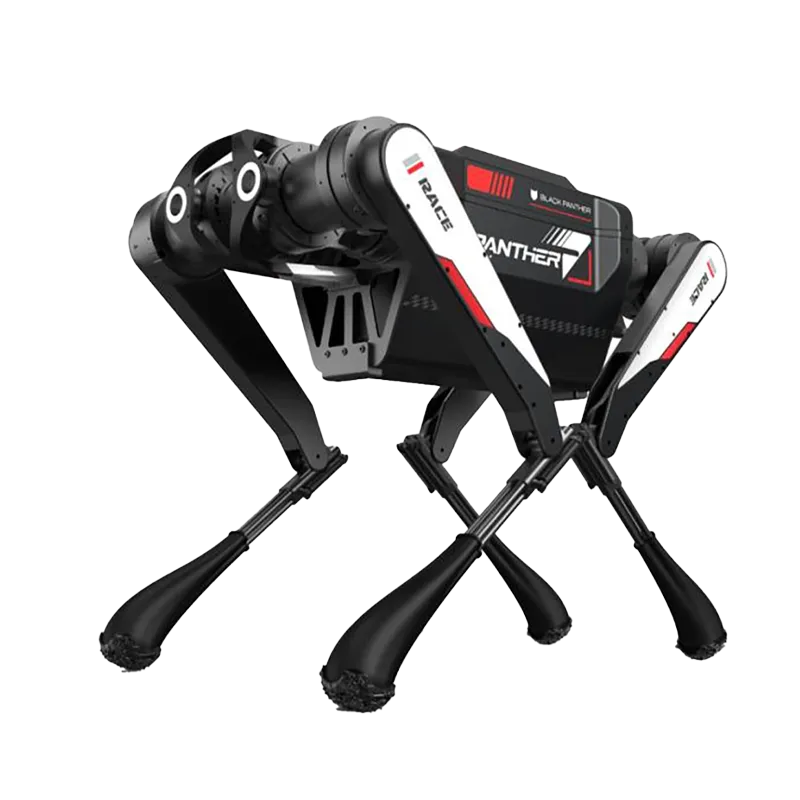
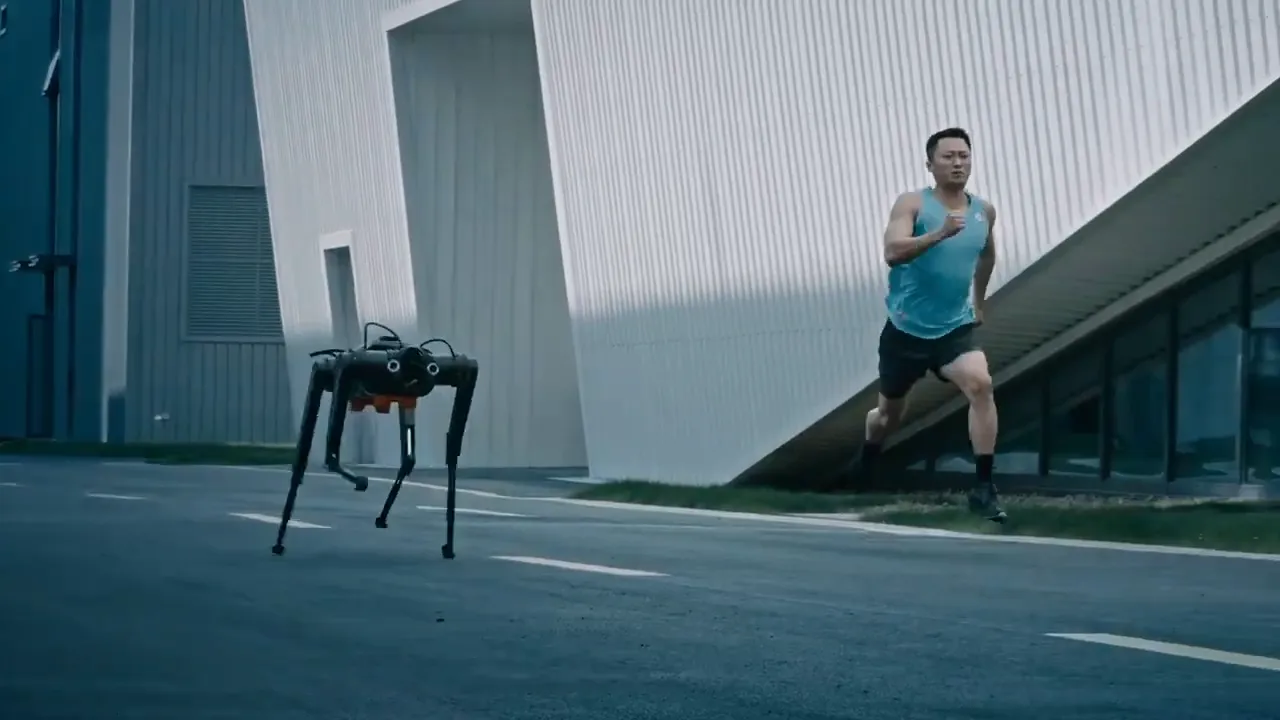
Ultra-fast quadruped robot capable of reaching over 10 m/s, designed for high-speed locomotion research and advanced biomechanical robotics applications.
Software Type
Closed Source
Software Package
Aparobot Readiness Score
ARS?
0
...
Actuators
Uses electrical actuation, spring-assisted passive joint system
Compiute
Uses Intel Atom® x5-z8350.
Sensors
Uses Xsens MTi-630 IMU.
Max Op. time
mins

Recent Robot Videos

*Aparobot claims no ownership of videos posted unless otherwise stated.
Description text
Date

Robot Brief

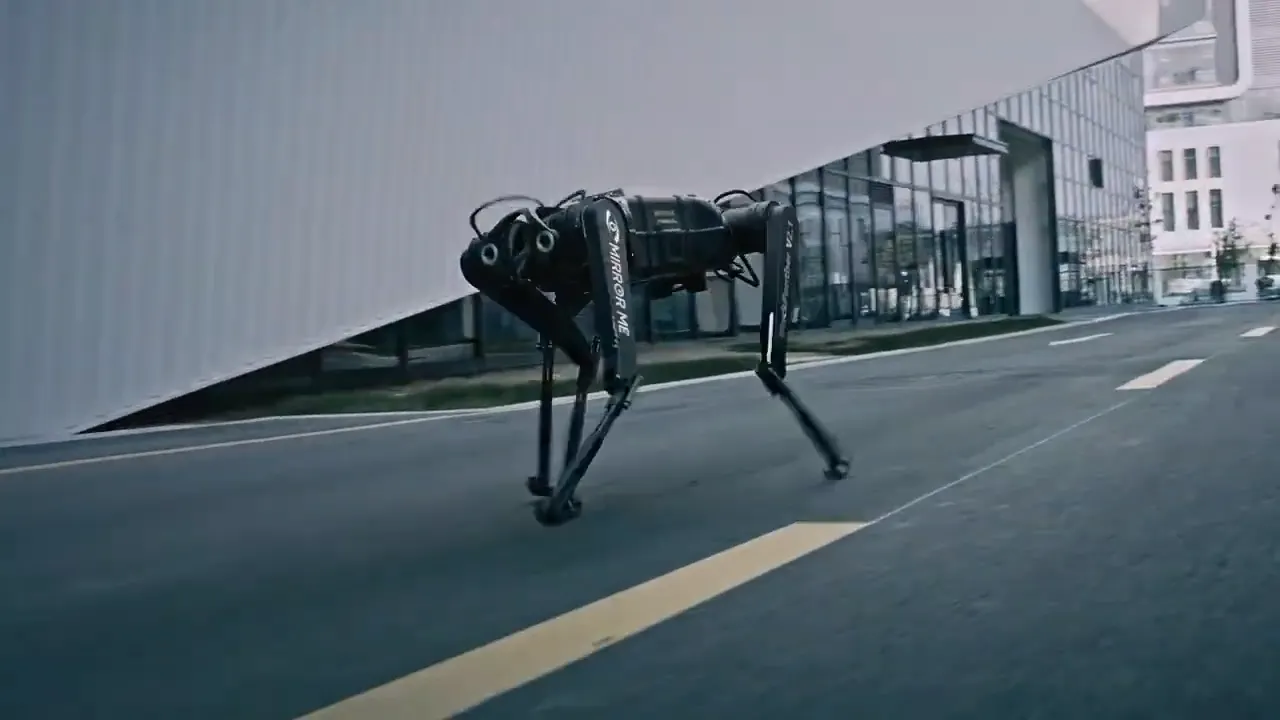
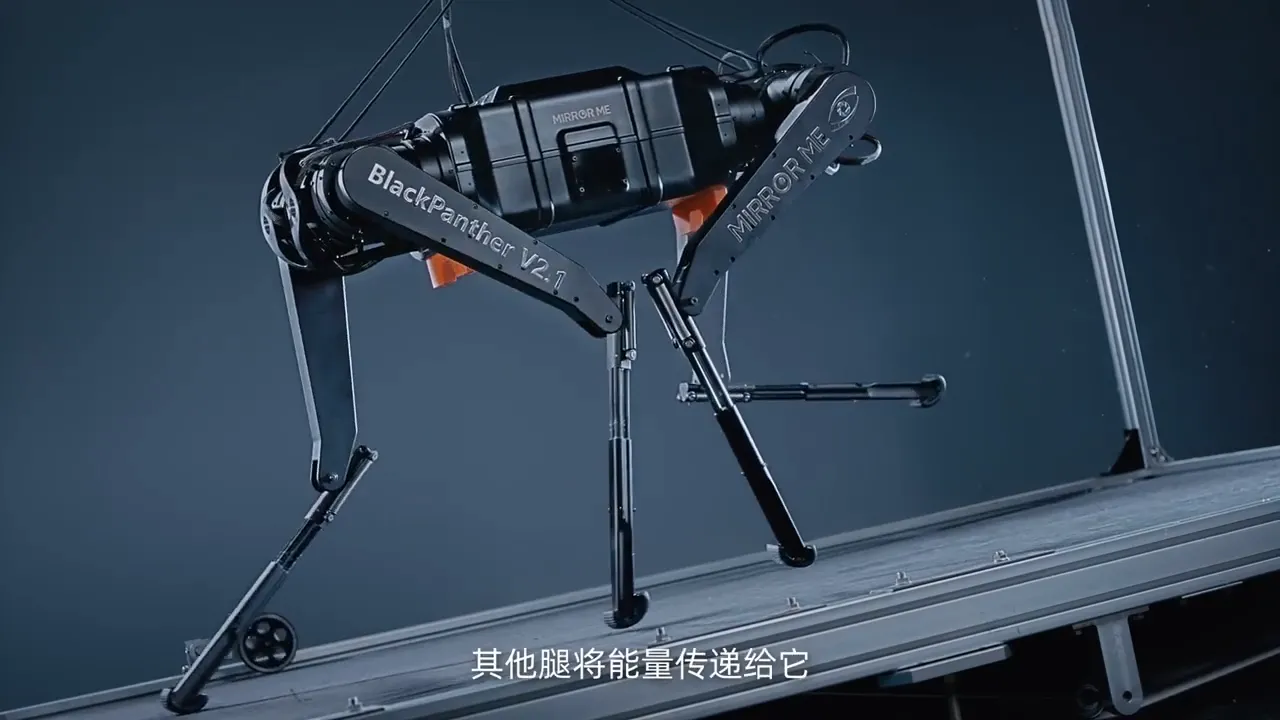
Black Panther II is a high-performance quadruped robot developed by MirrorMe Technology with the primary objective of pushing the limits of robotic speed, agility, and biomechanical efficiency. Inspired by fast-running animals such as panthers and jerboas, the robot is engineered for ultra-high-speed locomotion using advanced joint design and lightweight materials. Unlike traditional quadrupeds focused on stability or payload, Black Panther II prioritizes dynamic motion and extreme velocity, achieving record-breaking sprint speeds that surpass previous robotic benchmarks. Physically, it is a compact, lightweight quadruped with spring-assisted legs and a biomimetic structure optimized for rapid acceleration and stride efficiency.

Use Cases

  • High-Speed Locomotion Research:
    Serves as a platform to study extreme-speed robotics and dynamic motion control.
  • Benchmark Testing Platform:
    Used to push limits of quadruped speed and compare against other robots globally.
  • AI Motion Optimization:
    Improves gait planning, balance, and coordination at high speeds.
  • Biomechanics Research:
    Mimics animal locomotion to explore efficient robotic movement systems.
  • Technology Demonstration:
    Acts as a flagship system showcasing MirrorMe’s actuator and control innovations.

Industries

  • Robotics R&D:
    Advances high-speed locomotion and control systems for next-gen robots.
  • Defense:
    High-speed mobility platforms could be adapted for reconnaissance or rapid deployment.

Specifications

Length
-
809
mm
Width
-
450
mm
Height (ResT)
-
240
mm
Height (Stand)
-
630
mm
Height (Min)
-
240
mm
Height (Max)
-
630
mm
Weight (With Batt.)
-
32
kg
Weight (NO Batt.)
-
kg
Max Step Height
-
mm
Max Slope
+/-
-
°
Op. Temp (min)
-
°C
Op. Temp (Max)
-
°C
Ingress Rating
-
No items found.

Intro

Black Panther II is a cutting-edge quadruped robot engineered for extreme speed and dynamic performance. Developed by MirrorMe Technology, the robot represents a shift from traditional quadruped designs that prioritize stability and payload toward systems optimized for velocity and biomechanical efficiency. Its structure incorporates lightweight materials such as carbon fiber and aluminum alloy, featuring a compact body approximately 0.63 meters tall and weighing around 38 kg, enabling rapid acceleration and reduced inertia.

A defining feature of Black Panther II is its spring-loaded knee joint system (Joint motion range: ABAD:-90° ~ 90°,HIP:-180° ~ 180°,KNEE:20° ~ 150°,SPRING:0 ~ 9cm), inspired by animal locomotion, which allows for energy storage and release during running cycles. This enables high stride frequency (up to ~5 strides per second) and efficient high-speed motion.

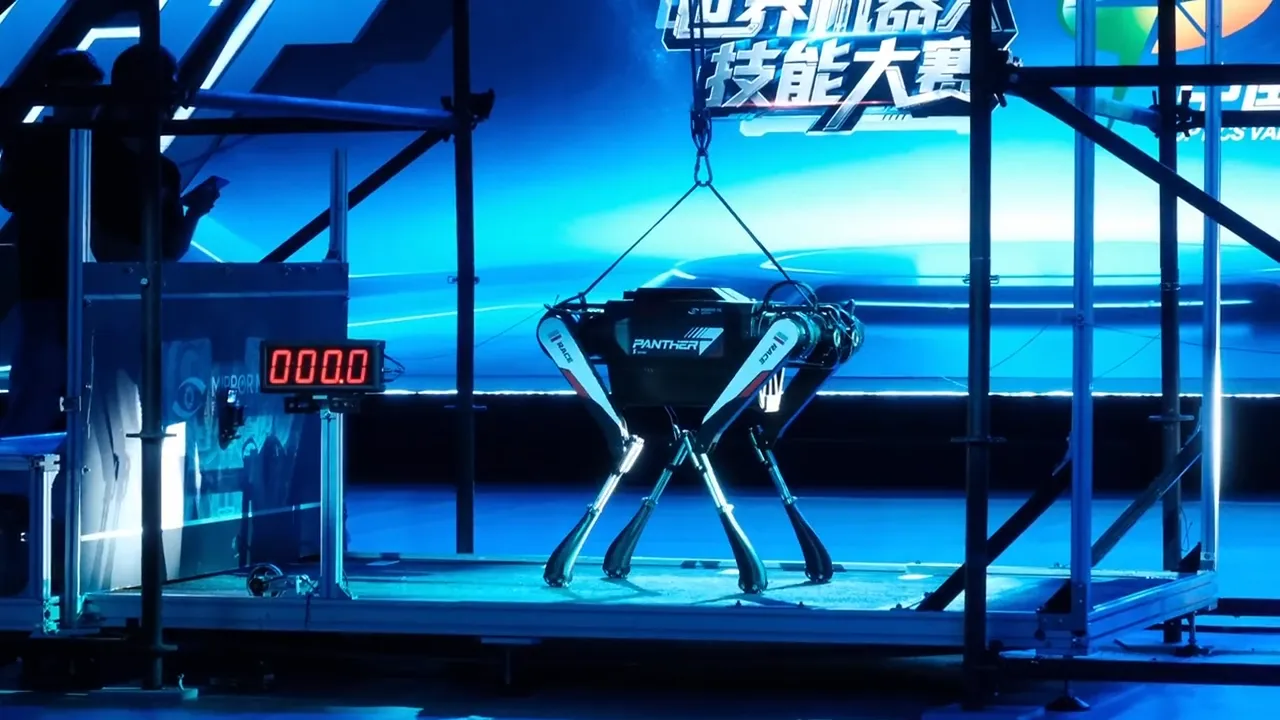
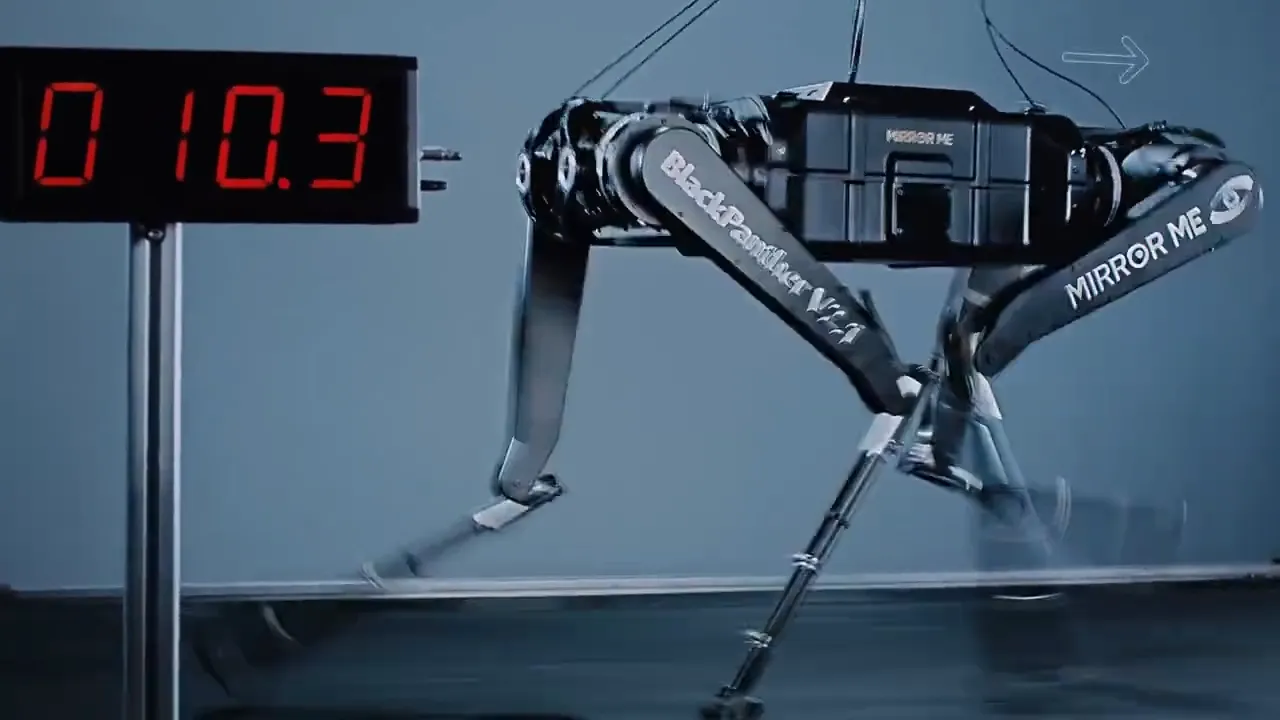
The robot has demonstrated exceptional performance, completing a 100-meter sprint in 13.17 seconds and reaching a peak speed of 9.7 m/s, with internal tests reportedly exceeding 10–13 m/s, making it one of the fastest quadruped robots ever recorded.

Connectivity

  • CAN FD Broadcast Communication Protocol: Enhances data transmission efficiency between joints and control system.

Capabilities

  • Ultra-High-Speed Running:
    Capable of sprinting at speeds exceeding 10.9 m/s, surpassing many existing quadruped robots.
  • Dynamic Stability Control:
    Maintains balance at extreme speeds using advanced control algorithms.
  • Spring-Assisted Locomotion:
    Uses elastic energy storage in joints for efficient running cycles.
  • High-Frequency Gait Execution:
    Achieves rapid stride rates (~5 Hz) for sustained high-speed motion.
  • Adaptive Terrain Traversal:
    Designed to maintain performance across flat and moderately uneven surfaces.