

Enquire about Robot

Simply fill up the form, our team will then reach out to you to connect to the relevant parties who can help facilitate your request.

Brand & Model
All fields required. Refer to our privacy policy for questions.
Thank you! Your submission has been received!
Oops! Something went wrong while submitting the form.
HomeRobots

Dive-LD

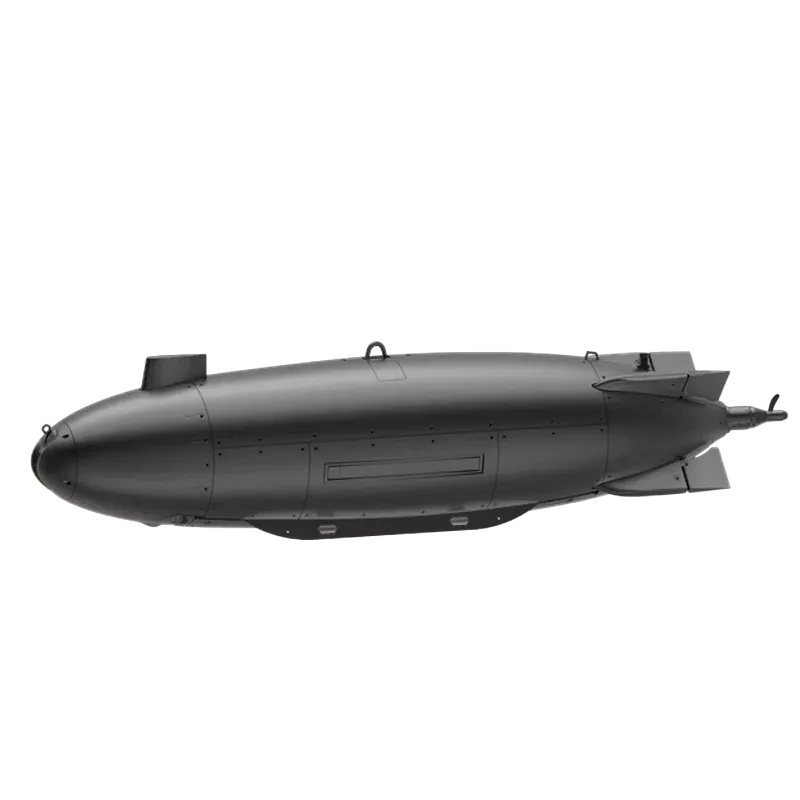
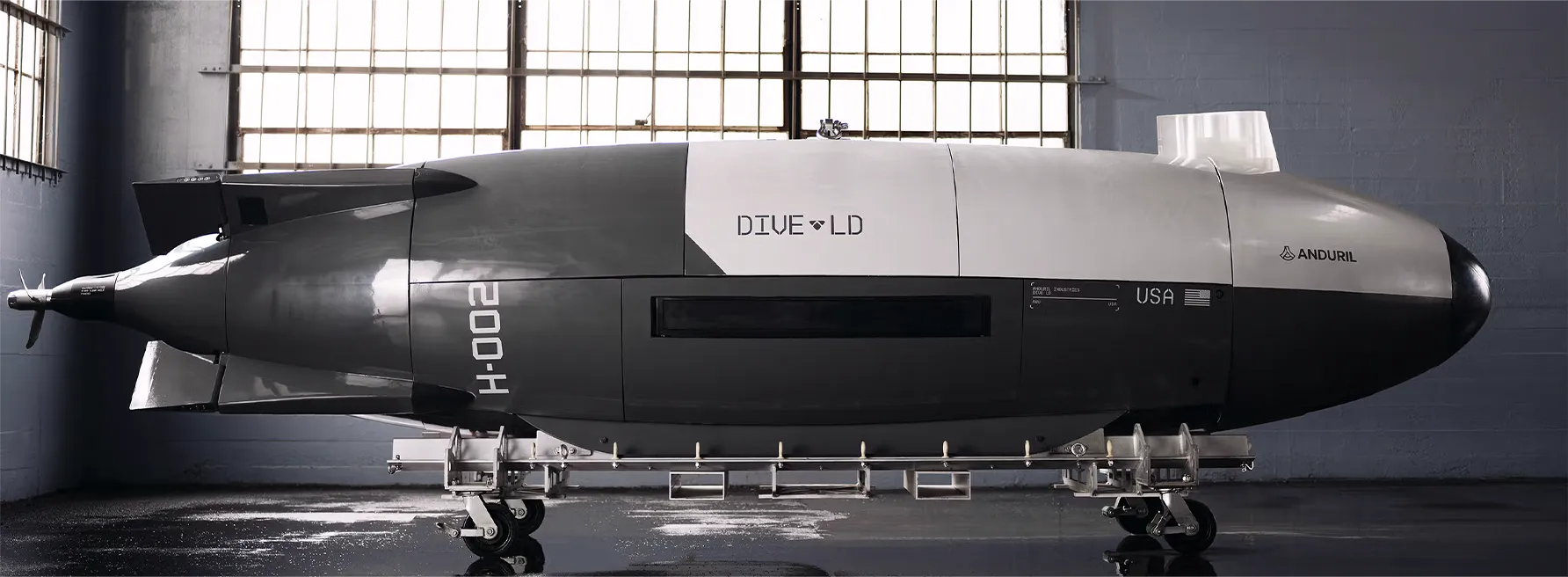
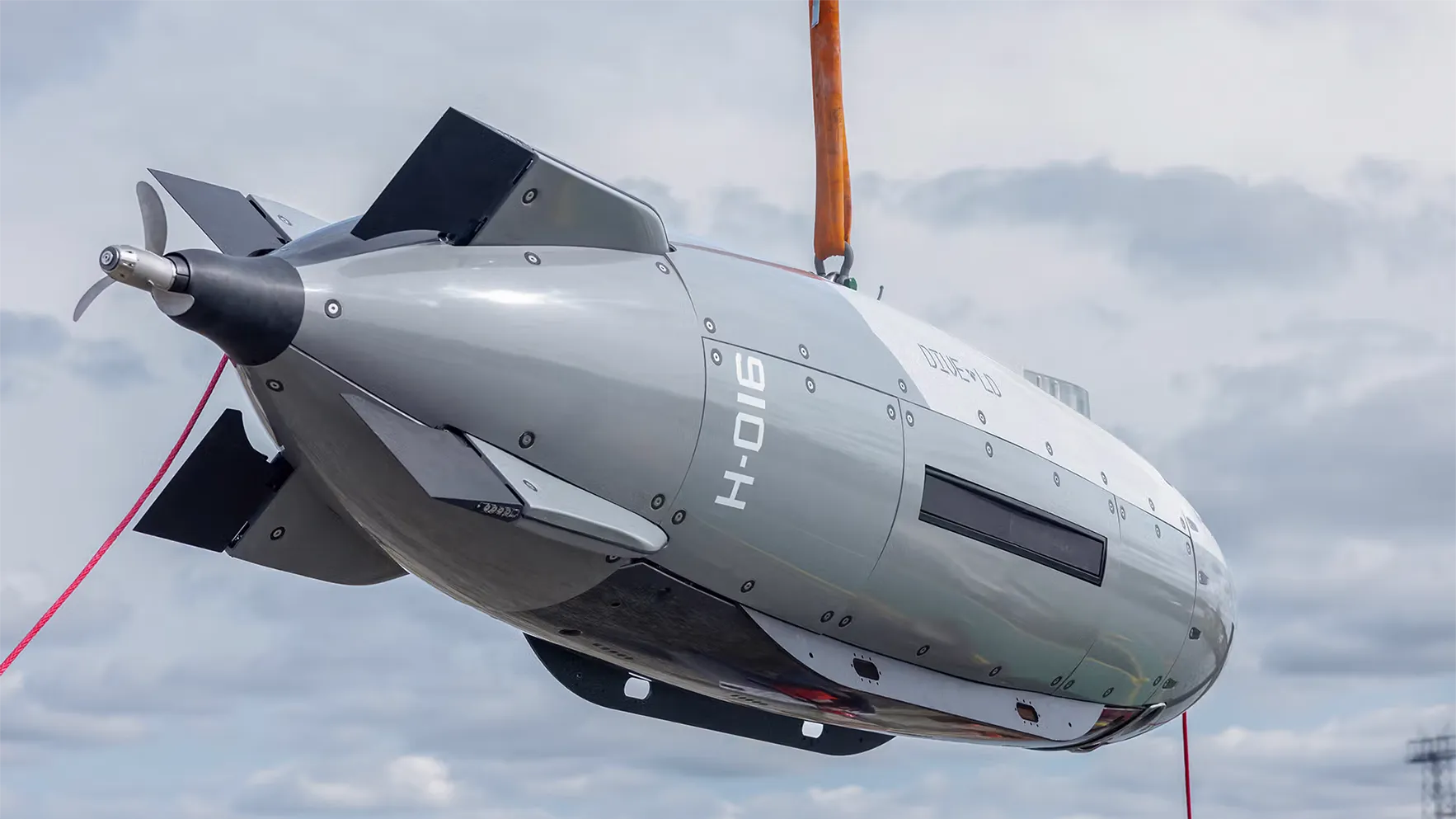
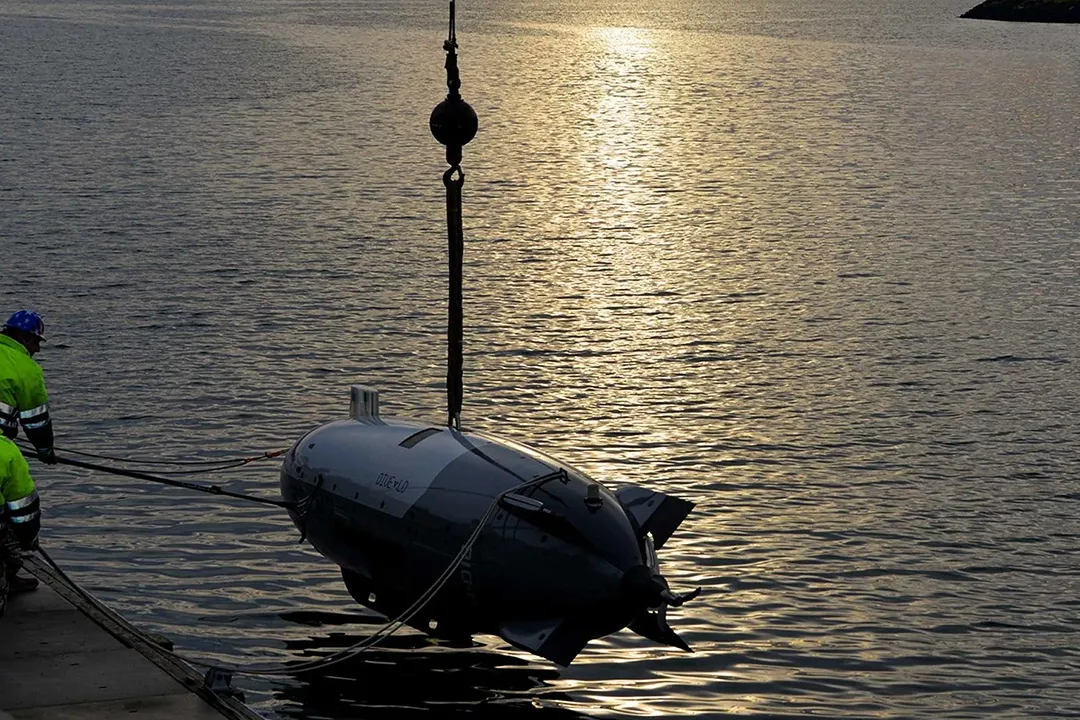
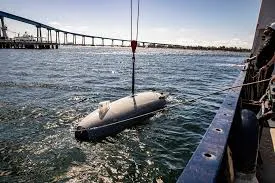
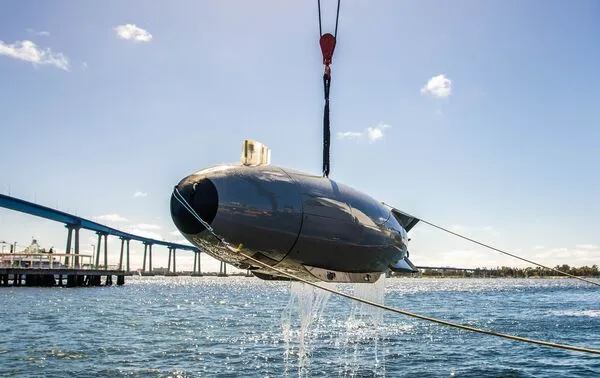
Dive-LD is a deep-rated large UUV providing long-endurance undersea ISR, seabed mapping, and flexible payload integration for defense and commercial operations.
Software Type
Closed Source
Software Package
Uses Anduril Lattice OS, an AI-powered mission tasking and monitoring program.
Aparobot Readiness Score
ARS?
0
...
Actuators
Uses direct drive electric propulsion.
Compiute
Sensors
Modular payload include Side-Scan Sonar, Synthetic Aperture Sonar (SAS), Sub-Bottom Profiler, Multi-Beam Echo Sounder, Magnetometer, Cameras, and other integrated payloads depending on configuration.
Max Op. time
14400
mins

Recent Robot Videos

*Aparobot claims no ownership of videos posted unless otherwise stated.
Description text
Date

Robot Brief

The Dive-LD is a large-displacement Unmanned Underwater Vehicle (UUV) developed by Anduril Industries for deep-water and littoral undersea missions requiring persistent autonomy, scalable endurance, and high payload flexibility. Designed with a modular architecture and advanced manufacturing processes (including large-format additive manufacturing), Dive-LD supports extended autonomous operations, deep ocean access up to 6,000 m, and rapid integration of complex sensor suites, making it suitable for defense ISR, seabed mapping, mine countermeasures, and inspection tasks.

Use Cases

  • Undersea ISR & reconnaissance:
    Provides autonomous, persistent underwater intelligence and situational awareness.
  • Deep-sea survey & mapping:
    High-resolution bathymetric and seabed imaging over long distances.
  • Mine countermeasures & ASW support:
    Detects seabed hazards, mines, and submarines.
  • Infrastructure inspection:
    Inspects subsea cables, pipelines, and structures.
  • Environmental & scientific missions:
    Collects data in deep oceanography and environmental monitoring.

Industries

  • Defense & Military:
    Maritime ISR, ASW, MCM, and distributed undersea deterrence.
  • Ocean Mapping & Survey:
    Geophysical and bathymetric data collection.
  • Commercial Inspection:
    Offshore energy and infrastructure monitoring.
  • Scientific Research:
    Deep-sea exploration and data acquisition.

Specifications

Length
-
5800
mm
Width
-
1200
mm
Height (ResT)
-
mm
Height (Stand)
-
mm
Height (Min)
-
mm
Height (Max)
-
mm
Weight (With Batt.)
-
2700
kg
Weight (NO Batt.)
-
kg
Max Step Height
-
mm
Max Slope
+/-
-
°
Op. Temp (min)
-
°C
Op. Temp (Max)
-
°C
Ingress Rating
-
No items found.

Intro

The Dive-LD is a large-displacement autonomous underwater vehicle (AUV) developed by Anduril Industries to enable persistent, long-range, and deep-water undersea missions with minimal human involvement. Designed for defense, maritime security, and commercial subsea operations, Dive-LD emphasizes endurance, modularity, and high-confidence autonomy, allowing it to operate independently for extended periods in environments where communications are limited or denied.

From a navigation and positioning standpoint, Dive-LD employs a high-accuracy aided Inertial Navigation System (INS) comparable in class to systems from Kearfott, iXblue, Northrop Grumman LITEF, or similar vendors. This INS is tightly coupled with a Doppler Velocity Log (DVL), pressure-based depth sensors, and GPS/GNSS when surfaced, enabling precise localization throughout a mission. When operating without GPS for extended durations, the vehicle supports acoustic navigation aiding such as Ultra-Short Baseline (USBL) and Long Baseline (LBL) positioning. For high-end or covert mission profiles, Dive-LD is architected to support advanced navigation techniques such as Terrain Referenced Navigation (TRN) and Magnetic Anomaly Navigation, allowing sustained submerged operations with estimated position error below 0.1 % of distance traveled (CEP50) over short unaided intervals.

The power system is based on a modular lithium-ion battery architecture, using high-energy-density, pressure-tolerant battery modules optimized for deep-water operation. Depending on mission configuration, battery capacity is estimated to range from tens of kilowatt-hours to well over 100 kWh, enabling multi-day endurance without surfacing. This modular approach allows operators to trade payload volume for endurance and simplifies maintenance, logistics, and future technology upgrades.

Structurally, Dive-LD uses a free-flooded, modular hull design that supports rapid integration of payload sections such as sonar arrays, ISR sensors, environmental instruments, or mission-specific equipment. Additive manufacturing techniques are leveraged to accelerate production, reduce cost, and enable fast iteration. To support scale, Anduril has established production capacity at its Rhode Island manufacturing facility, targeting output of up to 200 Dive-LD vehicles per year, positioning the platform not as a bespoke asset but as a mass-producible autonomous undersea system.

Connectivity

  • Supports acoustic modem-based communications for submerged command, control, and telemetry. Example modem classes include systems comparable to WHOI Micro-Modem, EvoLogics, or Teledyne Benthos, operating across multiple frequencies and standards (including JANUS-compatible protocols). These links enable low-to-medium data-rate (kbps-class) transmission for health monitoring, mission updates, and limited data exchange while submerged.
  • When surfaced, the vehicle uses satellite and RF communications for beyond-line-of-sight connectivity. This includes Iridium-class SATCOM and potentially higher-bandwidth maritime satellite systems (e.g., Inmarsat-class, Starlink-class, configuration-dependent). These links support mission re-tasking, software updates, and bulk data exfiltration.
  • A Fiber-Optic Tether option is supported for development, testing, or specialized operational scenarios, enabling high-bandwidth data transfer and direct vehicle control when required.
  • Integrates natively with Anduril’s Lattice OS, providing unified mission planning, execution monitoring, autonomy supervision, and post-mission data exploitation across multi-domain operations.

Capabilities

  • Deep-water endurance:
    Up to 10 days autonomous operation; scalable with battery modules.
  • Deep dive capability:
    Rated to 6,000 m operational depth.
  • Modular payload support:
    Rapid integration of sonars, sensors, and mission kits.
  • High payload capacity:
    Supports multiple concurrent sensor systems.
  • Autonomous mission execution:
    Launches, navigates, and completes missions without constant control.
  • Low logistical footprint:
    Deployable from piers, vessels, or other platforms with minimal support.