



Intro
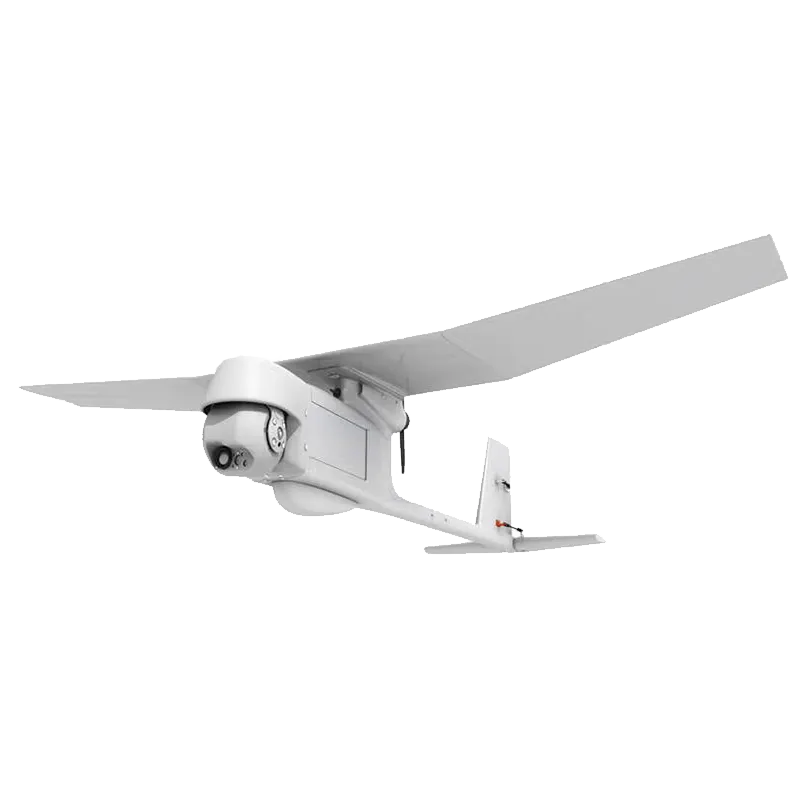
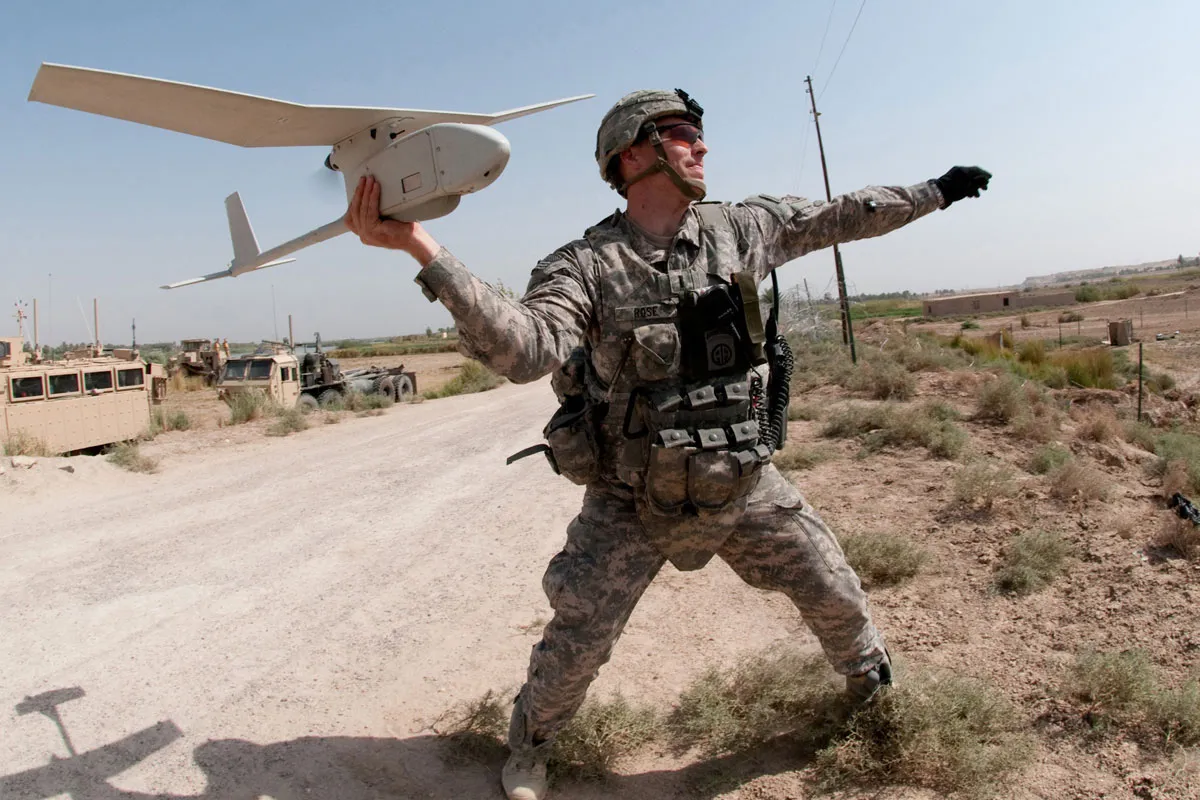
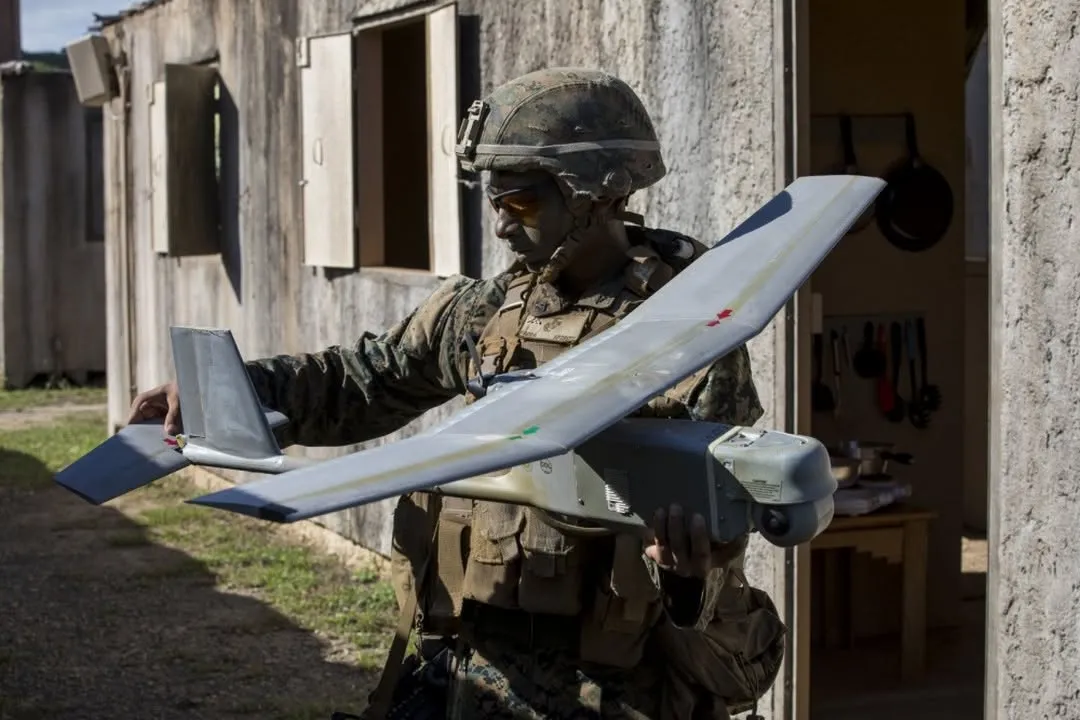
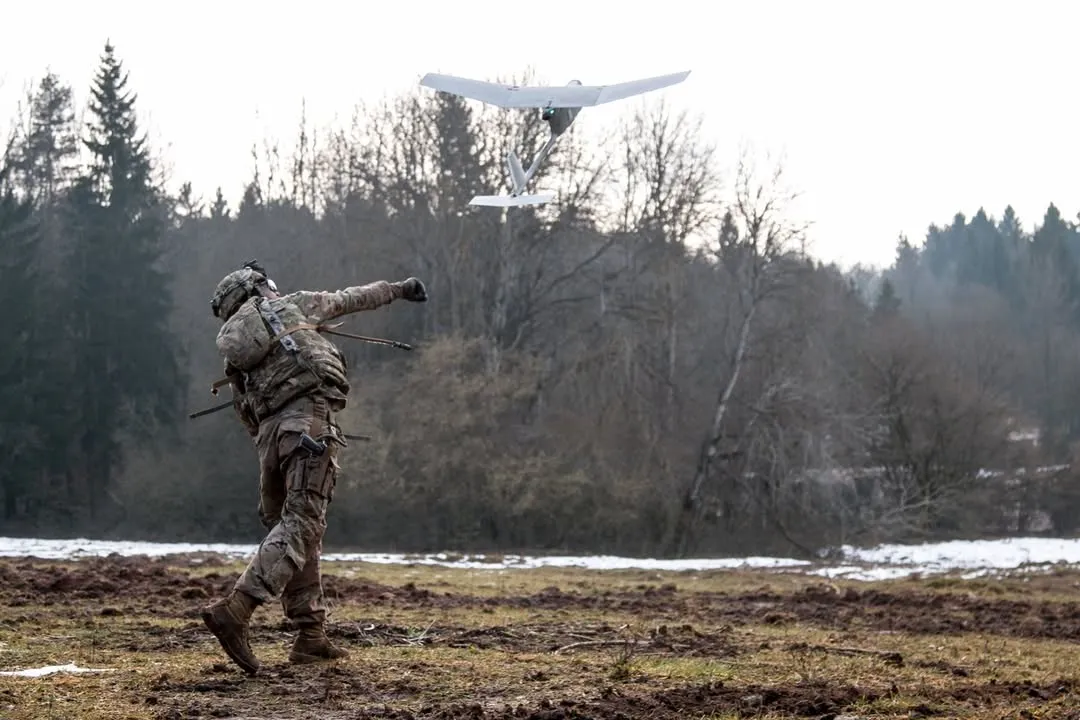
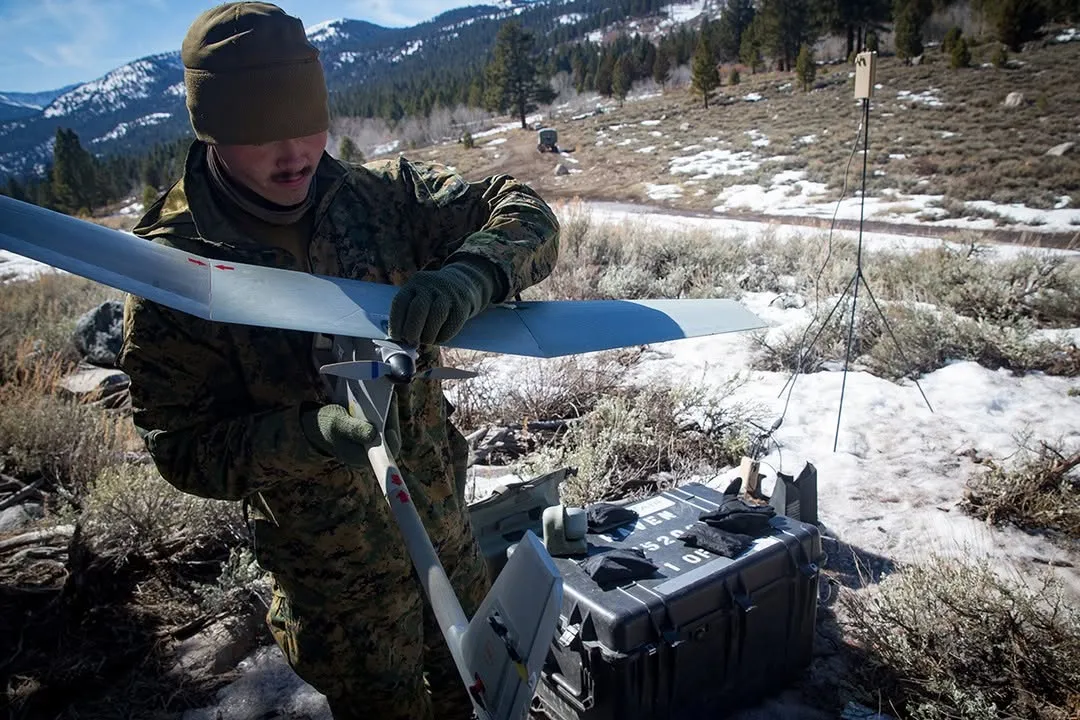
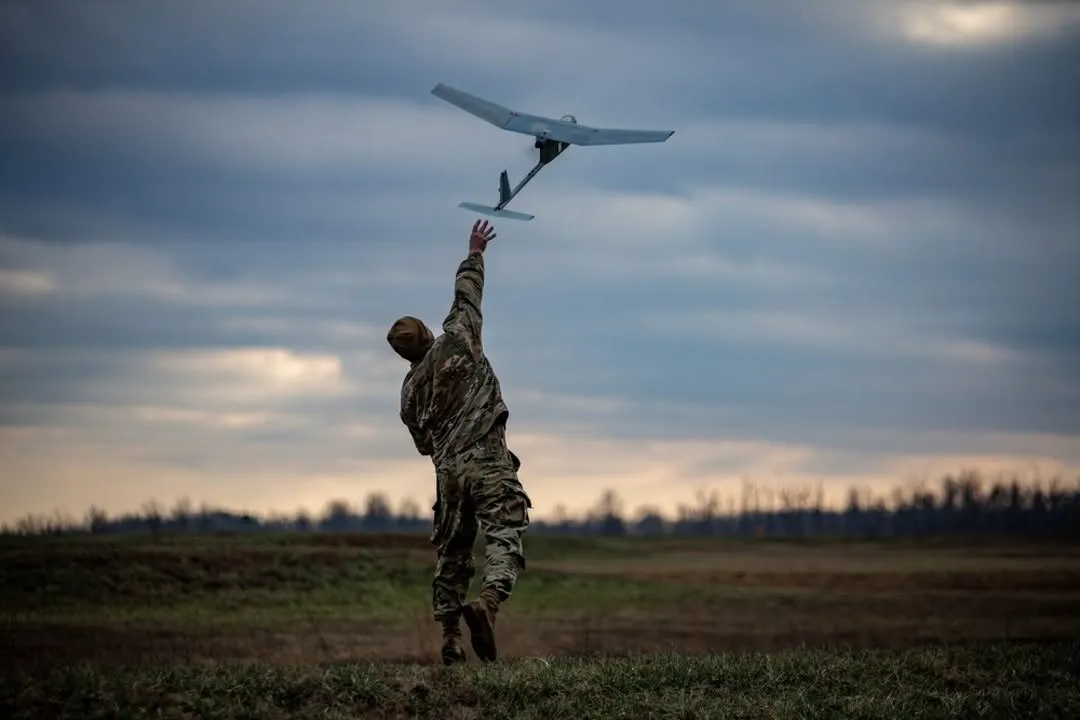
The Raven B is a fixed-wing small unmanned aircraft system (sUAS) in the Group 1 class, designed for rapid deployment and high mobility in tactical environments. With a wingspan of 1.4 m, length around 0.9 m, and a lightweight airframe of 1.9–2.2 kg, Raven B is carried in a backpack and hand-launched by operators. Its airframe is optimized for stability and endurance, enabling missions lasting 60–90 minutes at low altitude (30-152 m above ground level, 4267 m mean sea level) with secure real-time data link to ground control.
The aircraft is propelled by a brushless electric motor driving a pusher propeller and uses an autopilot system with GPS/INS for precise navigation and autonomous waypoint flight. For recovery, Raven uses a “deep stall” landing that allows controlled descent without runway infrastructure, crucial for field use. It is designed to operate in a variety of environments, from urban terrain to open battlegrounds, with rugged construction to withstand extended deployment conditions.
Standard payloads include Mantis-series EO/IR camera systems(Mantis i23D and i23) mounted in a gimbaled or fixed configuration, providing both day-light video and infrared imagery for night operations. The system transmits live imagery and telemetry back to a portable Ground Control Station (GCS) that is interoperable with other AeroVironment UAS and command networks. Raven B’s integration with lightweight, backpackable GCS equipment allows small teams to operate it with minimal logistic support.
Raven B has been widely adopted by military forces around the world since its fielding in the mid-2000s, becoming one of the most commonly deployed small tactical UAS for front-line ISR missions. Its ease of use, reliability, and adaptability to both manual and autonomous operation have made it a mainstay for dismounted units requiring immediate aerial awareness.