

Enquire about Robot

Simply fill up the form, our team will then reach out to you to connect to the relevant parties who can help facilitate your request.

Brand & Model
All fields required. Refer to our privacy policy for questions.
Thank you! Your submission has been received!
Oops! Something went wrong while submitting the form.
HomeRobots

Roadrunner

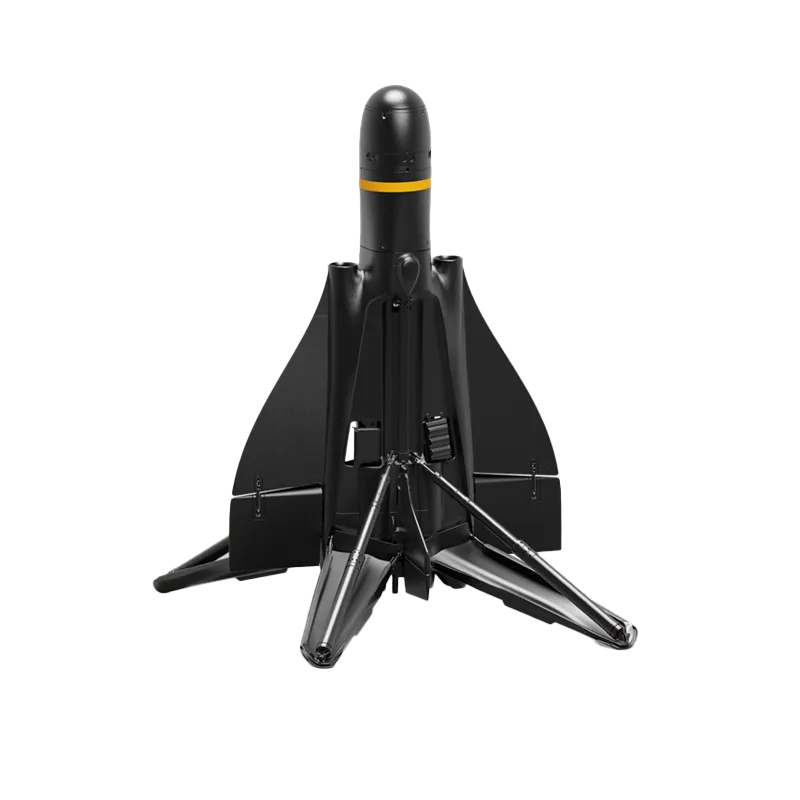
Autonomous VTOL interceptor drone designed to defeat cruise missiles and UAV threats with reusable launch capability and rapid deployment air defense.
Software Type
Closed Source
Software Package
Uses Lattice AI, Andurils's autonomous command and control system.
Aparobot Readiness Score
ARS?
0
...
Actuators
Compiute
Sensors
Can be equipped with modular payloads for ISR (EO/IR gimbals, SIGINT sensors), Electronic Warfare, communications relay, or other specialized mission system.
Max Op. time
mins

Recent Robot Videos

*Aparobot claims no ownership of videos posted unless otherwise stated.
Description text
Date

Robot Brief

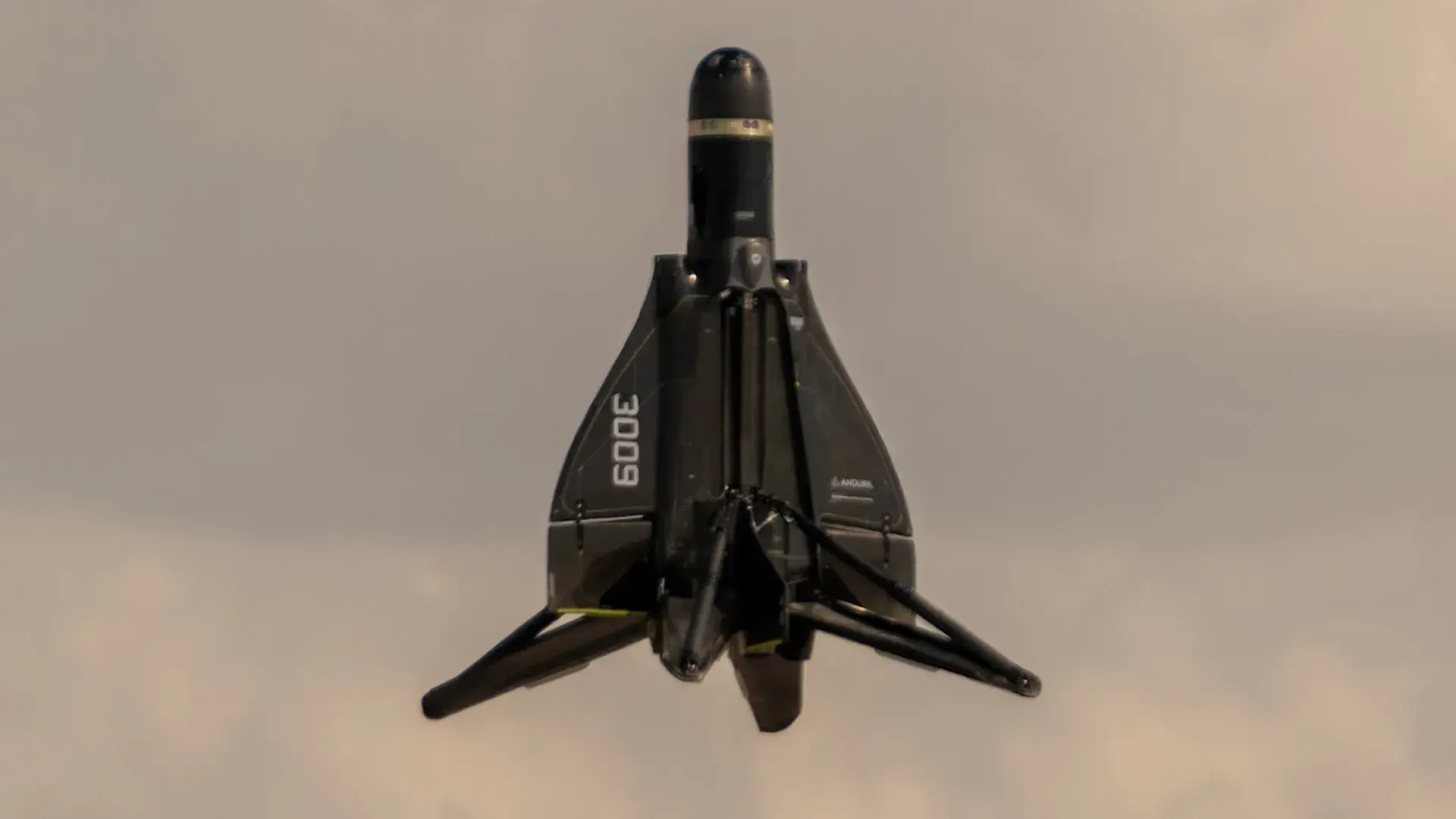
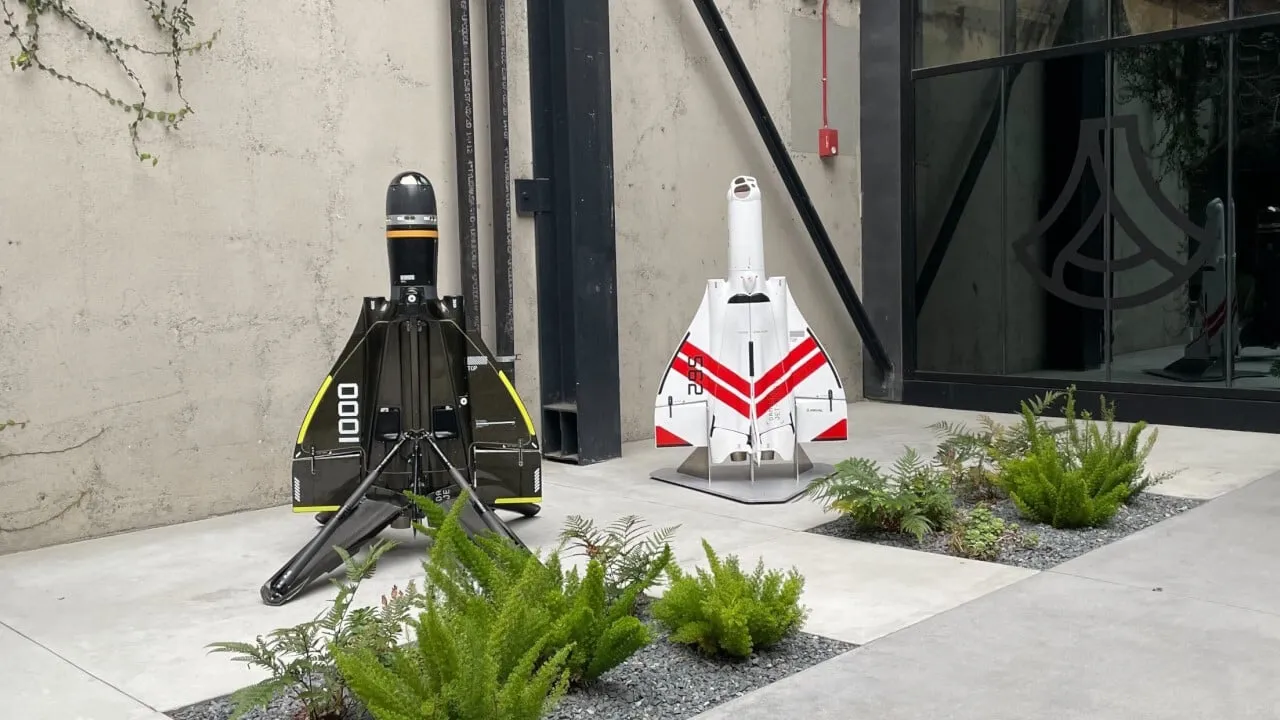
Roadrunner is a reusable, autonomous Vertical Takeoff and Landing (VTOL) interceptor developed by Anduril Industries to counter modern aerial threats such as cruise missiles and Unmanned Aerial Systems (UAS). Designed as a rapidly deployable, self-contained defense platform, it launches vertically from a ground-based module, autonomously identifies and intercepts airborne threats, and can either detonate near the target (Roadrunner-M) or return safely for reuse. Physically, it resembles a compact jet-powered missile with deployable control surfaces, housed inside a modular launch container system that enables rapid deployment across military bases and strategic sites.

Use Cases

  • Autonomous Aerial Interception:
    Detects and neutralizes airborne threats such as drones and cruise missiles.
  • Counter-UAS Defense:
    Designed specifically to defeat increasingly sophisticated unmanned aerial threats.
  • Cruise Missile Defense:
    Provides terminal-phase interception capability against low-flying cruise missiles.
  • Reusable Air Defense:
    Can return to base if no target engagement occurs, reducing cost per intercept.
  • Rapid Deployment Defense:
    Containerized system allows quick installation at military or strategic locations.

Industries

  • Defense & Military:
    Primary use in national defense, base protection, and force protection.
  • Critical Infrastructure Protection:
    Secures power plants, ports, airports, and strategic facilities from aerial threats.
  • Homeland Security:
    Border and airspace defense against unauthorized or hostile drones.

Specifications

Length
-
mm
Width
-
mm
Height (ResT)
-
mm
Height (Stand)
-
mm
Height (Min)
-
mm
Height (Max)
-
mm
Weight (With Batt.)
-
kg
Weight (NO Batt.)
-
kg
Max Step Height
-
mm
Max Slope
+/-
-
°
Op. Temp (min)
-
°C
Op. Temp (Max)
-
°C
Ingress Rating
-
No items found.

Intro

The Roadrunner is a next-generation autonomous aerial interceptor and multi-mission air vehicle developed by Anduril Industries, designed from the ground up as a reusable, vertical take-off and landing (VTOL) platform for rapid, distributed deployment. Unlike traditional fixed-wing drones or missile systems, Roadrunner combines twin turbojet propulsion with advanced autonomy and modular payload bays, giving it the agility and speed of a small jet and the flexibility of a software-defined airborne system. At its core, the Roadrunner platform is engineered to operate in contested environments with minimal infrastructure, able to launch vertically from a compact launch container and achieve high subsonic flight speeds with exceptional maneuverability. Its autonomy stack enables it to perform operator-supervised missions or integrate into broader air defense sensor networks.

Roadrunner-M

The Roadrunner-M variant builds upon the core Roadrunner platform to serve as a dedicated ground-based air defense interceptor tailored for modern threats such as Unmanned Aerial Systems (UAS), loitering munitions, and low-flying cruise missiles. Roadrunner-M integrates a high-explosive warhead and enhanced engagement logic that allows it to rapidly detect, track, and intercept hostile targets identified either autonomously or through sensor cues. When a target threat emerges, Roadrunner-M is capable of vertical launch, pursuit, precision interception, and detonation near the target, providing a kinetic layer of defense. If the mission does not result in an engagement — or if the attack is aborted — Roadrunner-M can autonomously return to base and perform a vertical landing, significantly reducing the cost per engagement compared with single-use interceptor missiles.

Nest

To support continuous readiness and rapid response, Roadrunner and Roadrunner-M are paired with Nest, a networked automated hangar system that serves as a mobile base of operations for storage, maintenance, environmental conditioning, and launch preparation. The Nest enclosure is equipped with integrated environmental controls and health monitoring systems that ensure the aircraft are maintained within operational parameters and ready to launch within seconds. Designed for expeditionary and distributed deployment, the Nest can be transported to forward operating bases or strategic sites, enabling rapid force projection without the need for traditional runways or complex infrastructure. When connected to broader defense networks and command systems — including Anduril’s AI-driven Lattice command and control software — Nest functions as a launch node that can autonomously dispatch units based on threat detections or operator directives.

Collectively, Roadrunner, Roadrunner-M, and the Nest system represent a cohesive shift in how air defense is conceptualized: a reusable, software-defined airborne asset optimized for modern threat environments and scalable defense architectures. Their design philosophy blends high-performance aerospace capabilities with modularity and autonomy, enabling a single operator to manage multiple assets across a theater of operations while reducing overall lifecycle costs through reuse and rapid turnaround.

Connectivity

Capabilities

  • Vertical Takeoff & Landing (VTOL):
    Eliminates need for runways; rapid deployment capability.
  • Autonomous Targeting:
    AI-driven detection, tracking, and engagement.
  • Reusable Return-to-Base:
    Can land safely if unused.
  • High-Speed Interception:
    Subsonic jet-powered interception of airborne threats.
  • Networked Air Defense:
    Operates within a larger sensor and command network.