- What are the key challenges that a robot could be facing in a fire disaster situation?
- he core solution strategy involving coordinated use of specialized UAVs (recon), UGVs (firefighting/penetration), and UUVs (underwater search).
- Robotics extends the rescue window and minimizes risk to human life, requiring trust in the technology and addressing ethical/autonomy challenges.
Image a place where air is thick with smoke, the ground beneath your feet shifts shifts with every breath, and the loudest sound is the terrible silence of ruin and your heartbeat. This is the disaster zone—a terrifying landscape that could be created by fire, flood, or earth tremor. In these critical first hours, the clock is not just ticking; it's counting down. Every second matters for those trapped beneath the debris.
For decades, the Search and Rescue (SAR) mission has been carried out by courageous human, often risking their lives to enter buildings on the verge of collapse. But today, a new breed of rescuer is stepping into the void: the disaster robots.
From the nimble UAVs (Unmanned Aerial Vehicles) that soar above the wreckage, to the rugged UGVs (Unmanned Ground Vehicles) that crawl through the dust, and even the articulated snake robots or what we called Serpentine that maneuver and penetrate deep into tight spaces, these machines are humanity’s electronic shield.
Yet, sending a sophisticated machine into a chaotic disaster zone is not like sending it into a neat factory floor. The environment is hostile, unpredictable, and actively trying to destroy the technology meant to help. The real story of disaster robotics is one of relentless innovation against immense odds. Let’s look at the terrifying gauntlet these metallic heroes must run to save a single life.
The Inferno and the Gauntlet of Fire
When fire rips through a building or sweeps across a forest, it doesn't just burn; it creates a dynamic and lethal environment. For quadrupeds, the challenges are immediate and extreme:
- The Heat Barrier:
The most immediate enemy is extreme heat. Standard electronics and plastic casings melt, fry, and fail quickly. A robot deployed to fight a factory fire must be built like a tank, armored with heat-resistant alloys and specialized coatings to protect its core CPU and motors from being cooked alive. For a robot, failure isn't just a breakdown; it’s being neutralized mid-mission, often in the very spot where a victim might be found. - The Blindfold of Smoke:
Thick, churning smoke blinds both the robot’s cameras and the human operator controlling it from outside. Visual sensors become useless. This forces the robot to rely on thermal imaging (IR) to "see" the world, desperately searching for the slightest heat signature—the sign of a trapped survivor—through the choking blackness. - The Risk of Re-collapse:
The structure a robot is exploring is compromised and actively failing. Every step taken by a tracked UGV or every slight tremor it causes risks triggering a secondary structural collapse. The robot must be light, quick, and intelligent enough to assess stability on the fly, calculating where to step without bringing the ceiling down on itself or, worse, on a survivor.

UAVs or drones are essential for providing overhead mapping and immediate situational awareness, giving the operators a complete understanding of the latest situation, but the fire itself fights back in the air:
- Ascending Turbulence:
The immense heat from a large fire creates powerful updrafts and unpredictable wind shear (known as thermal columns or pyrocumulus). These forces can easily destabilize a light drone, requiring constant, intense adjustments from the flight controller or the pilot just to maintain position. - Meltdown Proximity:
UAVs need to fly close enough to a fire zone (especially in forest fires or large industrial complexes) to capture high-resolution thermal images and pinpoint the fire's edge. However, getting too close risks having the high radiant heat melt the drone's plastic or composite airframe and damage sensitive equipment like batteries and rotors. - Smoke Obscurement:
While thermal cameras can cut through some smoke, heavy smoke columns can still obscure the ground or the roofline of a building, hindering accurate 3D mapping and visual assessment from above.
The Drowning World of Flash Floods
Floods turn our world into a torrent of churning mud and debris. This environment demands that robots be as capable under water as they are on land, facing completely different forces.
- The Battle Against the Current:
Flash flood waters move with incredible power. Any UGV or quadruped sent into these conditions must resist being swept away. This means they must be fully sealed (waterproof) and heavy enough to maintain traction on slippery, muddy ground while powerful currents push against them relentlessly. Getting stuck in the muck means the end of the mission. - Navigating the Murky Deep:
Whether dealing with a river that has burst its banks or a flooded subway tunnel, the water is rarely clear. It’s filled with sediment, toxic runoff, and heavy debris. UUVs (Unmanned Underwater Vehicles) cannot use cameras to navigate. They must rely on sophisticated sonar and acoustic sensors to map submerged obstacles like cars, fallen trees, and broken infrastructure—the same clutter that could quickly snag a propeller or a communication tether.
The Shifting Graveyard of Earthquakes
Earthquakes create a battlefield of concrete, twisted rebar, and unstable wreckage. The mission here is not only to find survivors but to reach them deep inside the rubble pile.
- Penetrating the Void:
A survivor often lies in a small, life-saving air pocket known as a void. Reaching them requires robots that can navigate openings no larger than a shoebox. This is the domain of small crawling UGVs and snake robots. Their challenge is to slither through confined, abrasive spaces without getting jammed, transmitting back a clear image of the interior. - The Communication Black Hole:
Deep inside a collapsed structure, concrete walls, steel reinforcement, and debris act as a shield, completely blocking wireless communication and GPS signals. The robot is effectively deaf and blind to the outside world. - The Light in the Darkness:
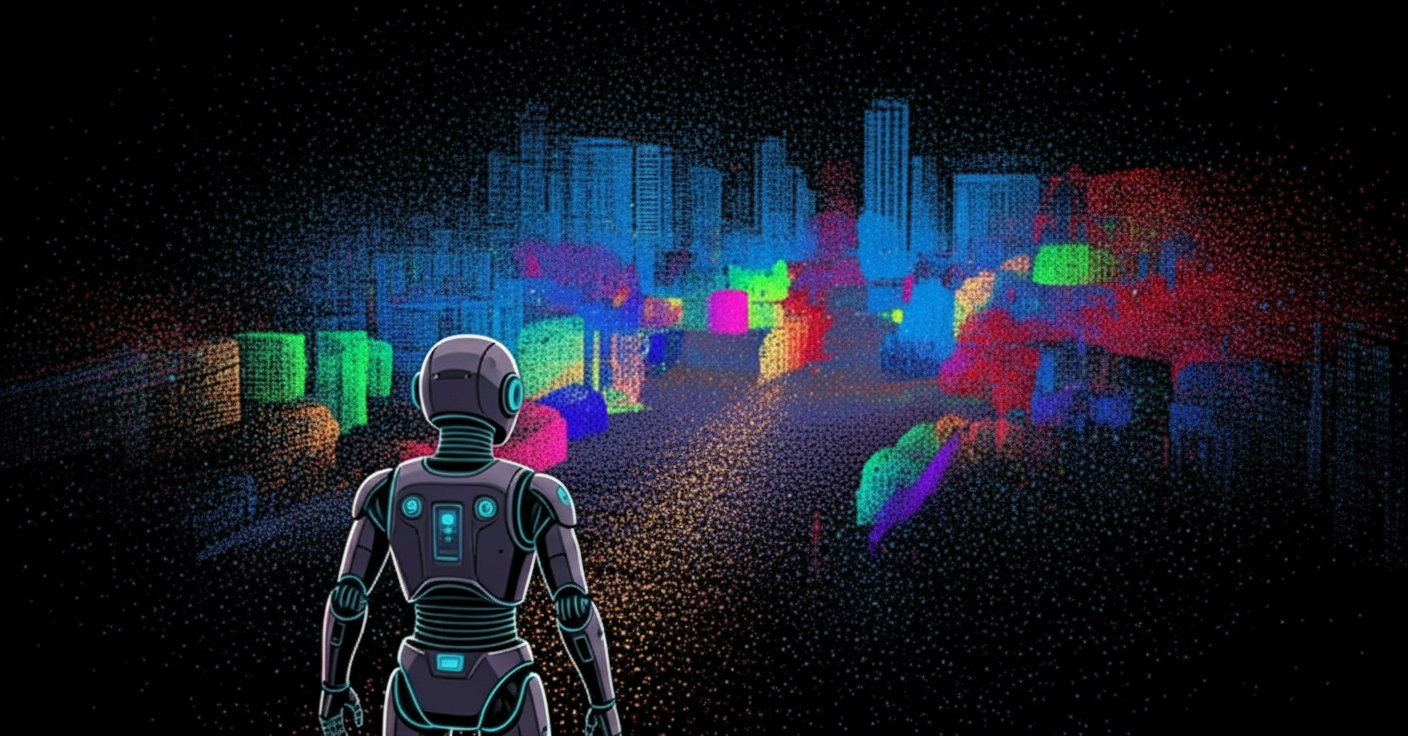
In this chaotic, unstable environment, robots will rely heavily on AI and computer vision. They must perform SLAM (Simultaneous Localization and Mapping)—building a 3D cloud point of the environment and figuring out where they are in it, all at the same time, without a human constantly guiding them.
Notable Robotic Companies
Shark Robotics
Hailing from France, Shark Robotics captured the world's attention with their robot, Colossus, during the tragic 2019 Notre-Dame Cathedral fire.
- Product Specialism:
Colossus is the giant among firefighting robots, famous for its extreme thermal resilience and long endurance—it operated for over ten hours at Notre-Dame, long after humans were forced to evacuate. Its strength lies in its modularity and massive payload capacity, able to haul hoses, clear debris, and provide powerful fire suppression. - The Companion:
Its "little brother," the Rhyno Protect, is more agile. Crucially for environments involving water and dust, the Rhyno Protect boasts an IP65 ingress protection rating (Colossus is IP67), guaranteeing it can withstand jets of water and fine particulate, protecting its delicate electronics while it cools the fire.
Howe & Howe Technologies
The Power of the BlastFrom the United States, Howe & Howe Technologies (now part of Textron Systems) specializes in raw power, designing machines that are essentially robotic battering rams with high-volume cannons.
- Product Specialism:
Their Thermite RS3 is a true industrial heavyweight UGV. Its power is measured in sheer output: a monstrous 2,500 gallons of water or foam per minute, allowing it to attack large-scale blazes from a distance of over 300 feet. The Thermite is built on military-grade tracks, giving it the traction and durability to navigate rugged, industrial disaster sites, pushing aside vehicles and debris with ease. It's the robot you send when you need a massive, sustained assault on a hazardous fire like a chemical plant or oil tank.
Blueye Robotics
Develops user-friendly underwater drones specifically marketed to public safety agencies (fire and police) for quick, localized SAR. Their focus is on ease of use and robust camera systems to cut through moderately turbid water for immediate, visual assessment.
- Product Specialism:
The Blueye X3 is a lightweight UUV specializes in user-friendly, quick-deployment underwater visual inspection and light recovery for public safety and SAR teams. It's built as an adaptable platform, featuring three guest ports to easily integrate crucial SAR tools like sonar, manipulators/grippers, and positioning systems.
Conclusion: The Partnership of Tomorrow—A Call to Action
The challenges facing Search and Rescue robots are staggering, but they are met with equally fierce innovation. From the heat-shunning armor of the Thermit RS3 to the silent sonar mapping of the BlueEye X3, every piece of technology represents a hard-won victory against the chaos of disaster.
The future of Search and Rescue isn't about one type of robot doing everything; it's about a highly coordinated team of specialized robots working together, each covering the other's weakness. We call this Heterogeneous Multi-Robot Teaming, and it dramatically reduces the time it takes to find and save a life. By working as a networked team, the robots turn a blind, dangerous mission into a data-driven, systematic operation, fundamentally reducing the need of risking a life.
For instance, in a high-rise fire disaster, search and rescue relies on a coordinated team of robots: UAVs (drones) first perform Aerial Reconnaissance, using thermal imaging and LiDAR to instantly create a 3D digital map of the structure, identifying fire sources and safe access points. Next, a heavy-duty, tracked UGV with specialized heat-resistant alloys is deployed for Ground Intervention. Its task is to penetrate the structure, suppress the core fire with its water cannon, and stabilize the environment. Finally, a nimble quadruped robot or snake robot takes on the role of Deep Search and Support, navigating the cleared path to locate survivors by detecting their heat signatures and exhaled using gas sniffers, while providing communication and basic supplies.
Yes, these machines cannot replace human heroes at the moment, they are providing them a third hand, a third eye, and the power to go where mortality dictates they cannot. They are extending the precious time window for rescue by performing the 3D mapping, heavy lifting, and deep penetration that is too risky or slow for humans.
The ultimate goal is not just finding a survivor, but guaranteeing that the rescue is executed with maximum speed and minimum sacrifice.
About the author