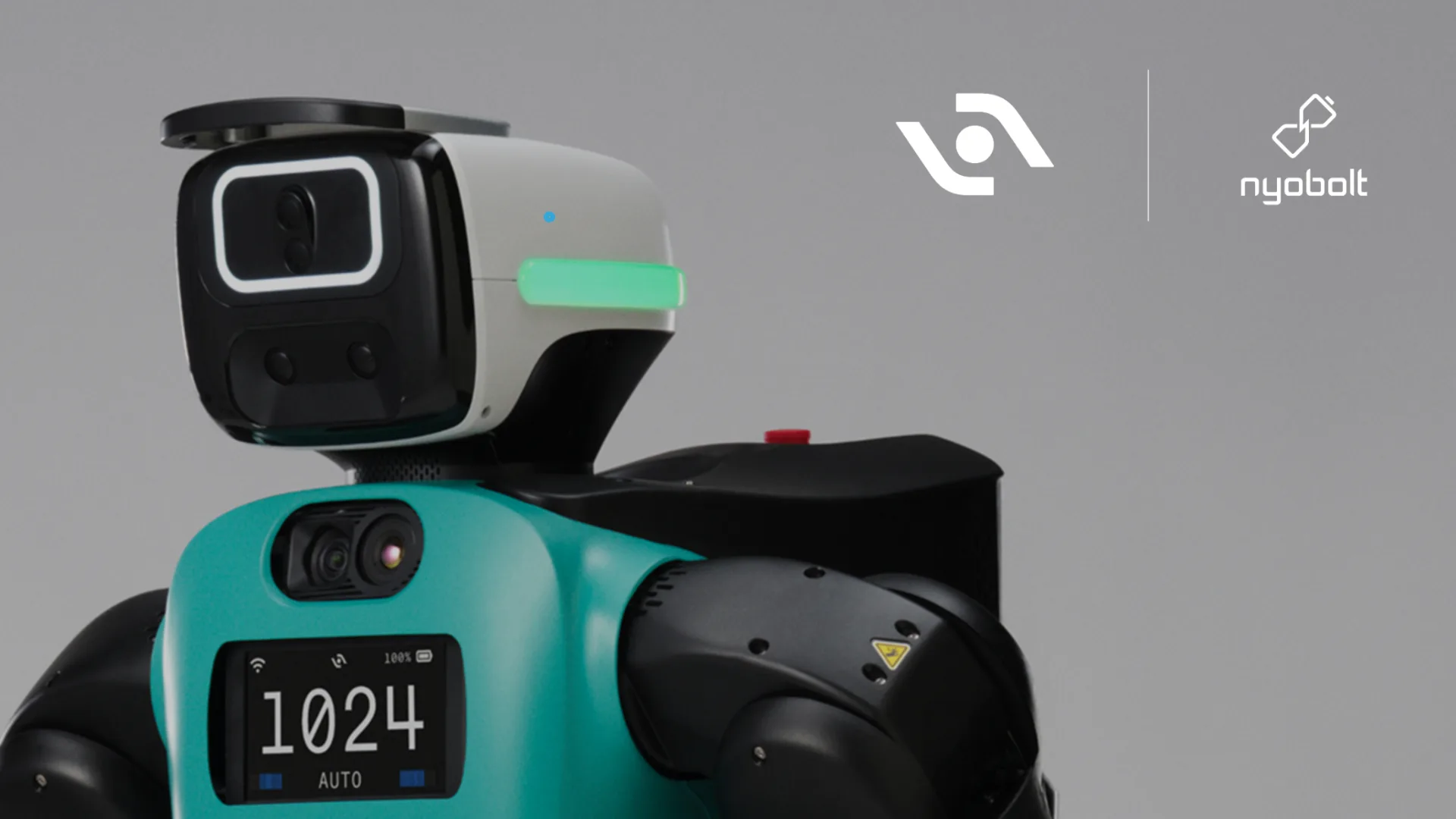
- Agility Robotics has named Nyobolt as battery supplier for its Digit 5 humanoid.
- Agility claims 90 minutes of work per 9-minute charge, a 10:1 ratio against 2:1 on Digit 4.
- Agility says that allows more than 20 working hours in 24.
- Early access is expected in the first half of 2027. No price has been published.
Agility Robotics has chosen Nyobolt, a battery company based in Cambridge, UK, to supply the battery system for its Digit 5 humanoid, the two companies said on 15 October 2026 (Agility and Nyobolt release). Agility says the pack runs Digit 5 for 90 minutes and recharges in 9 minutes. That is a run-to-charge ratio of 10:1, against 2:1 for the previous model, Digit 4. Agility says this lets the robot work more than 20 hours in a 24-hour day. Early access to Digit 5 with the Nyobolt battery is expected in the first half of 2027.
Why it matters
For anyone costing a humanoid for a warehouse or factory, charging time decides how many shifts one robot can cover.
Agility frames uptime as the core of its pitch. "For our customers, Digit's uptime is the business case," said Daniel Diez, Agility's chief business officer (release). A robot that sits on a charger for one hour in every three needs more units, or more spare robots, to cover a 24-hour operation. Cutting that to 9 minutes in every 99 changes fleet sizing.
What is proven, demonstrated and claimed needs separating. Digit 5 was announced on 15 September 2026 (Digit 5 release) and the battery figures were public then. What is new is the named supplier. Agility's own product page says Digit 5 is in development and that its specifications are preliminary estimates from internal testing on pre-production hardware (product page). So the 10:1 ratio is a company claim, not a field result.
The deployment evidence that does exist belongs to the older model. Agility reports more than 65,000 hours of Digit 4 operation with customers including GXO, Schaeffler, Amazon and Toyota Motor Manufacturing Canada, and more than USD 300 million in multi-year Digit 5 orders as of May 2026, subject to contractual milestones (Digit 5 release).
Timing is the other buyer point. Early access is set for the first half of 2027, with broader availability over the following six to nine months (release). No unit price has been published. The release also lists reliance on Nyobolt as its exclusive battery supplier among its risk factors, which matters to anyone planning a fleet around one pack.
Nyobolt was founded in 2019 (release). Its website lists warehouse robots and humanoids as one of three target markets, next to data centres and autonomous vehicles (Nyobolt). The Robot Report reports that it raised USD 60 million in May 2026 at a valuation of USD 1 billion (The Robot Report).
What run-to-charge ratio means for uptime
Run-to-charge ratio compares how long a robot works on one charge with how long it then spends charging. It is a simpler number than battery capacity for a buyer, because it translates straight into working hours.
Take the two ratios Agility gives. The arithmetic below is Aparobot's, not Agility's. At 2:1, a robot works two hours, then charges for one. Over 24 hours that is at most 16 working hours. At 10:1, with 90 minutes of work and 9 minutes of charging, each cycle lasts 99 minutes, so the ceiling rises to about 21.8 hours. That is a ceiling. Real sites also lose time to travel to the charger, queues and maintenance, so field figures will sit below it. Agility's own claim is "more than 20" hours.
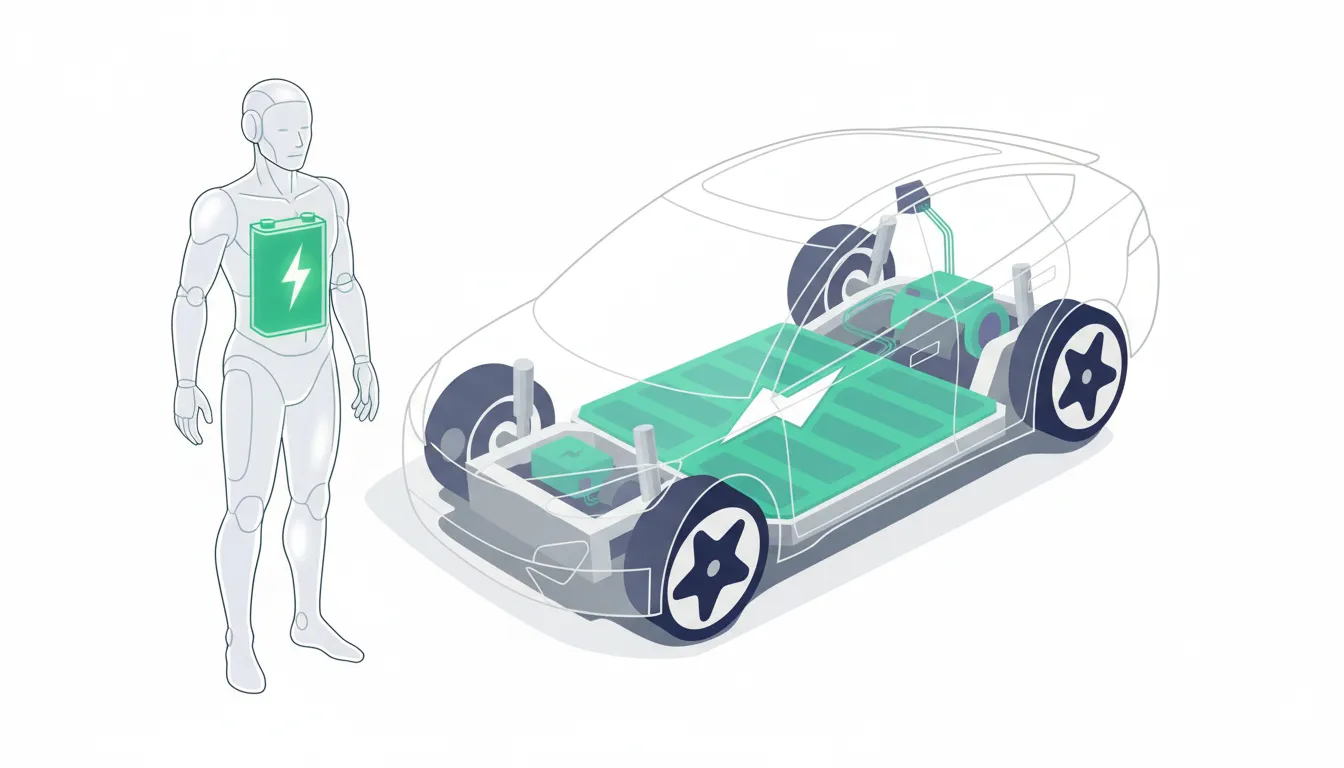
There are two common ways to get high uptime. One is fast charging, the route Agility has taken: the battery stays in the robot and refills quickly. The other is battery swapping, where a depleted pack is exchanged for a charged one, by a person or a station. Swapping needs spare packs and a process; fast charging needs high-power chargers and cells that tolerate many quick charges.
That last point is the hidden cost. At 10:1, a robot runs about 14 to 15 charge cycles a day on Aparobot's arithmetic. Battery life is counted in cycles, so the replacement interval and cost of the pack become part of the cost of ownership.
Aparobot's view: the ratio is the right number to ask for, but buyers should treat it as a target until it is measured on a customer site.
Questions to ask the vendor
- Is the 90-minute runtime measured with a full 50 lb payload, and on what task? The product page says the figures come from pre-production testing.
- How many charge cycles is the Nyobolt pack rated for, and what does a replacement pack cost and take to fit?
- What charger power and floor space does each robot need, and is the charger included in the price?
- Nyobolt is named as the exclusive battery supplier. What happens to spares and service if that supply is disrupted?
Sources
- Agility Robotics selects Nyobolt as its ultra fast charging battery technology partner for Digit 5, PR Newswire, 15 October 2026
- Agility unveils Digit 5 humanoid robot, PR Newswire, 15 September 2026
- Agility Robotics, Digit 5 product page
- Nyobolt website
- The Robot Report, Agility chooses Nyobolt for ultra-fast charging for Digit 5 humanoid, 15 October 2026
About the author