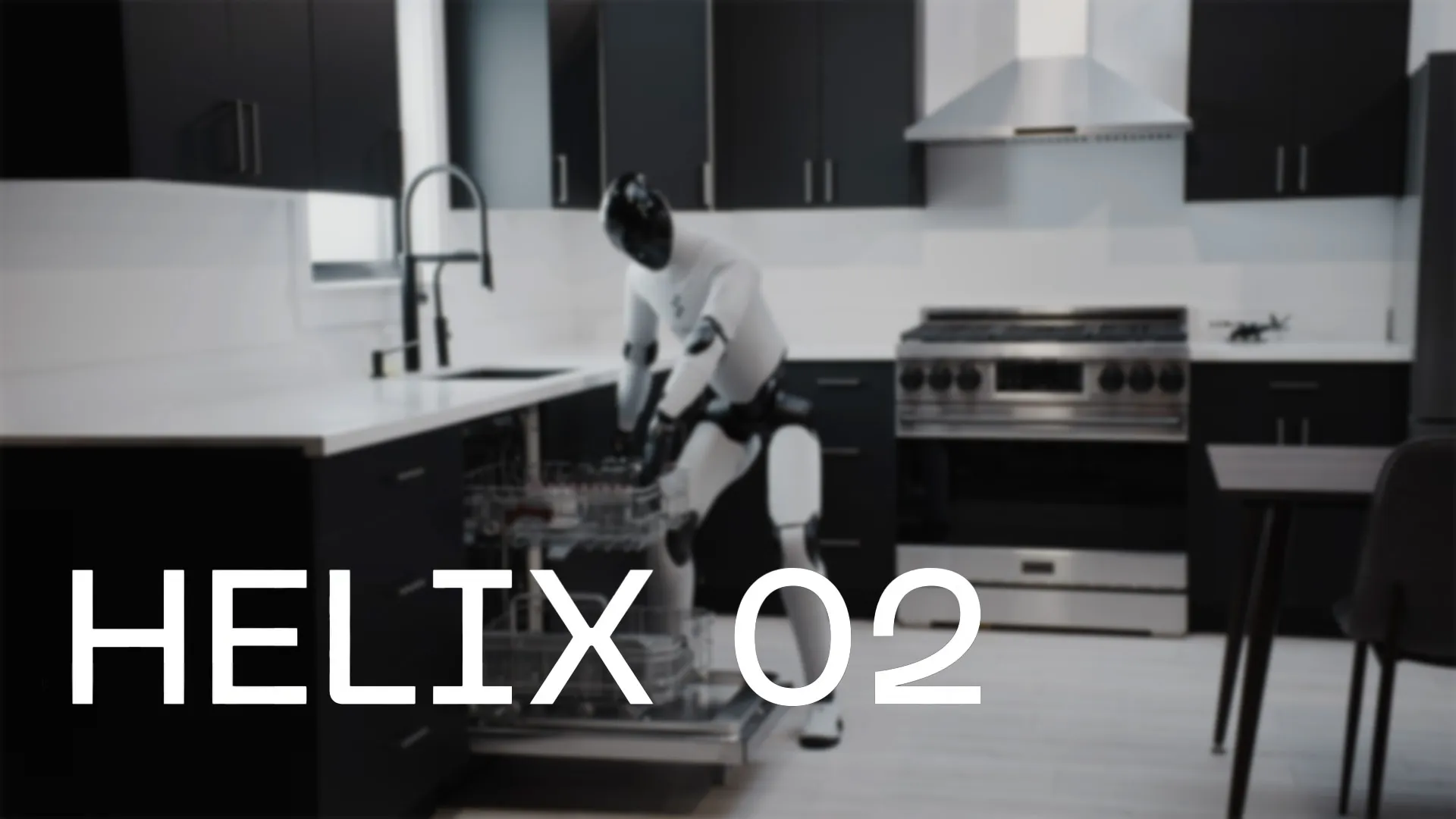
- Helix 02 introduces new layered architecture, System 0 for fast balancing.
- Figure 03 features new hardware, palm cameras and fingertip sensors that can detect a feather-light 3 grams of force.
- Following an 11-month deployment at BMW, where Figure 02 loaded 90,000+ parts for 30,000 cars, the team identified the wrist as a key failure point.
Figure AI unveiled Helix 02, the company's 2nd-generation VLA model that represents a fundamental shift in how humanoid robots interact with our world. While the original Helix was a breakthrough in "thinking", Helix 02 is about "doing", unifying walking, balancing and complex manipulation into one seamless full-body system.
The Anatomy of Intelligence: Architecture of S0, S1 and S2
To understand how Helix 02 works, think of it not as a single computer program, but as a digital mimic of the human nervous system. Figure uses a "tri-system" architecture, where three layers of intelligence work at different speeds to keep the robot moving and thinking.
- System 0 (S0):
The "Spinal Cord" (1 kHz): Imagine you are walking across a rocky beach. You don’t "think" about every ankle adjustment; your spinal cord and cerebellum handle it instantly. S0 is this instinctive layer. Operating at 1,000 times per second, it manages balance and biomechanics. Trained on over 1,000 hours of human motion data, S0 is the reason the robot can now move with a natural, fluid rhythm instead of a stiff "clunk." - System 1 (S1):
The "Motor Cortex" (200 Hz): This is the bridge between seeing and doing. System 1 uses a "pixels-to-whole-body architecture," a unified neural network that treats the robot and its surroundings as a single, coupled system. Like your motor cortex, S1 takes in visual data and tactile feedback from Figure 03's sensors (Head, palm and fingertips) and translates it into joint movements. If S0 keeps the robot standing, S1 is what allows it to reach out and grab a cup with millisecond-precision, even if the cup is moving. - System 2 (S2):
The "Brain" (7–10 Hz): This is the high-level planner. S2 is a 7B-parameter VLM—the part that understands when you say, "Go to the kitchen and find the medicine box." It "thinks slow" so the other systems can "act fast," breaking down complex human requests into logical physical goals.
Figure 03's Sixth Sense: Full-Body Proprioception
In one of the most significant updates on Figure's official site, the company introduces "proprioception" as a native pillar of the Helix 02 architecture. In humans, proprioception is our "sixth sense"—the internal awareness that allows you to touch your nose with your eyes closed or know exactly where your feet are as you climb stairs without looking down.
In the original Helix 1, proprioception was mostly "visual" and limited to the upper body; the robot had to "see" its own arms to calibrate its position. Helix 02, however, treats proprioception as a native, real-time input for the entire machine. By feeding the exact state of every motor and joint back into the System 1 neural network, the robot doesn't just "see" the world; it "feels" its own presence within it.
This is the first time Figure has demonstrated neural network policies that depend on these specific senses. The tactile sensors in the fingertips can detect forces as small as three grams (the weight of a paperclip), enabling "contact-aware" grasping. This means Helix 02 can feel if it is squeezing a plastic cup too hard or if a heavy object is starting to slip, unlocking the true potential of its five-fingered hands.
The Evolution: Helix 1 vs. Helix 2
The history of Helix is a story of independence. Initially, Figure AI partnered with OpenAI to provide the "brains" for their hardware. However, in early 2025, Figure chose to path ways with OpenAI to pursue vertical integration. They believed that to truly master robotics, the brain and the body needed to be built as one.
While Helix 1 showed that a robot could sort groceries while standing still, Helix 02 allows the robot to walk into a messy kitchen, navigate around a dishwasher, and use its entire body (even its hips to nudge a drawer shut) to complete a task.
The Hardware: Figure 03 Specs
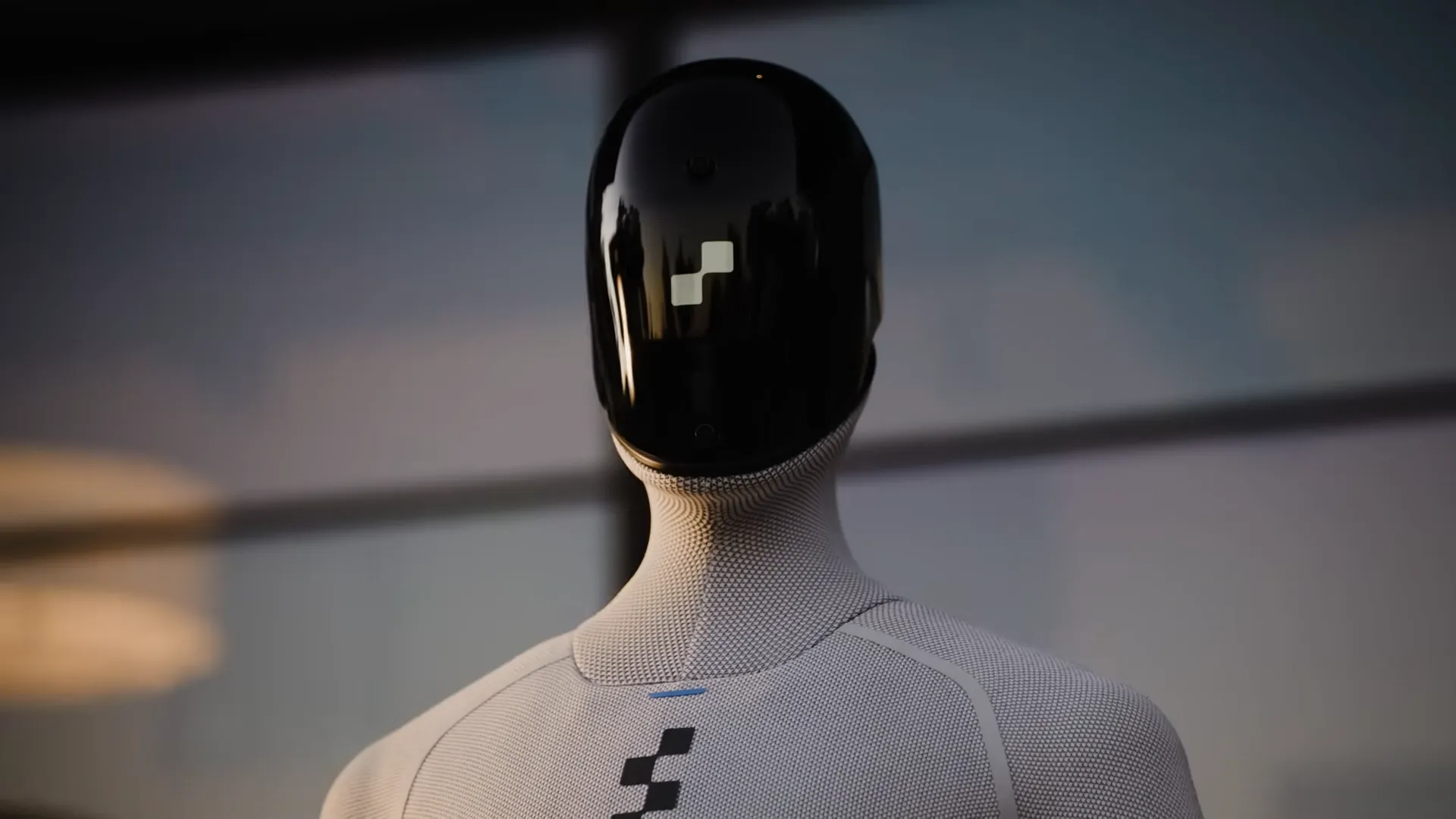
Helix 02 is the software, but it lives inside the Figure 03—a hardware masterpiece designed for mass production. Unveiled on last October, the humanoid stands at 1.7 m, weight around 60kg. The upgraded camera suite offers a 60% wider field of view, 2x faster frame rates, giving the robot a "dense" perceptual stream of its environment.
Figure AI also introduced a wireless induction charging feature, meaning Figure 03 can simply step onto a charging mat to refuel its 5-hour battery.
The Wisdom of Wear and Tear: Retiring Figure 02
While Helix 02 is the headline, it wouldn't exist without the "sacrificial" work of its predecessor. In late 2025, Figure officially retired the Figure 02 fleet following a grueling 11-month deployment at the BMW Group Plant Spartanburg.
This wasn't a controlled lab demo; it was a "battle-scarred" tour of duty that provided the most successful real-world humanoid data set in history:
- 90,000+ parts loaded into welding fixtures.
- 1,250+ hours of runtime (working 10-hour shifts, Monday to Friday).
- 30,000+ BMW X3 vehicles produced with the robot’s direct contribution
The BMW deployment was the ultimate stress test. It proved that a humanoid could maintain operational consistency—fitting into a standard 10-hour factory shift without disrupting human workflows. More importantly, it achieved industrial precision, balancing the speed of a 2-second part-load with a razor-thin 5mm tolerance on repetitive, heavy sheet-metal tasks.
Learning from Failure: The Wrist Redesign
In robotics, the most valuable data doesn't come from success, it comes from failure. Figure AI is perfectly demonstrating the "virtuous loop" where hardware and software iterate together.
During the 11-month stint at BMW, the Figure 02 forearm was identified as the top hardware failure point. The culprit? Complex internal packaging and "dynamic cabling", the messy bundles of wires that had to twist and bend every time the robot moved its hand.
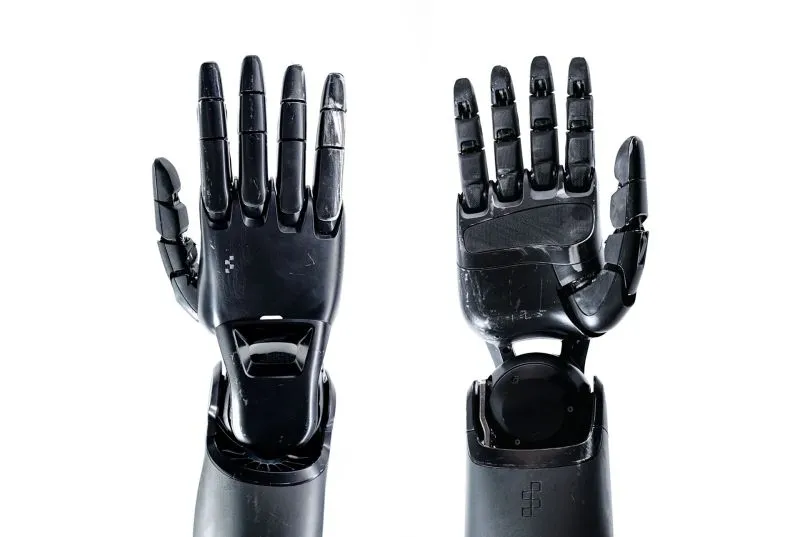
Figure’s response was aggressive and immediate. For the Figure 03, engineers performed a total "architectural overhaul" of the arm:
- Eliminated the distribution board: The wrist electronics were completely redesigned.
- Direct Communication: Each wrist motor controller now communicates directly with the main computer.
- Simplified Life: By removing the dynamic cabling and reducing part count, they didn't just fix a failure point—they improved thermal management and dramatically increased reliability for 24/7 operation.
Conclusion: Built on Experience
Figure is moving faster than its competitors because it is building on top of hundreds of thousands of hours of high-stress operational data. Figure 03 isn't just a newer model; it is a robot built from the "scars" of the factory floor. With Helix 02 as its brain and a battle-tested chassis as its body, Figure AI is no longer just testing the future, they are mass-producing it. What
About the author