.webp)
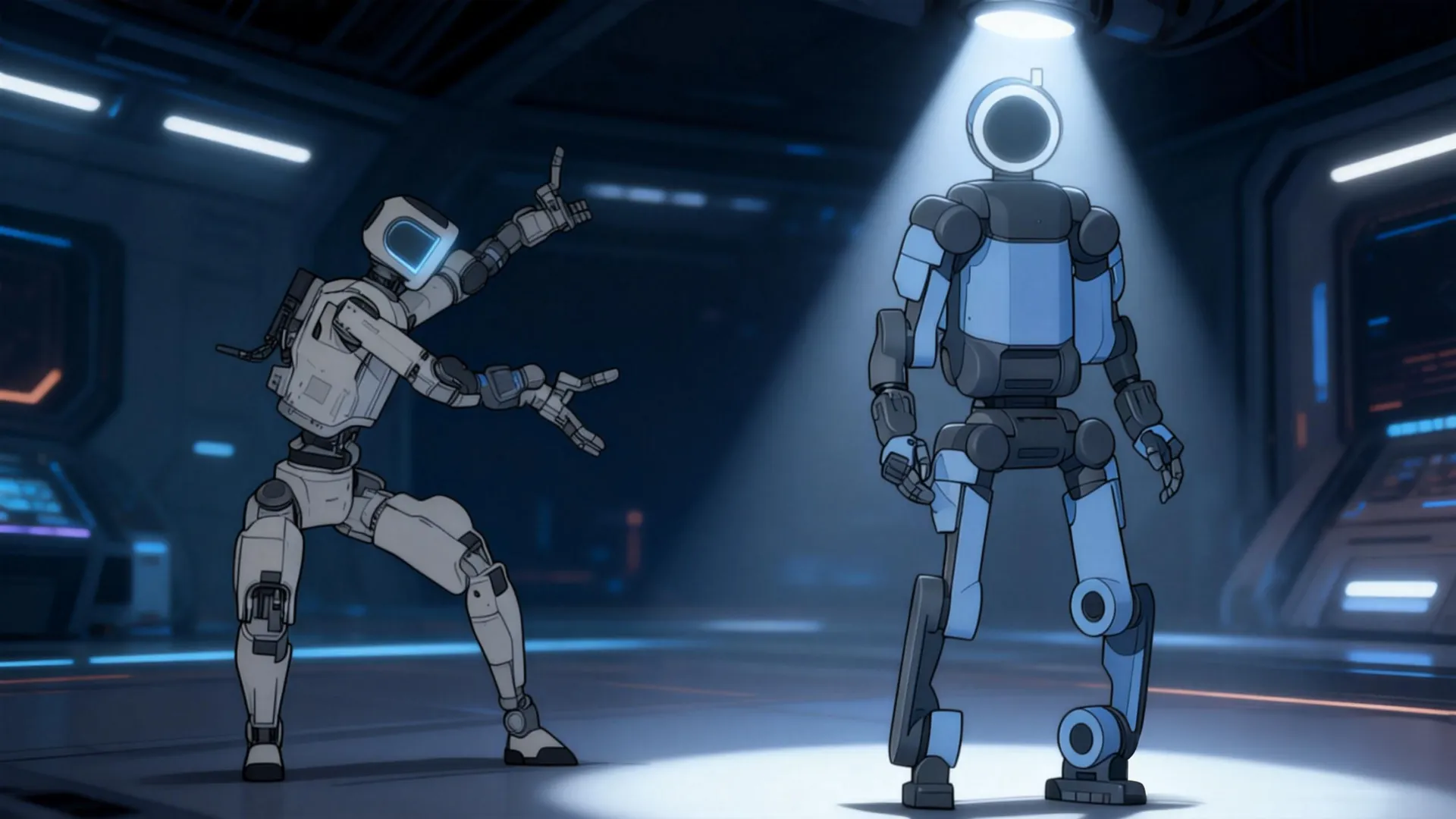
- NeodraDynamics showed Neo1, a 4-metre-class humanoid, at CIIF 2026 with JD Industrial, after a debut at WRC 2026.
- 39 of its 41 active joints use the company's own hydraulic actuators.
- Company claims a 500 kg dual-arm payload, not independently tested.
- No price, delivery date or customer deployment published.
NeodraDynamics, a Beijing robotics company, has shown its Neo1 heavy-duty humanoid at the 2026 China International Industry Fair (CIIF) alongside JD Industrial, which the company's release of 14 October 2026 names as a partner for pilot applications. Neo1 relies mostly on hydraulic joints rather than electric motors. The 4-metre-class machine has 41 active degrees of freedom, of which 39 are driven by the company's own miniature digital hydraulic actuators. NeodraDynamics claims a 500 kg dual-arm collaborative payload. The robot first appeared at the 2026 World Robot Conference in Beijing, according to an earlier company release dated 14 September 2026.
Why it matters
A heavy-payload humanoid claim needs a careful look before it shapes any buying plan.
The release targets jobs that are dangerous, heavy or both: heavy component assembly, port cargo handling, fuel transfer and maintenance in nuclear plants, subsea equipment maintenance, mining, and demolition and clearance after disasters. These are sectors where buyers already use large hydraulic machinery and where sending people in carries real risk.
What is proven, demonstrated and claimed needs to be kept apart. The robot has been physically on display at two trade events. The payload, thrust and accuracy figures are the company's own and have not been independently tested. No customer deployment has been announced. JD Industrial's role is described as providing supply chain and end-user scenario resources, with the two companies planning to verify industrial use through pilots. No contract value or timeline for those pilots has been published.
No unit price, lead time or delivery date has been published. The release says the company is in "global industrial cooperation negotiations", which suggests Neo1 is at the partner and pilot stage rather than open for orders.
The accuracy claim deserves a second look. The October release states repeat positioning accuracy of plus or minus 0.005 mm, while the September release gave fingertip repeatability of plus or minus 0.05 mm. The two may measure different things, but a buyer should ask which figure applies, and under what load and test conditions it was measured.
Aparobot's view: the main thing to watch is whether the JD Industrial pilots produce published results with named sites and hours of operation. Until then, Neo1 is best treated as a capable prototype aimed at heavy industry, not a product ready to buy.
Hydraulic versus electric actuators, and what torque density means
An actuator is the part of a robot that makes a joint move. It is the robot's muscle. Many humanoids use electric actuators: a motor, usually with a gearbox, turns the joint. Hydraulic actuators work differently. A pump pushes oil under high pressure into a cylinder, and the pressure drives a piston that moves the joint.
The useful idea for buyers is torque density, which means how much turning force a joint can produce for its weight and size. Hydraulics are known for high force from a small, light actuator, and they cope well with shocks and impacts. That is why diggers, cranes and presses use them. Electric drives are usually easier to control precisely, quieter, cleaner and simpler to maintain, which is why many commercial humanoids use them.
Hydraulic systems also bring practical costs. They need a pump, hoses and seals, oil can leak, and maintenance staff need hydraulic skills. A buyer should think about where the robot will work: a dusty mine or a demolition site tolerates some oil, while a clean factory floor or food plant may not.
A concrete example: NeodraDynamics says each of Neo1's hydraulic actuators weighs about 1 kg yet delivers "ton-level" continuous thrust. If that holds up, it is the kind of torque density that lets a humanoid lift loads in the hundreds of kilograms. The company combines this with electric drives in the two forearm rotation joints, where precise turning matters more than raw force. Mixing the two is a design choice to watch across the industry.
Specs at a glance
Figures below are company claims. See the full Neo1 record in the Aparobot database.
Questions to ask the vendor
- Under what conditions was the 500 kg dual-arm payload measured, and for how long can Neo1 hold or move that load continuously?
- What is the hydraulic maintenance schedule, including seal and fluid replacement intervals, and what happens to the robot if a hose or seal fails during a lift?
- Where does the hydraulic power come from, an on-board pump or a tethered power unit, and what runtime does that allow?
- What sites and tasks will the JD Industrial pilots cover, and will results be published with hours of operation and failure rates?
Sources
About the author