- Pi API beta announced 13 October 2026, access by waitlist
- Fine-tuning runs on Physical Intelligence's compute, inference through a hosted gateway
- Almond built a deburring model for its Axol robot after 4 days with the API
- Actor's wheel loader loads dump trucks with no operator in the machine
- No price, latency or supported hardware list published
Physical Intelligence, the San Francisco company that builds AI models for robots, said on 13 October 2026 that its latest models are now open to outside developers through a Pi API beta. A customer uploads data recorded on its own robot, the company runs the fine-tuning on computing infrastructure it manages, and the tuned model is then served back through a hosted gateway that the robot calls when it works. Access is through a waitlist. No price, response time or list of supported robots has been published.
Why it matters
The beta changes who carries the cost of teaching a robot a new task.
For a business that wants a learned skill on its robot, the usual options are to build its own machine learning team or to wait for the robot maker to ship one. Physical Intelligence had already released earlier models, π0 and π0.5, through its open-source openpi repository, but using open models still means supplying your own training hardware and expertise. The API moves the training compute and the serving to the vendor.
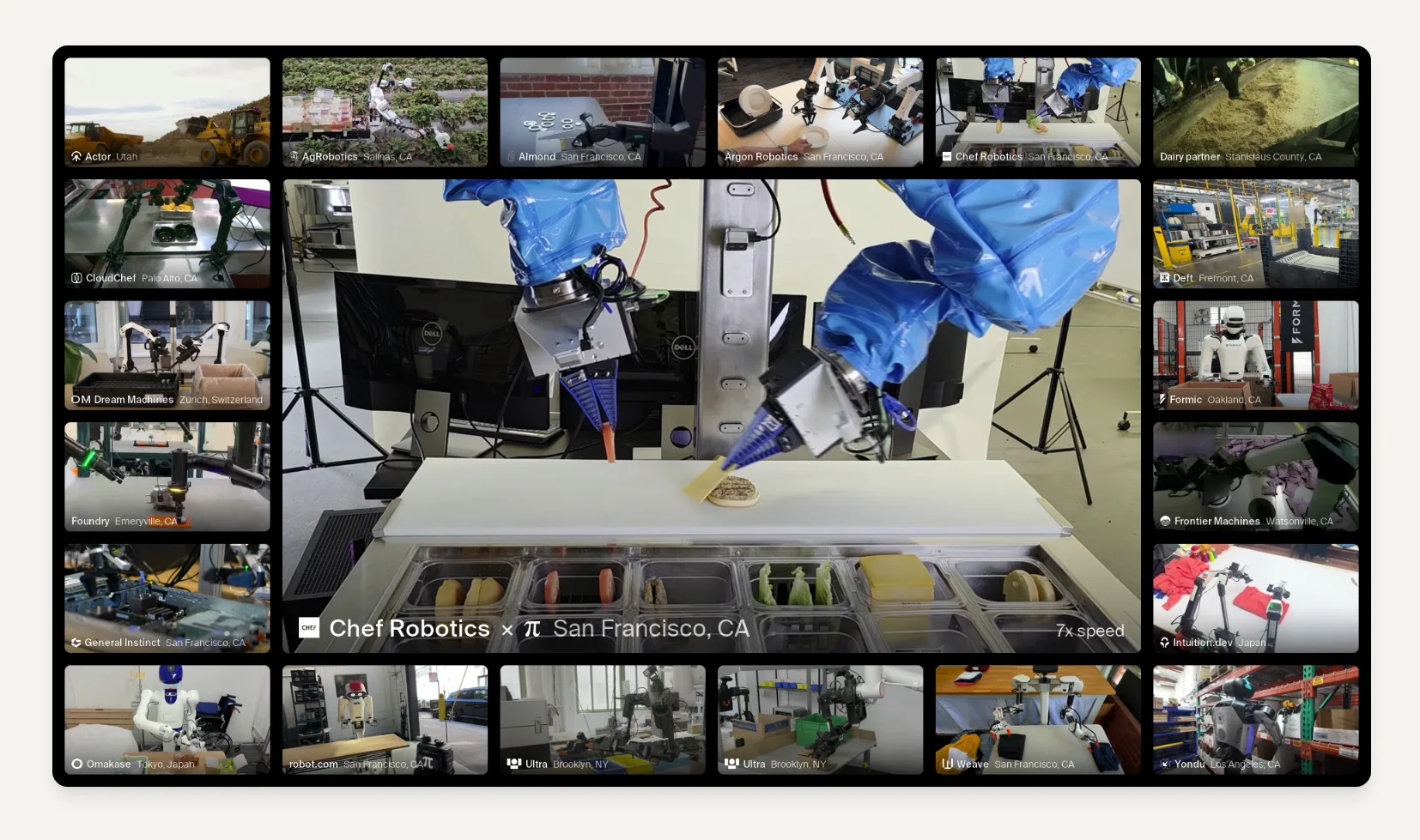
The company points to two partner deployments. Almond, a San Francisco robot maker, uses its dual-arm robot Axol to deburr spacers used in Axol's own assembly, with a model it built after four days of iterating with the API. Actor, a Utah heavy machinery firm, runs an autonomous wheel loader that scoops material and loads a dump truck in what the company calls a commercial deployment, with no operator inside the machine. AgRobotics, CloudChef, Ultra, Weave and an unnamed dairy partner are listed as partners, but no detail is given about their work.
Buyers should separate three levels here. The API's existence and the waitlist are confirmed by the company. The Almond and Actor tasks are demonstrated in company material. The statement that the newest model offers "more data-efficient fine-tuning and improved capability" is a claim with no published figures behind it.
One operational detail stands out. Physical Intelligence says most early users ran inference in the cloud, at sites from Japan and Switzerland to the United States, and that some partners hit network connectivity problems. For a factory, warehouse or farm with patchy coverage, how the robot behaves when the link drops is a deciding question.
Use cases touched: manufacturing, construction and earthmoving, food preparation and agriculture, based on the named partners.
What fine-tuning a robot foundation model means
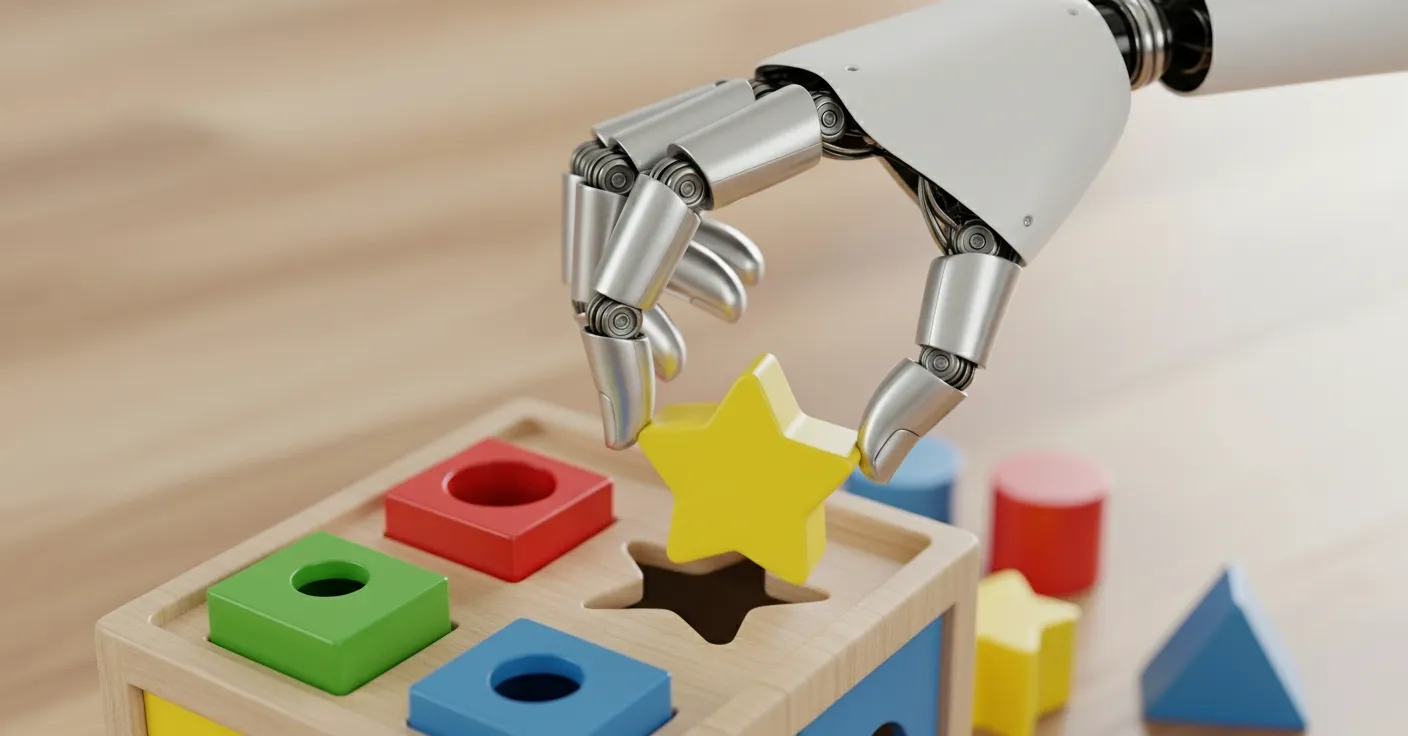
A robot foundation model is a large AI model trained on recordings from many robots doing many tasks. It learns general skills, such as how objects move when pushed or grasped, and links what the cameras see to what the arms should do. On its own, it is rarely good enough at one specific job in one specific building.
Fine-tuning is the step that closes that gap. The general model is trained further on a much smaller set of demonstrations of the exact task, recorded on the robot that will do it. Think of a new hire with broad experience who still needs a week of site training on your parts and your workstation.
Physical Intelligence describes the loop it expects customers to follow: collect demonstrations, train a model, test it on the robot, then use the failures to decide what data to collect next. Its examples of failures are ordinary: a garment that came out inside out, an ingredient that would not stay in a scoop, a part that landed in the wrong position. Almond's deburring model came from four days of that loop.
For a buyer, fine-tuning raises practical questions that a spec sheet does not answer: how many demonstrations a task needs, who owns the data and the tuned model, and whether the tuned model can run on the robot itself instead of in the cloud.
Aparobot's view: a hosted fine-tuning service lowers the entry cost for smaller robot makers, but until pricing and data terms are published, it is too early to judge whether it is cheaper than building in-house.
Key facts at a glance
ProductPi API betaCompanyPhysical IntelligenceAnnounced13 October 2026What it doesFine-tuning on company-managed compute, hosted inferenceAccessWaitlistPriceNot publishedSupported hardwareNot listedNamed deploymentsAlmond (Axol, deburring), Actor (wheel loader)
Aparobot's listing for this company is being prepared from public sources: Physical Intelligence on Aparobot.
Questions to ask the vendor
- Who owns the uploaded robot data and the fine-tuned model, and can the model be exported to run on our own hardware?
- What does a fine-tuning run cost, and how is inference billed?
- What does the robot do when the network connection drops mid-task?
- How many demonstrations did Almond and Actor need, and which robot arms, grippers and cameras have been tested?
Sources
About the author