

Intro
%20NEO%20The%20Home%20Robot%20_%20Order%20Today%20-%20YouTube%20-%200_02.webp)
1X Technologies was founded on 1 May 2014 in Moss, Norway, by Bernt Øivind Børnich under the name Halodi Robotics. Børnich, a Norwegian robotics engineer who decided at age 11 to build humanoid robots, co-founded the company alongside Phuong Nguyen (former CTO), Jørgen Sundell, and Pål Løken. The initial mission was to develop safe actuators and full-body control systems suited for industrial and healthcare robotics. From the outset, the company's core technical philosophy centred on reducing actuator inertia and friction to enable humanoid robots to operate safely and naturally alongside people, inspired by the mechanics of human tendon actuation. This led to the development of the Revo1 servo motor, a proprietary brushless DC motor with an exceptionally high torque-to-weight ratio achieved through low gear-ratio cable-driven transmission.
The company's first commercial product, EVE, was released in 2018 as a wheeled humanoid intended for logistics, security, and healthcare environments. EVE validated 1X's hardware and AI technologies in real-world deployments, with notable customers including ADT Commercial (Everon), which contracted 140 to 250 EVE units for commercial building security patrols, as well as Altopack, Strongpoint, Sunnaas Hospital, and I-Mens. In 2022, 1X rebranded from Halodi Robotics to 1X Technologies, signalling a strategic pivot toward consumer and home robotics. The rebrand coincided with a fundamental shift in product philosophy: the company concluded that truly general-purpose robot intelligence could only be developed through deployment in unstructured domestic environments, where the diversity of real-world interactions would force meaningful AI generalisation. In March 2023, 1X became the first robotics company to receive investment from the OpenAI Startup Fund, raising USD 23.5 million in a Series A2 round at a post-money valuation of approximately USD 210 million.
Following the Series A, product development accelerated significantly. NEO Beta, a bipedal humanoid designed for domestic use, was unveiled in August 2024, followed by the NEO Gamma update in February 2025, which featured a refined design, quieter operation, and expanded motion capabilities. In July 2025, 1X relocated its global headquarters from Norway to Palo Alto, California, consolidating its Norwegian and US teams to accelerate AI research and production scaling. In January 2025, the company acquired Kind Humanoid, a Palo Alto-based startup founded by former Google researcher Christoph Kohstall, bringing bipedal robotics IP and talent into the 1X fold. Pre-orders for NEO opened in October 2025 at USD 20,000 for early adopters, with initial US and Canada shipments expected in 2026. In January 2026, 1X announced significant advancements to its 1X World Model, a physics-grounded video model enabling NEO to learn from internet-scale video data and execute novel tasks without prior robot-specific training examples.
Robots
- EVE:
A wheeled humanoid robot designed for industrial and institutional applications such as logistics, security, and healthcare. It features proprietary actuation and manipulation technologies and has been deployed in pilot programs with ADT Commercial. - NEO:
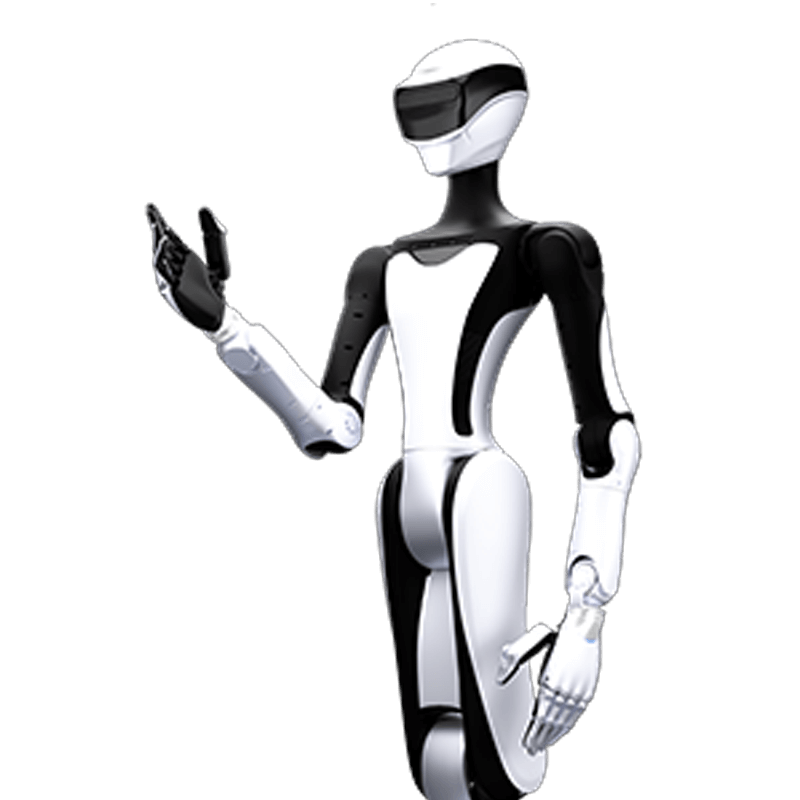
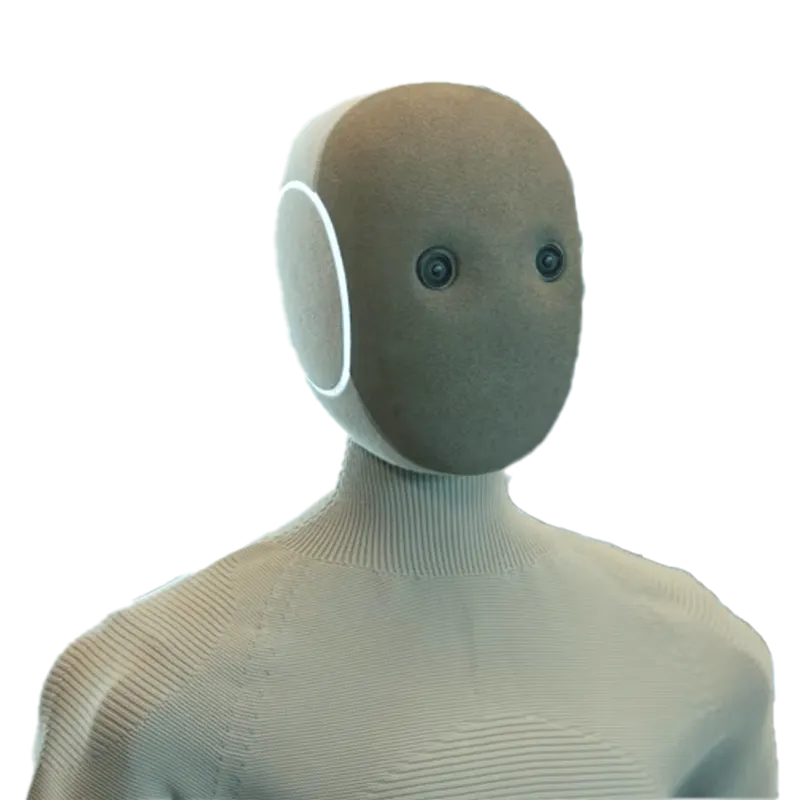
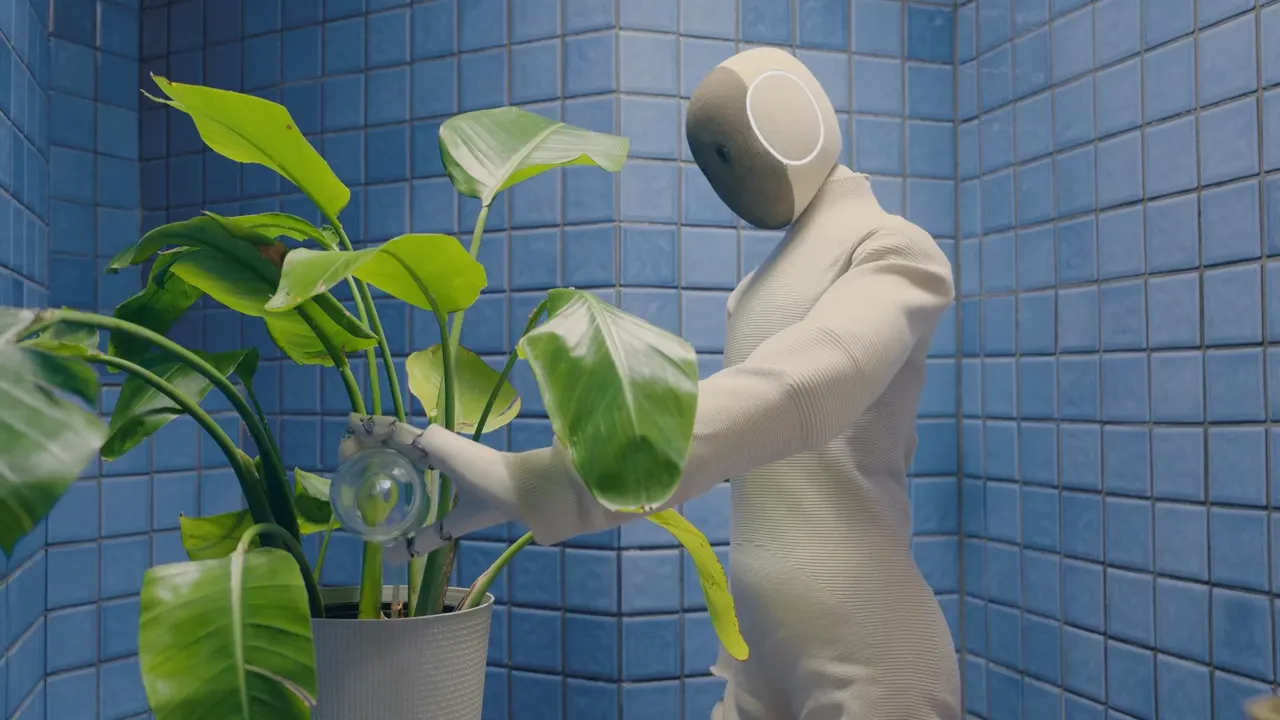
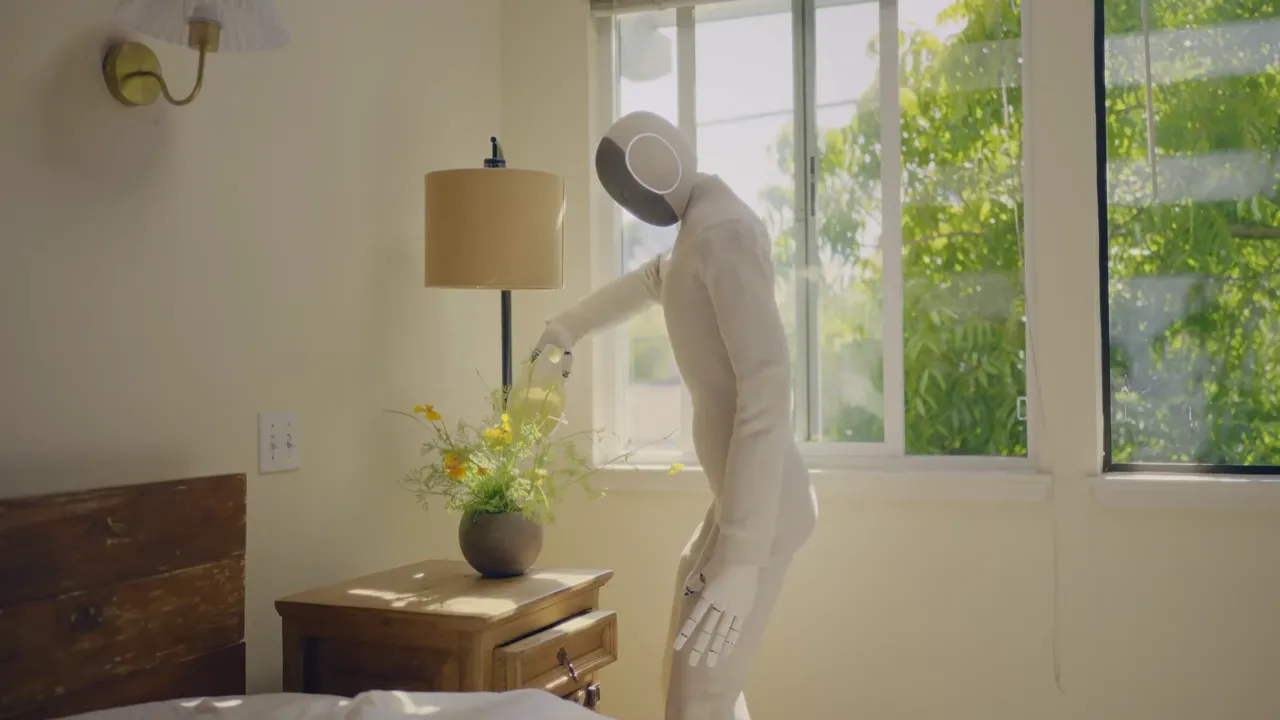
A bipedal humanoid robot designed for home use, featuring humanlike motion and a slim anthropomorphic form factor, aimed at operating safely and effectively in unstructured domestic environments.
Specialism
- Revo1 Proprietary Actuation:
1X's Revo1 brushless DC motor is purpose-built for low gear-ratio robotics, delivering what the company claims is the world's highest torque-to-weight ratio for a direct-drive servo motor. The design enables near-zero backlash, high backdrivability, and full torque control suited for safe physical interaction with humans. - Tendon-Drive Soft Mechanics:
All joints in NEO use flexible polymer tendon-based transmissions that produce compliant, muscle-like movement. This results in a robot that is inherently safe around people, operates quietly, and produces motions that closely resemble human biomechanics. - Redwood AI VLA Model:
A proprietary end-to-end VLA model that processes visual input and generates appropriate physical actions. Redwood enables NEO to learn household tasks through observation and teleoperation, and is continuously improved through fleet-wide real-world data collection. - 1X World Model:
A physics-grounded video foundation model that allows NEO to learn from internet-scale video data, enabling the robot to generalise to new tasks without requiring robot-specific training examples for every scenario. Announced in January 2026, it represents a material architectural advance over data-collection-only training approaches.
Business Viability
Funding and Financial Position
1X Technologies has raised a total of approximately USD 125 to 136 million across four funding rounds since 2014. Key milestones include a USD 23.5 million Series A2 in March 2023 led by the OpenAI Startup Fund at a post-money valuation of USD 210 million, and a USD 100 million Series B in January 2024 led by EQT Ventures, which brought the valuation to approximately USD 820 million. In September 2025, the company entered talks to raise up to USD 1 billion at a targeted valuation of at least USD 10 billion, representing a more than 12x increase from its Series B valuation in under two years. As of the time of this audit, the outcome of that round has not been publicly confirmed.
Revenue Model
1X operates a dual-track revenue model. On the enterprise side, EVE robots are sold outright or deployed under service agreements with industrial and security clients. On the consumer side, NEO is offered at USD 20,000 as an outright purchase, or through a USD 499 per month subscription (six-month minimum), both of which include access to 1X's Expert Mode teleoperation service. This hardware-plus-service bundling creates a recurring revenue stream alongside hardware sales, though the company's consumer revenue remains nascent as deliveries have not yet commenced at scale.
Customer and Deployment Base
EVE has been deployed commercially across logistics, security, and healthcare sectors. ADT Commercial (operating as Everon) contracted between 140 and 250 EVE units for commercial building night security patrols, representing one of the largest single humanoid robot deployment agreements at the time of signing in 2022. Additional EVE customers include Altopack, Strongpoint, Sunnaas Hospital, and I-Mens. NEO was placed in a limited number of homes throughout 2025 for real-world testing, with early adopter pre-orders open as of October 2025.
Strategic Partnerships and Collaborations
1X holds a notable AI training collaboration with NVIDIA, with NEO Gamma featured in NVIDIA's GTC 2025 keynote as a demonstration platform for the GR00T N1 foundation model. This collaboration provides access to NVIDIA's robotics AI stack and simulation infrastructure. The OpenAI Startup Fund's Series A investment constitutes both a financial and strategic alignment with one of the most influential AI research organisations globally. In November 2025, 1X signed an agreement with the Abu Dhabi Chamber of Commerce to support AI and robotics deployment in the UAE's industrial and energy sectors. In December 2025, EQT announced a strategic partnership to make up to 10,000 NEO units available across its global portfolio of companies between 2026 and 2030, providing a large-scale committed deployment pipeline. Additionally, 1X has partnered with IFS to bring industrial AI to physical operations.
Intellectual Property
1X's primary IP assets centre on the Revo1 actuator design, proprietary Tendon Drive transmission system, the Redwood AI VLA model, and the 1X World Model. The January 2025 acquisition of Kind Humanoid further consolidated bipedal robotics IP and engineering talent. The company operates a vertically integrated stack from custom hardware through to AI training infrastructure, which it views as a core competitive moat.
Market Position and Competitive Advantage
1X occupies a distinct market position as the only well-funded humanoid company that has explicitly committed to consumer home use as its primary product category rather than industrial automation. This differentiates it from Figure AI, Agility Robotics, Apptronik, and UBTECH, which are primarily industrial-focused, and from Boston Dynamics, which targets enterprise inspection and logistics. The home-first strategy is both a competitive differentiation and a long-term AI development thesis: domestic environments provide richer, more varied data for training general-purpose AI than controlled factory settings. The OpenAI and NVIDIA affiliations also carry significant credibility in the AI and investor communities.
Leadership and Team
Bernt Øivind Børnich is Founder and CEO, having led the company since its founding in 2014. Jorge Milburn, formerly of Tesla where he led global growth for the Supercharger network and the European Model 3 launch, serves as VP of Sales. Christoph Kohstall, formerly a robotics researcher at Google and founder of Kind Humanoid, joined through the January 2025 acquisition. Key engineering hires from Tesla and BMW were reported in 2024, strengthening design and production capabilities. Employee headcount grew substantially, reaching approximately 965 as of February 2026.
Awards and Recognition
NEO was featured in NVIDIA CEO Jensen Huang's keynote at GTC 2025, one of the highest-profile platforms in the global AI industry. CEO Bernt Børnich presented a TED Talk in April 2025. The company's work on embodied AI has been covered extensively by IEEE Spectrum, The Wall Street Journal, and The Information as a benchmark case for consumer humanoid robotics development.
Risks and Challenges
The most material near-term risk is the gap between 1X's product claims and its current autonomous capability. As of the 2026 pre-order period, NEO relies substantially on human teleoperators via VR for complex or unfamiliar tasks, which raises real-world privacy concerns for home users and limits the product's standalone utility. The company's dependence on real-world deployment data for AI improvement also means early customers function partly as a training data source, a dynamic that requires careful management of user trust and transparency. The USD 1 billion fundraising round announced in September 2025 had not been confirmed as closed at the time of this audit; failure to close at the targeted valuation or scale would constrain the company's production and AI development roadmap significantly. The consumer humanoid market also remains entirely unproven at commercial scale, with pricing at USD 20,000 limiting the addressable market to affluent early adopters in the near term.
Expansion and Outlook
1X's stated production roadmap targets thousands of NEO units in 2025, tens of thousands in 2026, hundreds of thousands in 2027, and millions by 2028. The EQT strategic partnership provides a committed enterprise pipeline of up to 10,000 units independently of consumer sales. The Abu Dhabi Chamber agreement signals early moves into the Middle East market. International consumer availability is planned for 2027, with Europe and select Asian markets identified as priority regions. The January 2026 World Model announcement suggests the company is investing heavily in reducing reliance on teleoperator-assisted tasks, which will be the critical milestone that determines whether NEO can be positioned as a genuinely autonomous consumer product rather than a supervised-assistance platform.