
Intro

ROBOTERA is a leading robotics company, founded in 2023, specializing in fully in-house humanoid robots and dexterous hands. From core actuators and joints to complete robotic systems, we develop high-performance, reliable robots entirely in-house, ensuring precise control and robust engineering across all our products. Incubated by the Institute for Interdisciplinary Information Sciences at Tsinghua University, the company was established in August 2023 and represents one of China’s fastest-emerging players in advanced robotics.
Under the leadership of Professor Chen Jianyu, a Tsinghua University assistant professor and robotics expert with a Ph.D. from UC Berkeley, ROBOTERA brings together a multidisciplinary team drawn from top global research institutions and industry leaders to tackle core challenges in embodied AI, dexterous manipulation, autonomous mobility, and robot-foundation model integration. By combining robust engineering with versatile robotic systems, ROBOTERA delivers solutions ready for real-world environments. The company's mission is to advance robotics technology and provide reliable robots that enhance human productivity, safety, and collaboration across industries and research.
ROBOTERA’s mission is to create robots with native intelligence and universal physical world interaction capabilities, with a vision of bringing robots into tens of millions of homes and workplaces. Its approach integrates robot foundation models, advanced hardware platforms, and real-time adaptive control to enable high-performance action across diverse tasks. The company has rapidly progressed from early prototypes to commercial units, securing significant Series A and Series A+ funding rounds led by strategic investors such as Geely Capital, Alibaba, Haier Capital, BAIC Capital, and others, collectively raising close to ¥1.8 billion (~US$250 M+) to scale development and production.
ROBOTERA also collaborates on the global stage, including strategic partnerships with the United Nations Industrial Development Organization (UNIDO) to promote industrial transformation and sustainable development through embodied intelligence solutions.
Robots
- L7:
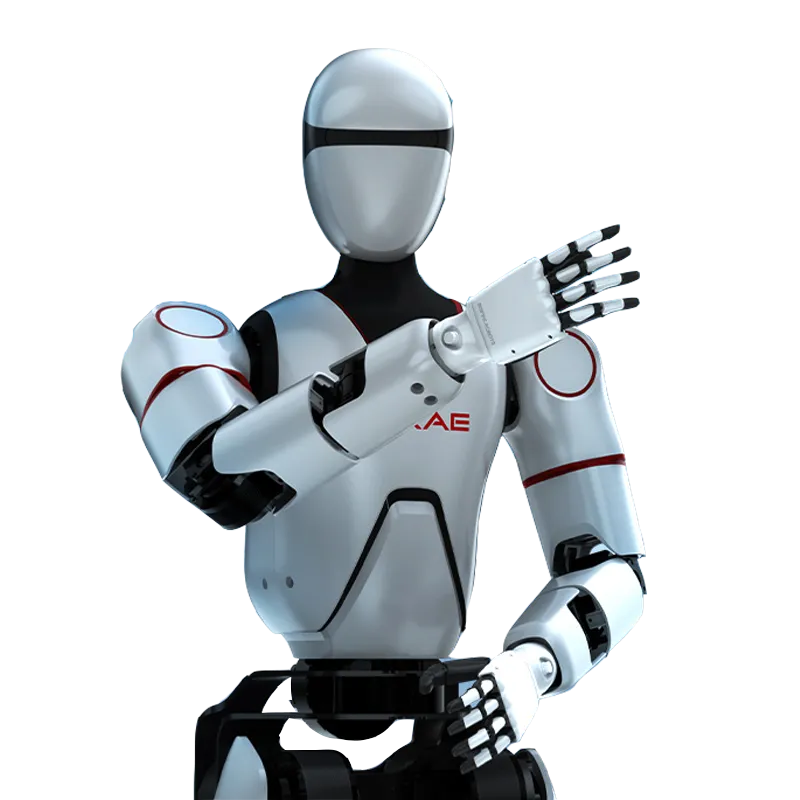
A full-size humanoid robot with 55 DoF, capable of agile running at 14.4 km/h, dynamic acrobatics, and industrial-grade manipulation of 20 kg payloads. - Q5:
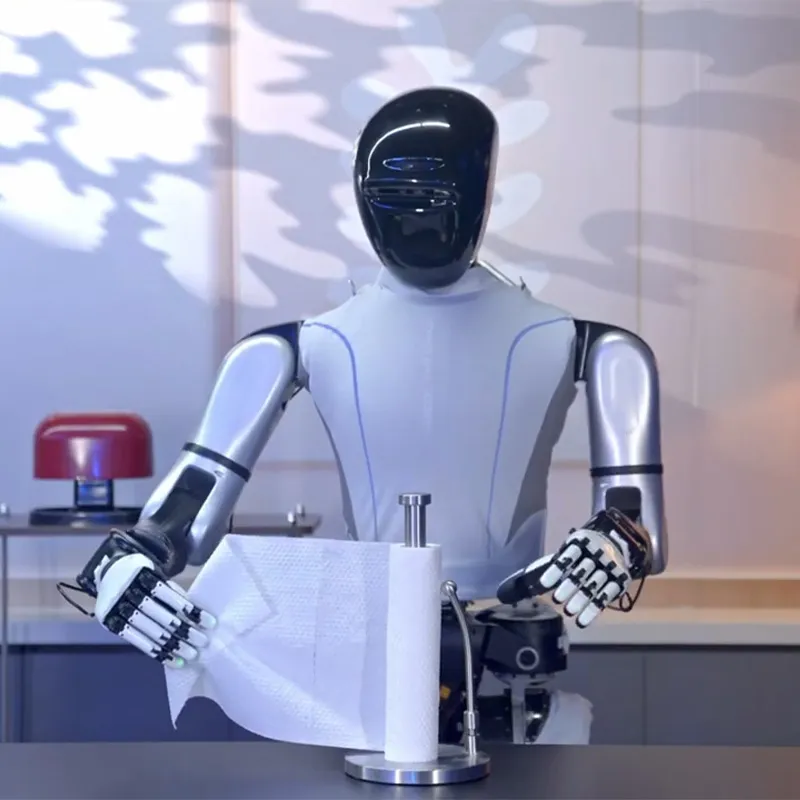
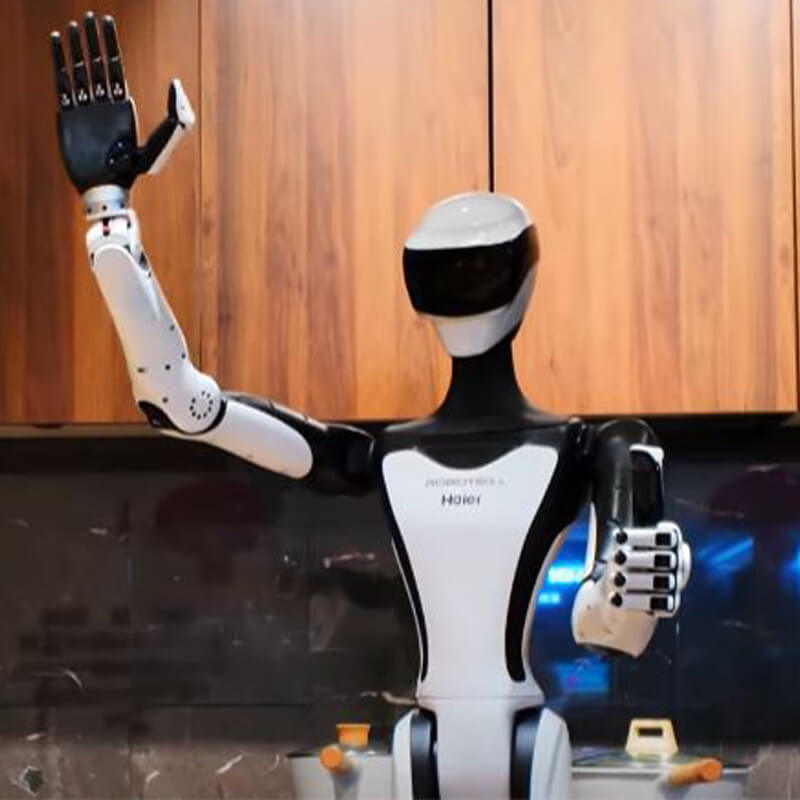
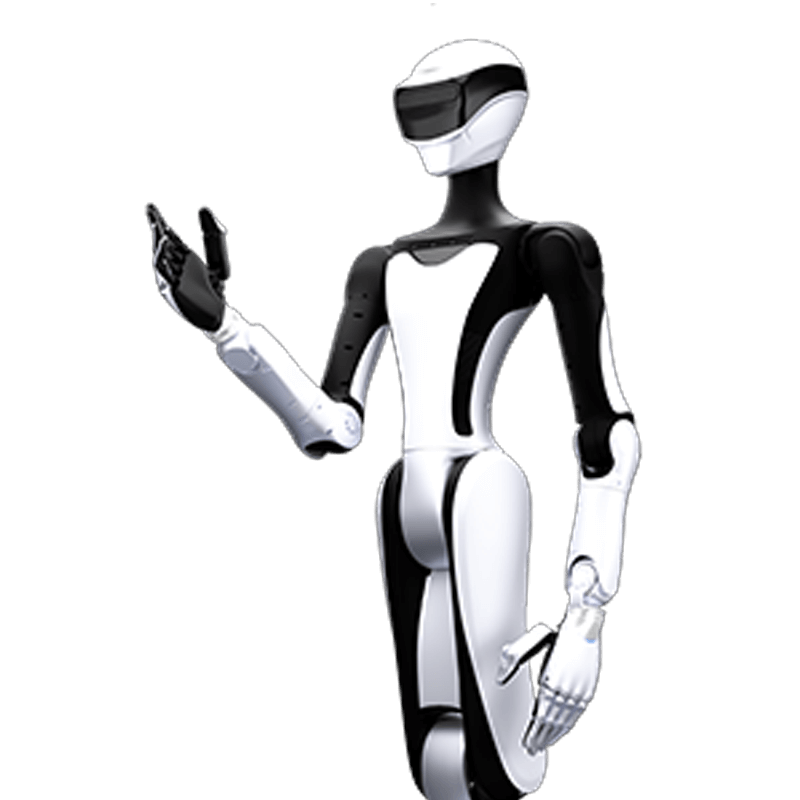
A 44-DoF wheeled humanoid robot with advanced navigation, lifelike manipulation, voice interaction, and embodied AI for service and research applications. - XHAND1:
fully direct-drive five-fingered dexterous hand with 12 independent degrees of freedom and high-resolution 3D tactile sensors, designed for AI research and humanoid robot applications.
Specialism
- Embodied Intelligence & Robot Foundation Models:
AI models designed to enable robots to perceive, reason, and act continuously in physical environments. - Dynamic Bipedal Motion & Agile Locomotion:
Full-scale humanoids capable of walking, running, and complex movement sequences. - Dexterous Manipulation & Multi-Modal Perception:
Highly articulated limbs and tactile sensing for intricate object handling and task execution. - Multi-Scenario Adaptability:
Platforms designed for industrial tasks (assembly, warehousing), service roles (guidance, interaction), and home support functions.
Business Viability
ROBOTERA’s viability is underpinned by strong academic incubation, substantial venture backing, and rapid technological milestones in humanoid robotics — a sector where many competitors struggle to balance performance, autonomy, and real-world utility. Its ability to raise significant capital, ship hundreds of robots, and attract notable industrial partners (e.g., Lenovo, Geely, Haier, SF Express, Renault) reflects early commercial traction beyond mere lab demonstrations.
Moreover, strategic collaborations with international organizations like UNIDO signal a broader ambition to position embodied intelligence as a tool for sustainable industrial modernization and inclusive technological adoption — expanding the company’s relevance beyond narrow commercial niches.
However, humanoid robotics remains capital-intensive with long scaling cycles, and widespread adoption depends on further advancements in autonomy, safety, cost efficiency, and ecosystem integration. If ROBOTERA continues to deliver on both hardware innovation and AI performance, it stands to be a significant player among global general-purpose robotics companies.