- Agentic Architecture: the three-layer hierarchy that mimics the human nervous system.
- Semantic vs. Geometric: Details why traditional robots forget and how COSA’s memory creates proactive agents.
- Real-Time Cognition: Highlights the ability to reason and move simultaneously, even on difficult stairs.
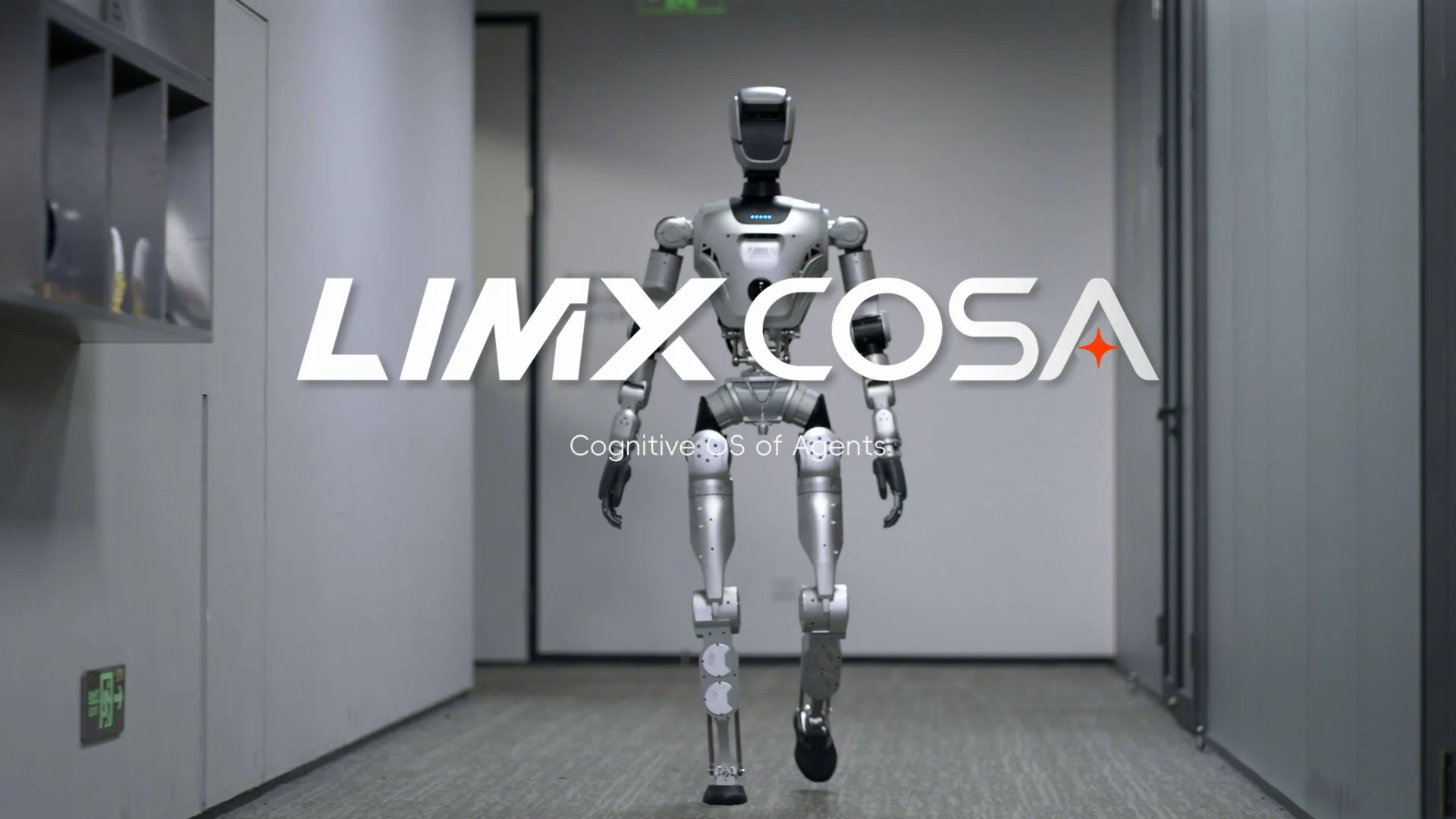
In 2008, the mobile world changed not because of a new phone, but because of an operating system called Android. On January 12, 2026, the robotics industry hit that same milestone. While the West has been focused on building the expensive 'hardware', China’s LimX Dynamics just released COSA, the world’s first physical-native Agentic OS. It’s not just a brain for their new robot, Oli; it’s a bid to become the 'universal software' for every humanoid on the market."
The Biological Blueprint: A Three-Layer Hierarchy
COSA stands of Cognitive OS of Agents, its an architecture mimics the human nervous system to solve the "latency gap", the awkward pause robots usually make when they stop moving to think.
- The Foundational Layer:
A robust whole-body control foundation model. This handles the "brute force" physics of balance and locomotion, ensuring the robot doesn't fall, even on construction debris. - The Skill Layer:
This layer couples cognitive planning with low-latency motion loops. It manages specific skills like navigating around a sudden obstacle, climbing stairs, or picking up a fragile glass. - The Cognitive Layer:
This is where "Agentic" behavior lives. It handles natural language understanding, intent recognition, and long-term task decomposition.
Three Pillars of the Humanoid Agent
The power of COSA lies in 3 core capabilities that transform a machine into an embodied agent, a robot that doesn't just work in our world, but understands it.
- High-Level Cognition: The "Think While Acting" Engine
Traditional robots often operate in a "Stop-Think-Action" loop. They reach a destination, pause to process the next command, and then react. COSA breaks this cycle by fusing the "big brain" (logic) with the "little brain" (motion). This allows the humanoid Oli to autonomously decompose long-horizon tasks, like "Find the guest and offer them a drink", adjusting its priorities in real-time without ever breaking its stride. - Semantic Memory: Ending "Robotic Amnesia"
Most robots suffer from a form of digital amnesia. They use Geometric Mapping to see the world as a collection of 3D cloud points and shapes to avoid hitting walls. However, once they finish a path, they often "purge" that data in order to save processing power. COSA replaces this with Semantic Memory, allowing Oli to build a persistent worldview.- Contextual Persistence: Oli recognizes people, remembers where objects were left, and recalls interaction histories.
- Proactive Behavior: Because Oli has a memory, it moves from being passive to proactive. It doesn't just wait for a command; it might proactively check if a printer is out of paper or if a specific coworker needs assistance, based on what it remembered from an hour ago.
- Real-Time Whole-Body Loco-Manipulation
This is the ultimate physical expression of the OS. COSA ensures that cognitive intent is directly realized through stable action. It enables Loco-Manipulation, the ability for the robot to use its hands for complex tasks while its legs handle challenging terrains like long, uneven stairs.
The Flagship: Meet Oli
While COSA is the brain, Oli is the body. Standing 165cm tall and weighing 55kg, Oli is the first humanoid built to showcase COSA's full potential. With 31 degrees of freedom, LimX is positioning this "Agentic OS" robot as the first truly accessible humanoid for research and industrial deployment.
About the author