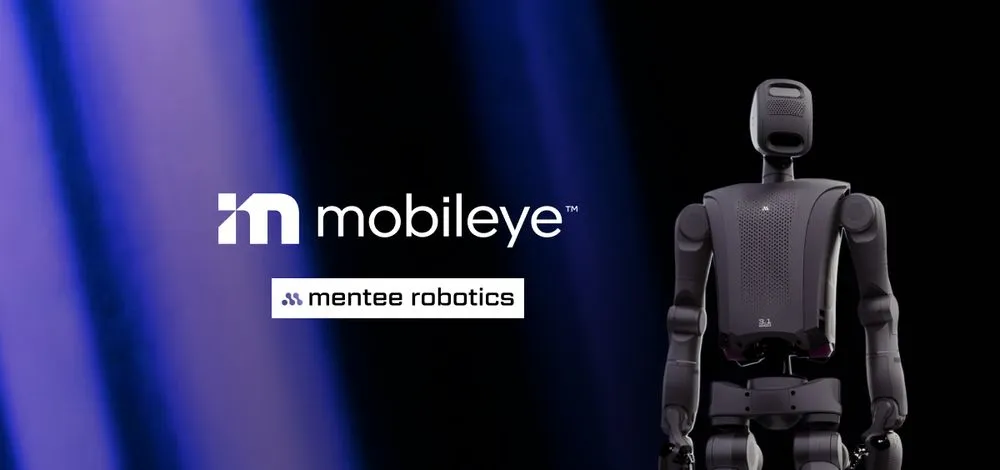
- The acquisition transitions Mobileye from an automotive vision supplier to a "Physical AI" powerhouse, using car-grade autonomy to power humanoid labor.
- At $900 million ($612M cash + stock), this deal represents a massive premium for a four-year-old startup.
- Designed for 24/7 industrial shifts, the MenteeBot V3.0 utilizes hot-swappable batteries and is powered by dual NVIDIA Jetson Orin AGX processors for onboard edge computing.
- Targets full-scale commercial production by 2028 with a projected unit cost of around $20,000.
In 2021, Hyundai Motor Group made headlines by acquiring an 80% stake in Boston Dynamics, valuing the legendary robotics company at $1.1 billion. At the time, the deal was seen as bold, even expensive, for a company best known for viral robot videos and limited commercial deployment.
Fast forward to today, and the numbers tell a very different story.
At a reported $900 million acquisition price, Mobileye’s move to acquire Mentee Robotics, a startup founded just in 2022, signals how quickly the value of Physical AI has surged. While Hyundai paid more for a much larger stake in a mature robotics pioneer, Mobileye is paying nearly the same amount for a far younger company, betting not on legacy hardware, but on intelligence that can move, see, and act in the real world.
This is not just another robotics acquisition. It is a sign that physical AI has become one of the most valuable frontiers in artificial intelligence.
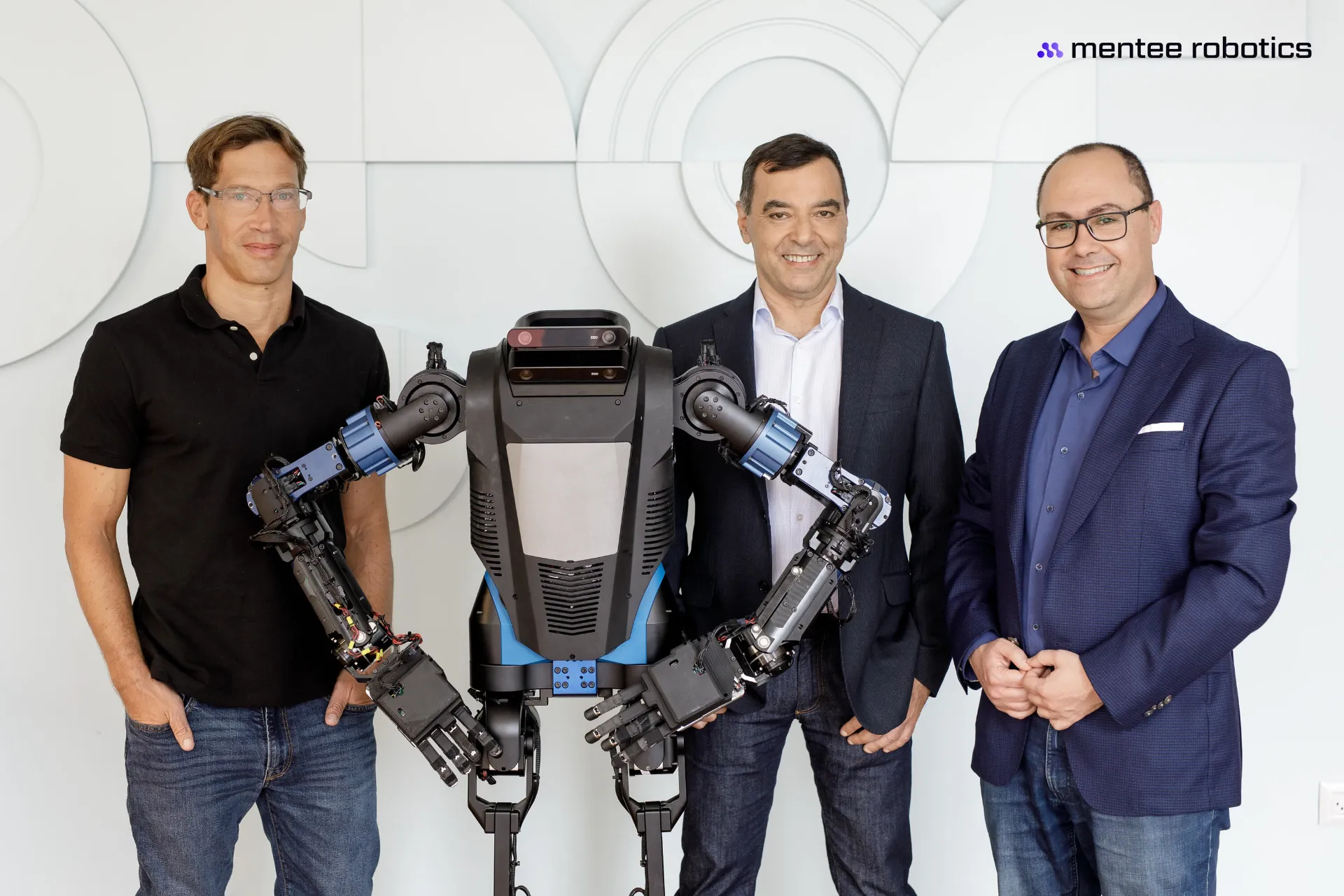
The $900 Million Handshake: A Deal at a Glance
The details of the transaction are as bold as the vision behind them. Mobileye’s planned acquisition of Mentee Robotics for $900 million marks the company’s most decisive step beyond autonomous vehicles. The Israel-based automaker company is acquiring Mentee Robotics for $900 million, structured as $612 million in cash and approximately 26.2 million shares of Mobileye stock. Mobileye is positioning itself to control a full physical intelligence stack, extending its autonomy expertise from cars into humanoid robots.
Rather than building a humanoid program from scratch, Mobileye chose speed. Mentee brings a working humanoid platform, a growing embodied AI stack, and a clear focus on general-purpose physical intelligence. Mobileye brings scale, safety-critical autonomy experience, and one of the most advanced perception systems in the world.
Together, they form a powerful combination.
Mobileye: The Eyes of the Road
For decades, Mobileye has been the silent partner in your car. Founded by Professor Amnon Shashua, they pioneered the computer vision tech that powers over 200 million vehicles globally. If your car can stay in its lane or stop for a pedestrian, there is a good chance a Mobileye EyeQ™ chip is doing the heavy lifting.
Over the years, the company expanded from driver-assist systems into full-stack autonomy. Mobileye handles perception, mapping, planning, and safety validation at the highest levels required by automotive-grade deployments. These systems are designed to operate reliably in unpredictable environments where mistakes can have real consequences.
This background makes Mobileye uniquely suited to compete in physical AI. A humanoid robot navigating a crowded workspace faces many of the same challenges as an autonomous vehicle navigating city streets: dynamic obstacles, ambiguous signals, and the need for fast, correct decision-making.
"Physical AI is where the next chapter of autonomy will be written. We have spent decades building systems that see, think, and act safely in the world. Adding Mentee’s embodied intelligence expertise accelerates our path toward robots that can work alongside humans in real environments.”
- Amnon Shashua, CEO of Mobileye
Meet the Body: MenteeBot V3.0
Founded in 2022, Mentee Robotics launched with a clear mission. Unlike many companies focused on hardware achievement, Mentee built its strategy around embodied intelligence, the idea that robots should not just move, but understand, predict, calculate and adapt in complex environments.
This is a 1.75-meter bipedal humanoid that can carry a 25 kg payload and walk at steady 1.5 m/s, its designed for pure industrial utility. It also feature a hot-swappable batteries, cutting down downtime and increasing the efficiency. What makes this robot a game-changer isn't just its hardware, but its "Real2Sim2Real" learning philosophy.
In this system, the process starts in the real world: the humanoid observes a human performing a task. It doesn't just record the video; it "mentors" under the human, learning the intent and the nuances of the movement. Next, the robot takes that data into a virtual simulation. In this digital gym, it practices the task millions of times over, perfecting its balance and grip. Finally, it executes the task back in the real world with a level of precision that used to take years of manual coding to achieve.
The Vision: "Mobileye 3.0"
This deal has a personal touch: Amnon Shashua actually co-founded both companies. While he recused himself from the vote to ensure a fair deal, he is clearly the architect of this union.
"The only question that needs to be asked is whether the deal is good for Mobileye," Shashua told reporters at the event. "Jensen did a great service to all of us when he brought these fields together under the title 'physical AI.' For Mobileye, it is only natural to enter the humanoid robotics field."
He sees a future where labor shortages are solved by robots that cost roughly $20,000 to produce. By 2028, Mobileye expects to be selling these humanoids to the same automakers that already buy their driving chips.
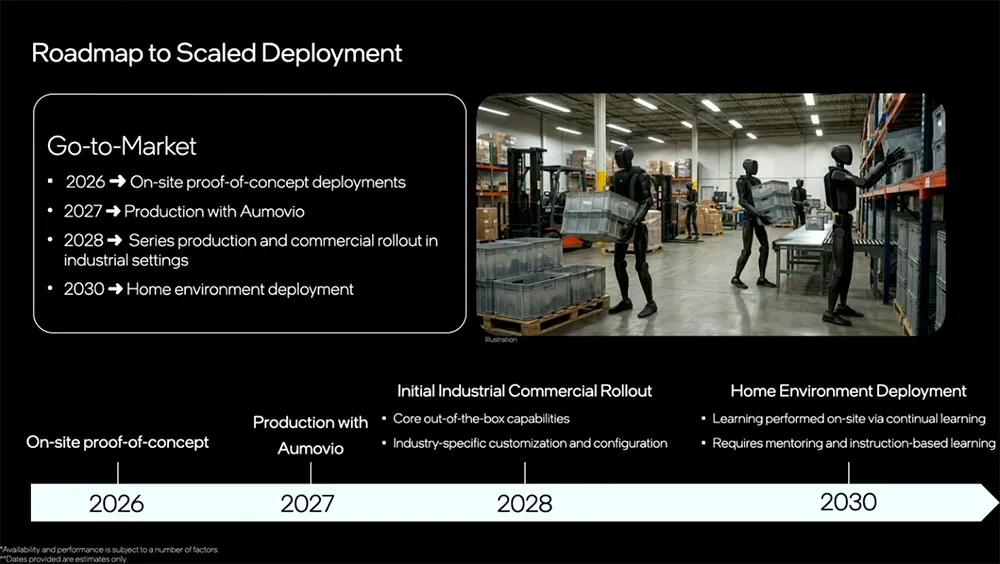
Looking Ahead: A New Era of Labor
Once the acquisition is completed, attention will shift to integration. How Mobileye merges its autonomy software with Mentee’s humanoid platform will shape the pace of development. Pilot deployments, expanded testing environments, and gradual commercialization are likely next steps.
What is clear already is the direction of travel.
From Hyundai’s 2021 bet on Boston Dynamics to Mobileye’s 2026 bet on Mentee Robotics, the value of physical intelligence has risen sharply. The industry is no longer asking whether AI can move into the physical world.
It is deciding who will own it.
About the author