
Intro

Chengdu Humanoid Robot Innovation Center Co., Ltd. was officially established on April 12, 2024 in Chengdu, Sichuan Province, as the first humanoid robot new-type R&D institution in central and western China. The organisation was constituted as the flagship project of Sichuan Province's "No. 1 Innovation Initiative," which designated artificial intelligence as the province's primary strategic development priority for 2024. CHRIC is classified as a national high-tech enterprise and a new-type R&D institution in Sichuan Province, and serves as the chairperson unit of the Chengdu Robot Industry Association. Its founding team leader is Zhang Ruirui, who also chairs Chengdu Ruileda Robot Technology Co., Ltd. Under Zhang's leadership, CHRIC oriented its primary research focus from inception toward humanoid robot "brain" technology, specifically the development of AI systems capable of genuine reasoning, task planning, environmental understanding, and autonomous decision-making, as distinct from traditional robots operating via pre-programmed instructions.
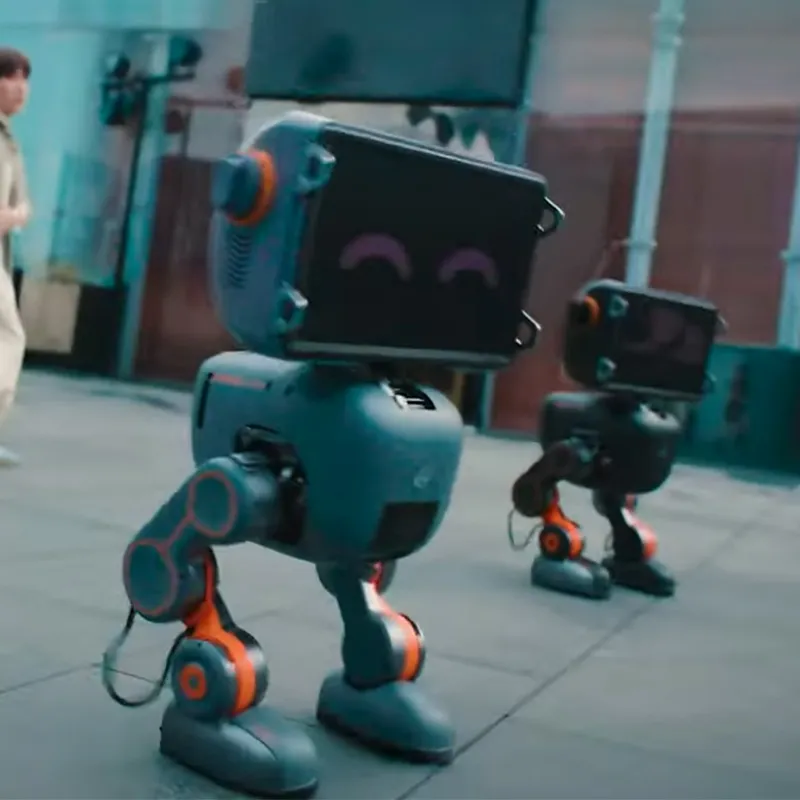
From April 2024 through the end of 2024, CHRIC delivered over 30 internationally leading technological achievements in humanoid robot brain development within its first year of operation. Key milestones in 2024 include: China's first humanoid robot task generation model based on a visual diffusion architecture (R-DDPRM, June 2024), enabling robots to generalise across multiple task constraints with advanced global planning; China's first multimodal model and dual-arm collaboration system; China's first 3DSGs-based humanoid robot reasoning, planning, and execution system (Raydiculous-1), enabling long-view reasoning and autonomous cross-space task execution; and in September 2025, China's first world model-based robot task execution system (R-WMES), which enables robots to simulate environmental changes internally, infer future states, and assess action consequences before physical execution. On October 28, 2024, CHRIC launched Konka-1, China's first ultra-lightweight single-arm wheeled humanoid robot, which weighs 25 kg and carries a maximum payload of 5.5 kg, demonstrating CHRIC's embedded AI brain in a compact commercial form factor. On December 27, 2024, CHRIC publicly unveiled a portfolio of seven humanoid robots developed for the World Games 2025 in Chengdu, including the bipedal Honghu and the wheeled Konka-1, covering torch relay, sports exhibitions, reception, and retail service scenarios.
In 2025 and 2026, CHRIC expanded its product portfolio to include the commercially targeted TangPa (TP-01) cultural and commercial service humanoid, alongside the general-purpose "Gongga No. 1" humanoid, the "Jinbao" sports humanoid, an embodied intelligence engineering robot, and specialised platforms including the world's first AI neural network electronic skin and the world's first full-size heavy-duty dual-wheeled robot open-source platform (RW-02OP). The centre has been selected four consecutive times for the CCID Research Institute's global AI cutting-edge technological achievement recognition programme and is actively leading the formulation of the most significant national standard for humanoid robot brain technology in China. A joint venture with PowerChina, named Zhicheng Ruijin Robot Technology (Chengdu) Co., Ltd., was established with SASAC approval, hosting China's first Central-Local Co-built Embodied Intelligence Engineering Robot Innovation Center, representing CHRIC's expansion into state-owned enterprise collaboration for large-scale industrial robotics deployment.
Robots
- TangPa (TP-01):
An 850 mm, 34 kg culturally themed bipedal service humanoid with 16 DoF, a patented 6-DoF neck, a 19-inch display, and the R-PAN autonomous outdoor navigation system. Designed for cultural tourism, retail, entertainment, and public event environments, available in Standard and EDU Development Editions. - Konka-1:
China's first ultra-lightweight single-arm wheeled humanoid robot, launched October 2024. Weighs 25 kg with a maximum payload of 5.5 kg. Equipped with CHRIC's AI brain for autonomous task intent understanding, environment observation, task flow generation, and accurate task execution in domestic and commercial settings.
Specialism
- Humanoid Robot Brain Technology:
CHRIC's core technical differentiator is its proprietary AI brain stack, which enables genuine reasoning, planning, and autonomous decision-making in robots. This is realised through a series of first-in-China and first-in-world AI models including the R-DDPRM diffusion task generation model, the Raydiculous-1 3DSGs-based reasoning and execution system, and the R-WMES world model-based task execution system. - Autonomous Outdoor Navigation (R-PAN):
The proprietary R-PAN system enables fully autonomous robot navigation in dynamic, uncontrolled outdoor public spaces without human remote control, a technically significant capability for humanoid service robots operating in cultural tourism and commercial venue environments. - Cultural and Tourism-Oriented Humanoid Design:
CHRIC has uniquely positioned a segment of its product portfolio toward cultural tourism, public events, and commercial entertainment, combining expressive interaction design with modular cultural theming and fleet-level choreography capability, differentiating it from peers focused exclusively on industrial or domestic humanoids. - National Standard Leadership:
CHRIC leads the formulation of China's primary national standard for humanoid robot brain technology, giving the company a regulatory shaping role that carries long-term influence over the domestic industry's technical benchmarks.
Business Viability
Funding and Financial Position
CHRIC's specific funding amounts are not publicly confirmed in international financial databases as of this audit. The company is described in its own brochure as holding the highest cumulative financing amount and valuation among humanoid robot organisations in central and western China. The organisation was constituted as the Sichuan Provincial Government's "No. 1 Origin Project," indicating direct government funding and infrastructure support rather than purely private venture capital. A mid-2025 transition to pilot production at a government-supported dedicated facility was planned per Xinhua reporting from January 2025. The joint venture with PowerChina (a state-owned enterprise) provides an additional state-backed capital and operational infrastructure layer. Exact funding round amounts, lead investors, and current valuation are not publicly confirmed.
Revenue Model
CHRIC's revenue model appears to combine government R&D funding and project grants (consistent with its classification as a new-type R&D institution), product sales and leasing of its commercial robot lineup (TangPa, Konka-1), and joint venture and licensing arrangements. The TangPa brochure promotes an enterprise sales model with direct inquiry via email, suggesting a B2B product and services approach for commercial deployments rather than consumer retail. The PowerChina joint venture suggests an emerging B2G (business-to-government) and B2SOE (business-to-state-owned enterprise) revenue channel for industrial engineering robot deployments.
Customer and Deployment Base
TangPa has been deployed at the 31st Summer Universiade Chengdu (2025) in reception, retail, and event scenarios. CHRIC's robots were designated for use at the World Games 2025 in Chengdu, including torch relay, sports exhibitions, and retail service roles. Commercial deployments referenced in the TangPa brochure include Chunxi Road, Taikoo Li CBD Chengdu, and multiple CBD shopping malls. The Konka-1 and Honghu platforms have been demonstrated in controlled and public settings but no large-scale confirmed commercial customer contracts beyond event deployments have been publicly named.
Strategic Partnerships and Collaborations
CHRIC's most significant partnership is the joint venture with PowerChina, established with SASAC approval, creating Zhicheng Ruijin Robot Technology (Chengdu) Co., Ltd. and hosting China's first Central-Local Co-built Embodied Intelligence Engineering Robot Innovation Center. This positions CHRIC within China's state-owned enterprise infrastructure ecosystem, providing access to large-scale government and infrastructure project deployments that private robotics companies cannot easily access independently. CHRIC is also the chairperson unit of the Chengdu Robot Industry Association, giving it a convening role in the local industry ecosystem.
Intellectual Property
CHRIC holds a portfolio of proprietary AI systems including the R-DDPRM diffusion task model, Raydiculous-1 3DSGs system, R-WMES world model, and R-PAN navigation platform, all developed in-house. The 6-DoF neck structure on TangPa is described as patented. The AI neural network electronic skin is stated to be a world-first, suggesting active IP development in tactile sensing. The company leads the formulation of China's national standard for humanoid robot brain technology, which represents significant regulatory IP influence. CCID Research Institute has recognised CHRIC's technologies four consecutive times in its global AI cutting-edge achievement assessments.
Market Position and Competitive Advantage
Within China's humanoid robot ecosystem, CHRIC occupies a distinct position as the only government-backed innovation centre in central and western China, operating in a domestic landscape otherwise concentrated in Beijing, Shanghai, Guangdong, and Zhejiang. Its brain-technology-first strategy differentiates it from hardware-first peers such as Unitree (locomotion), UBTECH (industrial), and AgiBot (data and manipulation). The cultural tourism and event deployment focus for TangPa addresses a niche with clear near-term commercial demand in China's vast domestic tourism and retail sectors, where interactive humanoid robots provide measurable footfall and engagement value without requiring the industrial safety certifications that manufacturing deployments demand.
Leadership and Team
Zhang Ruirui serves as President of CHRIC and chairman of Chengdu Ruileda Robot Technology Co., Ltd., the commercial entity from which CHRIC's founding team originated. Zhang has been the primary public spokesperson for CHRIC in all major Chinese and international media coverage. CHRIC is stated to house the largest humanoid robot R&D team in central and western China, though total headcount is not publicly disclosed. The company's technical leadership is oriented toward AI model development rather than hardware engineering, reflecting the brain-first research philosophy.
Awards and Recognition
Selected four consecutive times by the CCID Research Institute for its global AI cutting-edge technological achievements list, recognising CHRIC's humanoid robot brain breakthroughs. Designated as the lead institution for China's most significant national standard on humanoid robot brain technology. Seven CHRIC robots officially selected for deployment at the 2025 World Games in Chengdu. TangPa deployed at the 31st Summer Universiade Chengdu and multiple Chengdu landmark commercial sites.