- Airbus has procured the Walker S2 for high-precision assembly and quality inspection in its aircraft manufacturing plants.
- The Walker S2 features a world-first 3-minute autonomous battery swap, eliminating the need for long charging downtimes.
- This deal follows a major partnership with Texas Instruments, moving humanoids into both chip-making and aviation.
In the cavernous silence of an aircraft assembly hangar, precision isn't just a requirement, its a religion. Every rivet, every connector, and every millimeter of a fuselage must meet standards that are among the strictest in the world. For decades, this has been the domain of highly skilled human engineers and massive, stationary robotic arms. But in January 2026, the aviation industry witnessed a change in the guard.
UBTech Robotics, the Hong Kong-listed pioneer of humanoid technology, has officially signed a landmark service agreement with Airbus. The mission? To deploy the Walker S2, the company's latest generation of industrial humanoids, directly into Airbus’s manufacturing plants to tackle the unique challenges of building modern aircraft.
The Aviation Challenge: Precision in Tight Spaces
Why does Airbus need a humanoid? Unlike automotive manufacturing, which is high-volume and repetitive, aerospace is "high-mix and low-volume." Every plane is a complex puzzle with thousands of variations. Traditional robots often struggle with the narrow corridors of a fuselage or the delicate dexterity required for quality inspections.
The Walker S2 is stepping in to fil in the gap. In the Airbus hangar, these robots are being tasked and tested with:
- High-Precision Assembly:
Navigating the complex interior of aircraft to assist in installing components where traditional automation cannot reach. - Quality Inspection:
Using their advanced sensors suite to scan and verify thousands of rivets and surface finishes with microscopic accuracy. - The Overhead Burden:
Taking on tasks like overhead riveting and underside inspections, work that is notoriously back-breaking for human mechanics and prone to fatigue-related errors.
Walker S2: The Mass-Produced Workhorse
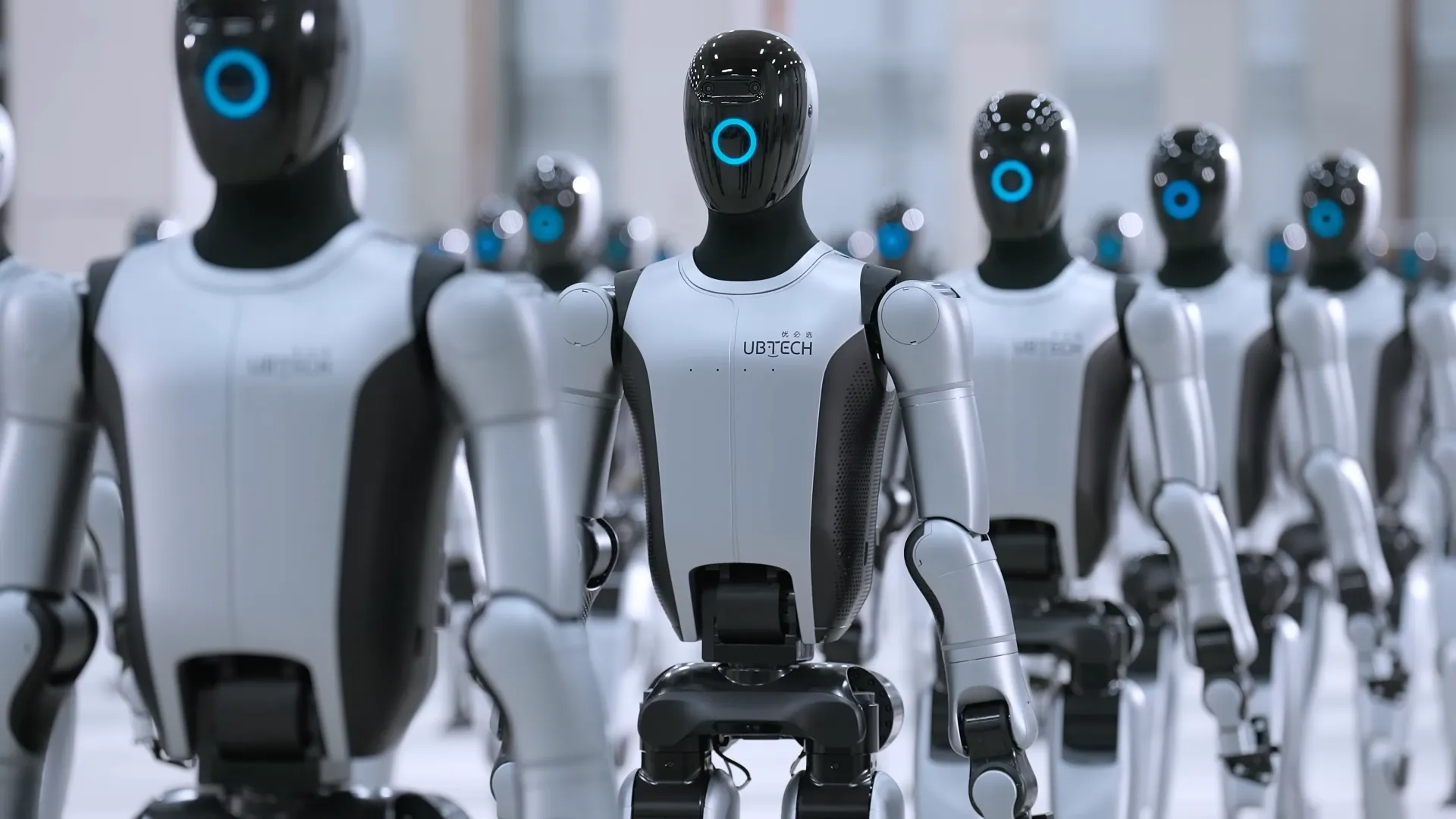
The Walker S2 is a ruggedized industrial tool designed for the rigors of the aerospace hangar. Standing at 1.76m tall and weighing 73kg, it is built to operate seamlessly alongside human teams. Its defining technical advantage is a world first autonomous, hot swappable battery system. While most humanoids require hours of downtime to recharge, the Walker S2 can autonomously navigate to a swap station and replace its own power source in under 3 minutes, enabling zero-downtime, which is essential in an assembly line.
Beyond its physical frame, the robot is driven by UBTech’s proprietary Co-Agent system. This dual loop AI architecture, known as BrainNet 2.0, allows the Walker S2 to understand complex, task driven instructions through LLM. It doesn't just follow a script because it can plan movements, recognize tools, and adapt to unexpected obstacles in real time.
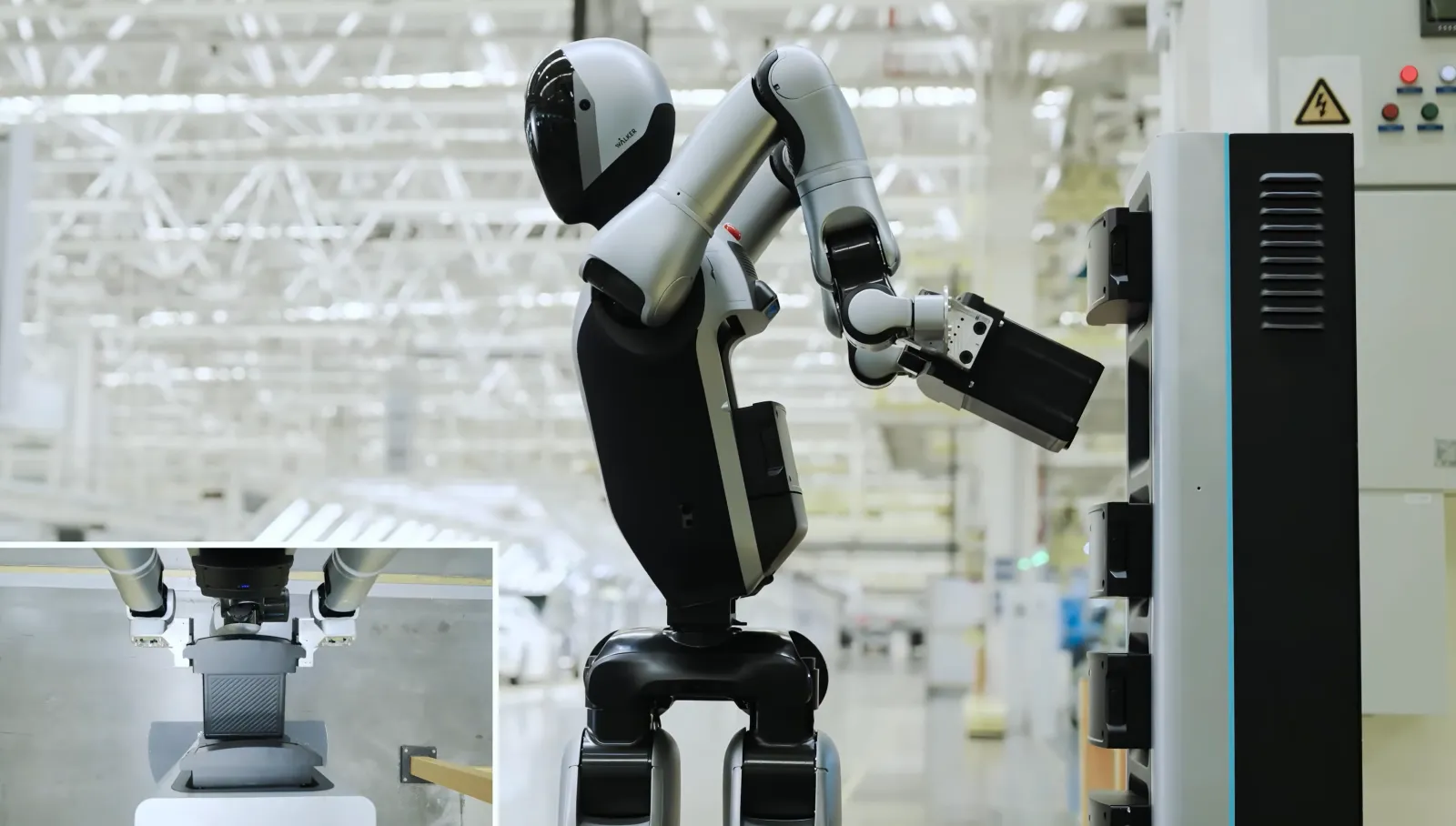
This level of intelligence is now being delivered at an unprecedented scale. In late December 2025, UBTech celebrated a historic milestone as the 1,000th Walker S2 unit rolled off the production line at their Liuzhou manufacturing plant. By cracking the code of mass production, the company has transformed the humanoid from a futuristic prototype into a standardized industrial product.
The successful ramp up is already reflecting in the company's commercial health, as they delivered over 500 units in 2025 alone and secured an order book exceeding 1.4 billion yuan. With an aggressive roadmap targeting 5,000 units in 2026 and 10,000 units by 2027, UBTech is no longer just testing the future because they are manufacturing it at a pace that defines the new industrial standard.
The Strategic Chessboard: From Chips to Wings
The Airbus deal is part of a much larger global strategy. It follows on the heels of a massive partnership with Texas Instruments (TI) in late 2025. In that reciprocal deal, TI purchased Walker S2 units for their semiconductor "clean rooms," which are environments where even a speck of dust is a disaster, while UBTech integrated TI’s high-performance components into the robot’s core architecture.
By securing partnerships with leaders in both semiconductors and aviation, UBTech is positioning its robots in Strategic High-Value sectors. This isn't just about moving boxes in a warehouse because it is about proving that humanoids can handle the most sensitive and complex manufacturing tasks on the planet.
Market Impact and the Human Element
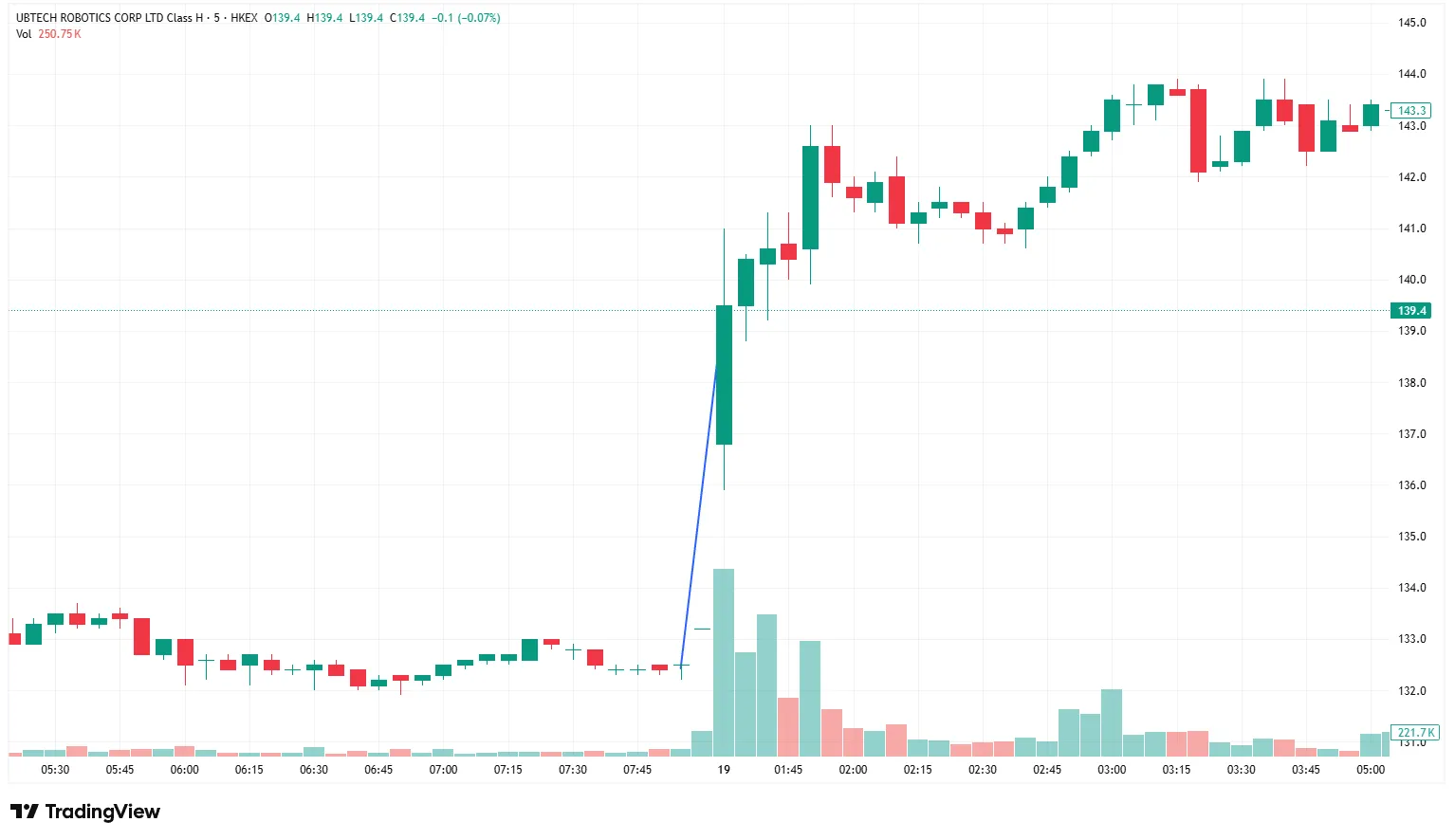
The financial world has taken notice. Immediately following the Airbus announcement, UBTech’s stock surged by nearly 10%, hitting an 11-week high. As the first humanoid company to go public, UBTech is now the primary bellwether for the entire industry’s commercial health.
But beyond the stock charts, the real victory is in Human-Robot Synergy. The deployment at Airbus isn't about replacing the engineer but about a safer, more efficient hangar. By delegating the "dull and dangerous" tasks to the Walker S2, human engineers are free to focus on the high-level problem solving and craftsmanship that truly makes an aircraft fly.
Conclusion: The Horizon Ahead
As the Walker S2 begins its journey at Airbus, the message to the industry is clear: the humanoid workforce has arrived. From the clean rooms of Texas Instruments to the hangars of Europe, these robots are no longer just walking; they are working.
About the author