- The HMND 01 went from concept to a functional prototype in just seven months, with their bipedal model walking only 48 hours after assembly.
- Integration with NVIDIA Jetson Thor allows the HMND 01 to run complex VLA models natively, enabling real-time reasoning without cloud lag.
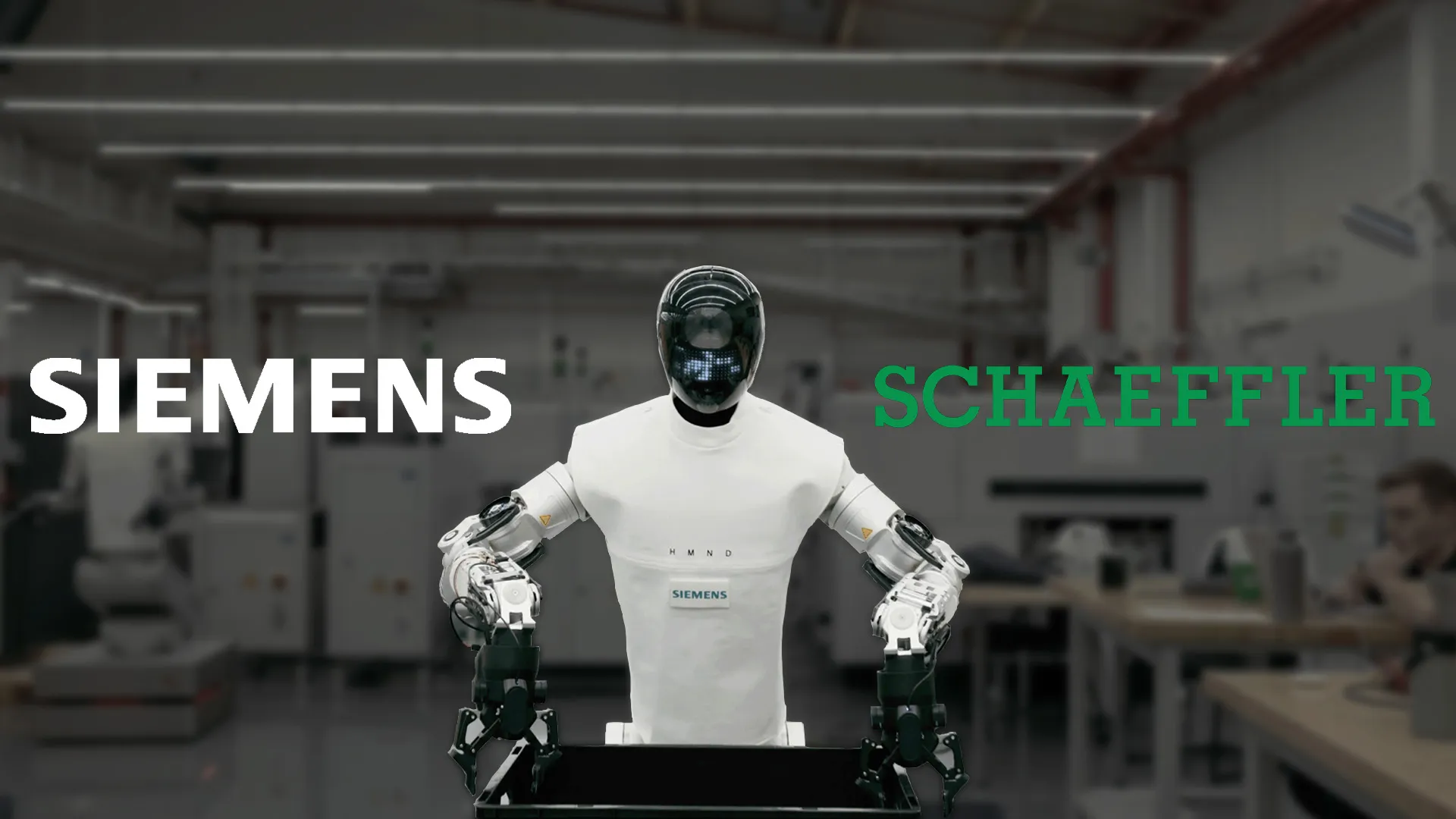
- A successful POC with Siemens achieved 60 tote moves per hour, proving the robot's readiness for repetitive logistics.
- A 5-year deal with Schaeffler secures a high-precision actuator supply and a roadmap to deploy hundreds of robots in global factories.
The global race for humanoid supremacy has a new, surprisingly fast contender. While giants in the US and China have spent years in labs, UK-based robotics, Humanoid (SKL Robotics Ltd.) has gone from a blank sheet of paper to a factory-floor deployment in record time.
Founded in May 2024, the company has bypassed the usual "viral video" phase to focus on one thing: getting robots into the workforce immediately. By leveraging a high speed development cycle that moved from concept to a functional prototype in just seven months, Humanoid has rapidly secured its place in the most demanding factories in the world. This velocity is the foundation of three massive partnerships that are now defining the future of industrial automation.
Partnership 1: The Siemens Logistics Breakthrough
In January 2026, Humanoid moved from impressive newcomer to proven asset through a landmark trial at the Siemens Electronics Factory in Erlangen, Germany. The goal was to take a humanoid robot and put it to work in a live industrial logistics environment.
Tasked with destacking, the robot was required to autonomously pick up totes of various sizes and place them on conveyor belts. The results were impressive as the robot achieved a throughput of 60 tote moves per hour with an autonomous success rate of over 90%. By maintaining continuous operation for over 30 minutes without human intervention, the trial proved that humanoids are finally ready to handle the repetitive and ergonomically taxing tasks that traditional automation cannot touch.
Partnership 2: The Schaeffler Supply Chain
If Siemens proved that the brain of the robot works, the partnership with Schaeffler ensures its body can scale and its intelligence can evolve. Schaeffler, the German titan of motion technology, has entered a multi year strategic agreement to become the preferred supplier of actuators for Humanoid’s platforms.
This is more than a simple hardware deal because it creates a continuous loop of industrial learning. The two companies are working together on a massive data collection and skill development program designed specifically for factory environments. By gathering use case driven data through teleoperation and synthetic data generation, Humanoid is building a specialized library of "Physical AI" skills.
Every action taken on the factory floor is captured as peripheral data to train AI models and optimize robot performance in real time. This ensures the robots develop specific skills tailored to the operational needs of Schaeffler, such as high precision assembly and heavy material handling. Schaeffler plans to deploy hundreds of Humanoid’s robots across its global production network over the next five years, using this growing intelligence to drive a new era of autonomous manufacturing.
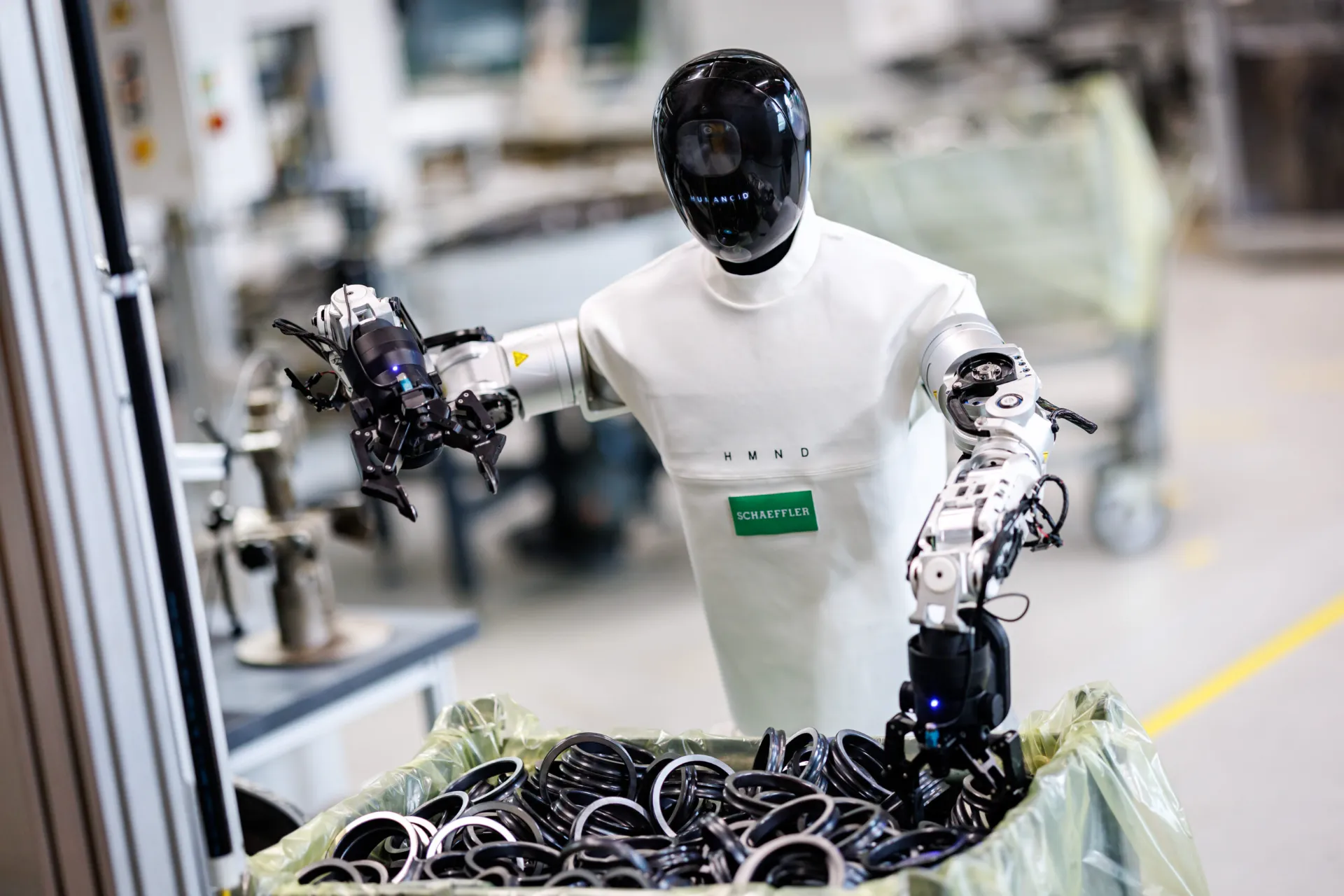
Partnership 3: The NVIDIA Simulation to Reality Engine
The record breaking development speed at Humanoid is powered by a deep integration with the NVIDIA robotics stack. Central to this collaboration is the use of NVIDIA Jetson Thor, a next generation robotics supercomputer designed specifically for the heavy computational demands of humanoid robots.
By utilizing Jetson Thor, Humanoid can run the latest, largest, and most capable robotic foundation models directly at the edge. This provides the HMND 01 with the onboard reasoning power needed for real time, intelligent interactions without relying on the cloud. This hardware is paired with NVIDIA Isaac Sim and NVIDIA Isaac Lab, allowing the company to create high fidelity digital twins.
This simulation first approach allowed their bipedal model to achieve stable walking just 48 hours after final assembly. By training VLA models on the powerful Blackwell architecture of Jetson Thor, Humanoid can teach a robot a new skill and deploy it to a physical robot within 24 hours. This partnership ensures that Humanoid remains at the cutting edge of Physical AI, moving past legacy industrial communication standards toward modern, software defined robotics.
Behind the Machine: Founders, Funding, and the HMND 01
At the heart of this rapid ascent is founder Artem Sokolov, a serial entrepreneur who successfully grew his family’s business to a 1 billion dollar valuation before turning his attention to robotics. Inspired by the repetitive labor he witnessed in manufacturing, Sokolov self funded the early stages with 30 million dollars of his personal wealth to maintain absolute speed and control. Today, he leads a team of over 200 experts drawn from companies like Apple, Tesla, and Boston Dynamic
The flagship platform of the company, the HMND 01, is a masterpiece of modular industrial design:
- HMND 01 Alpha Bipedal:
Standing 179 cm tall and weighing 90 kg, this model is designed for multi terrain versatility and R&D applications. It features 29 degrees of freedom and a unique textile uniform to protect its internals from factory dust. - HMND 01 Alpha Wheeled:
A heavier and more stable variant designed for high speed logistics in industrial environments. It can reach speeds of 7.2 km/h and is optimized for the flat floors of warehouses and shipping centers. - Modular Hands:
Both versions can swap between a 12 DOF five fingered hand for delicate tasks and a 1 DOF parallel gripper for heavy lifting of up to 15 kg.
Conclusion
The rise of Humanoid marks the end of the prototype era for humanoid robots. By aligning with industrial giants like Siemens and Schaeffler and technological leaders like NVIDIA, they have shifted the focus from what a robot can do to how fast it can provide value. With a massive personal investment from Sokolov and a clear roadmap toward Robot as a Service, the British Prodigy is no longer just racing to catch up as it is now setting the pace for the rest of the world.
About the author