
Intro
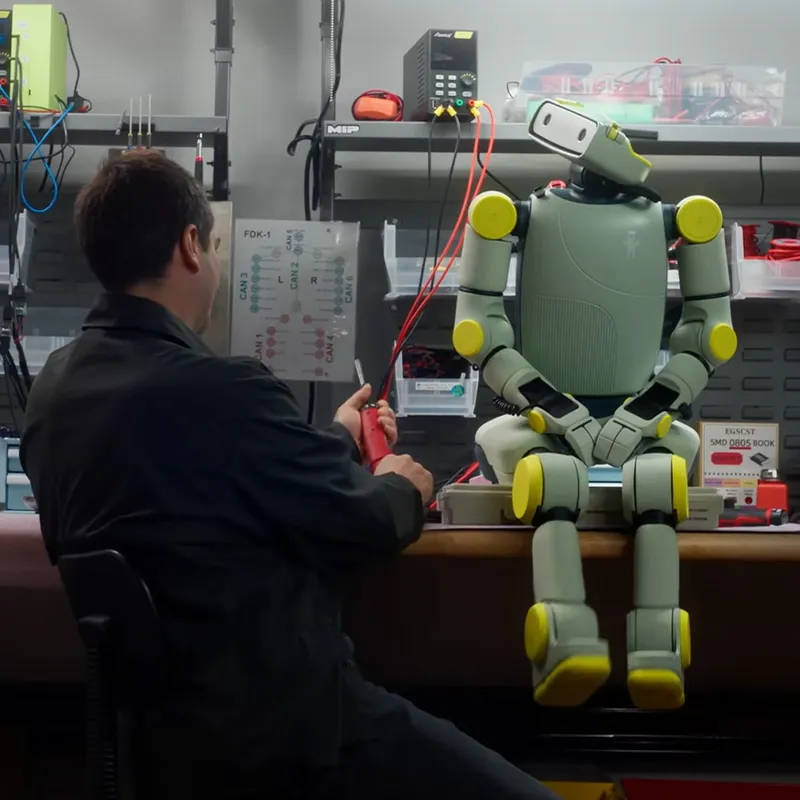
Fauna Robotics is a U.S.-based robotics and AI startup on a mission to build capable, safe, and engaging humanoid robots that operate in human-centric environments rather than confined industrial spaces. The company believes that robots should be present around people in everyday life — in homes, workplaces, retail settings, schools, and public spaces — and that safety, approachability, and ease of interaction are critical for broad adoption.
Founded by Josh Merel and Rob Cochran, from a premise that existing humanoid prototypes are often too heavy, intimidating, or limited to labs, Fauna focuses on developing hardware, software, and AI platforms that lower the barriers to real-world deployment and developer innovation. The company’s flagship humanoid robot, Sprout, was launched publicly in January 2026 after several years in stealth and is designed as a developer-ready, modular platform for embodied artificial intelligence, human-robot interaction, and experimentation across applications such as retail, entertainment, education, and home services.
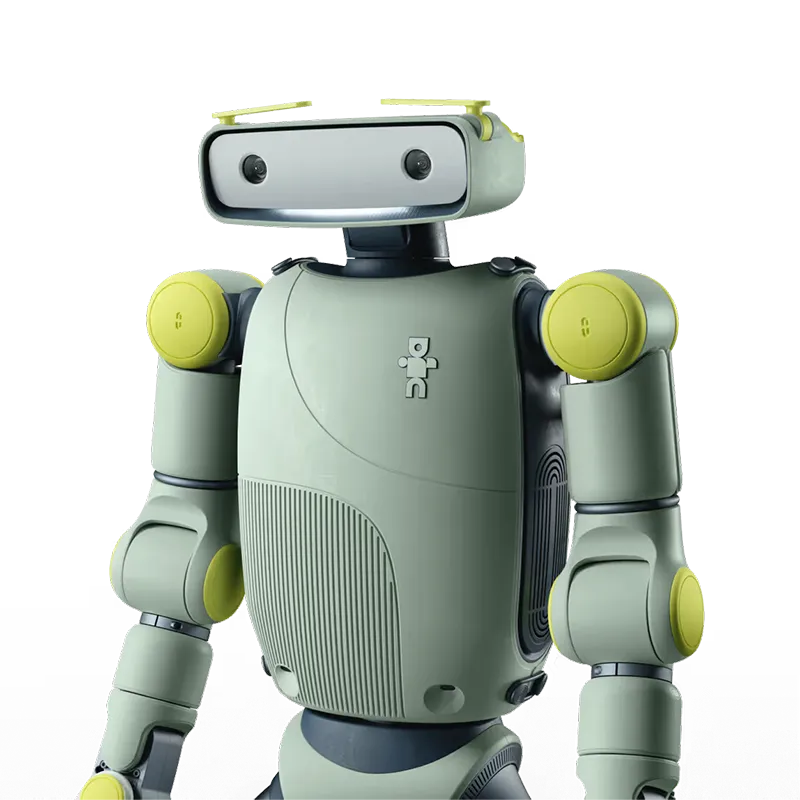
Sprout’s design emphasizes safety and social engagement, with a lightweight form factor, soft compliant materials, and expressive visual features that support intuitive interaction in close human proximity. Its architecture combines full-body motion, integrated autonomy, and a modular AI stack that enables developers and researchers to rapidly build and test new capabilities without rebuilding core hardware or control software. Early adopters of the Sprout platform include major research institutions and global enterprise partners exploring next-generation embodied AI use cases.
Backed by leading venture investors including Kleiner Perkins, Quiet Capital, and Lux Capital, Fauna Robotics is positioning itself as a foundational platform provider in the emerging humanoid robotics ecosystem, balancing practical near-term utility with long-term research and development toward robots that can live, work, and play alongside humans.
Robots
- Sprout:
A lightweight, friendly humanoid robot platform for developers, researchers, and enterprises, designed for safe operation in shared human environments and for building embodied AI applications.
Specialism
- Human-centric Interaction:
Designed for safe, close-proximity operation around people. - Developer-First Platform:
SDK and modular AI stack for rapid experimentation and customization. - Embodied AI Enablement:
Supports research and real-world adaptation of AI across locomotion, perception, and engagement. - Expressive Design:
Soft exterior and visual expression elements for approachable social engagement. - Unified Hardware/Software:
End-to-end system with motion control, autonomy, and teleoperation support.
Business Viability
Fauna Robotics is well positioned at the convergence of several emerging robotics and AI trends, particularly embodied artificial intelligence, developer platforms, and humanoid robotics in shared human environments. By launching Sprout as a developer-ready platform rather than a singular application robot, the company lowers the technical barriers for innovation and attracts use cases across multiple sectors, including entertainment, retail, research, and home automation.
Its lightweight, safety-focused design differentiates it from heavier industrial humanoids and aligns with industry conversations about accessible robot form factors and human comfort, an approach that media outlets note contrasts with more intimidating industrial designs.
The company has also secured significant seed funding (US$30 M) and backing from prominent venture capital firms, giving it runway to expand R&D, support networks, and product iteration.
However, addressing real-world utility beyond research and developer engagement — particularly for consumer and service markets, remains a long-term challenge due to high technical complexity, manufacturing scale, and competitive pressure from other humanoid developers. Success will hinge on adoption by developers, strong enterprise partnerships, and the evolution of autonomous software capabilities that extend beyond controlled environments. Nonetheless, Fauna’s platform approach, tooling ecosystem, and safety emphasis provide a solid foundation for growth in the broader humanoid robotics landscape.